Automotive Door Hinges Market Demand Driven by Vehicle Production, Electrification and Light weighting.
-

- Published Updated
- 2,344 views
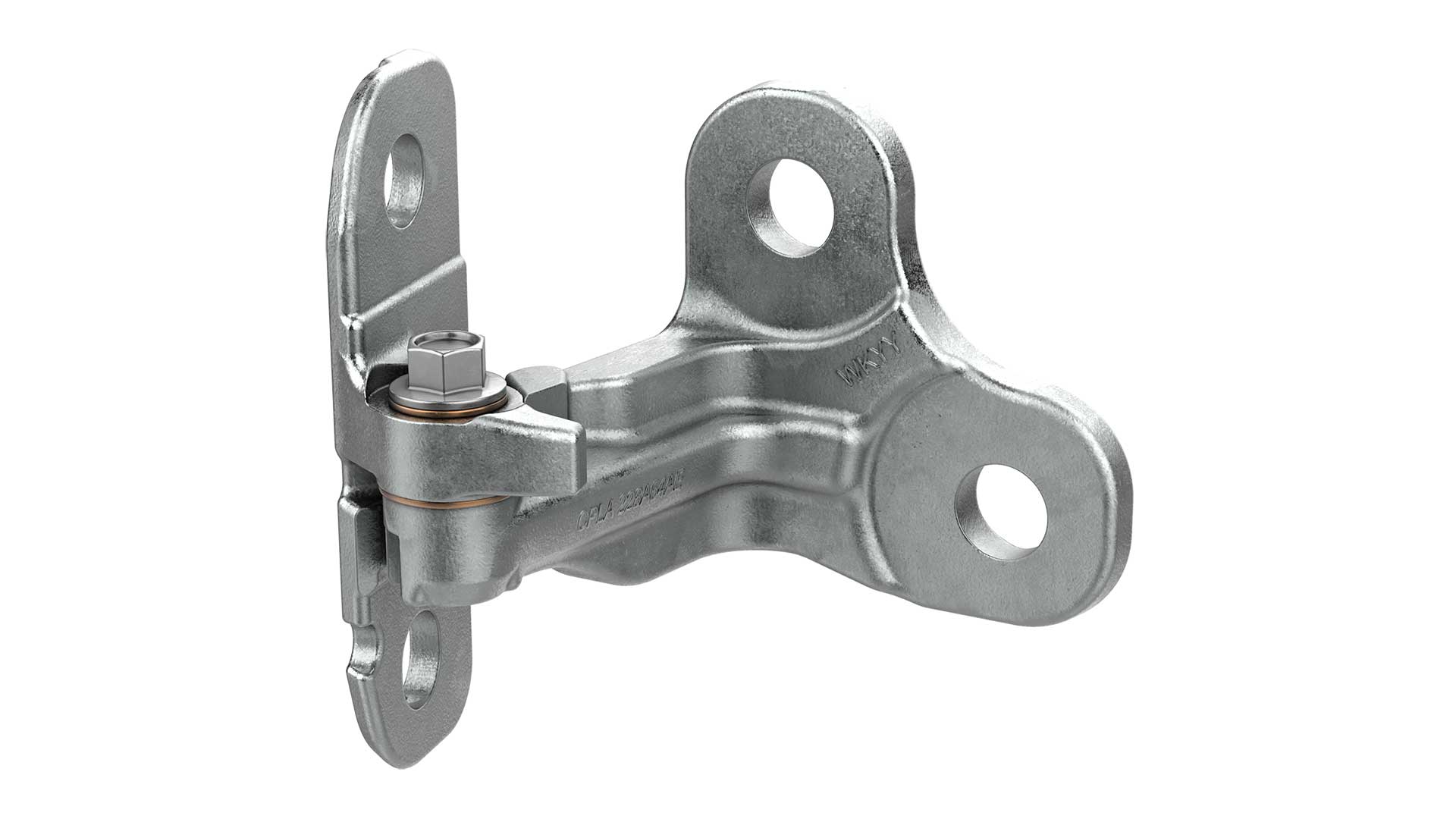
The automotive door hinges market demand is closely linked to global vehicle production, expanding vehicle portfolios, changing door architectures, electrification, and increasing expectations for durability and operating performance. Door hinges are essential structural components that allow controlled door movement while supporting significant loads throughout the vehicle's service life.
Although hinge systems are relatively small compared with other automotive components, their requirements are becoming increasingly sophisticated. Automakers are introducing larger doors, advanced access technologies, powered opening mechanisms, concealed hardware, and lightweight structures. These developments are encouraging suppliers to provide hinges with improved strength, precision, corrosion resistance, compact packaging, and long-term reliability.
Vehicle Production Remains the Core Demand Foundation
The overall level of vehicle manufacturing remains a fundamental factor influencing hinge consumption. Every passenger vehicle, SUV, crossover, commercial vehicle, and other applicable vehicle platform requires multiple door hinge assemblies.
Expansion in vehicle model portfolios can therefore generate additional component requirements even when individual hinge designs differ between platforms.
Automakers are also introducing new vehicle derivatives more frequently, creating opportunities for suppliers that can provide flexible designs and scalable production. Companies capable of supporting several vehicle programs can benefit from broader demand across different applications.
SUVs and Crossovers Influence Component Requirements
The continued importance of SUVs and crossovers is affecting hinge specifications. These vehicles can feature larger doors, greater door mass, and higher equipment levels compared with many smaller passenger vehicles.
Higher loads can increase requirements for hinge strength, fatigue resistance, alignment, and durability. Suppliers are responding with optimized geometries and stronger material configurations.
This segment also creates demand for hinges capable of supporting premium features such as powered doors, integrated access systems, and sophisticated exterior styling.
Electric Vehicles Create New Demand Opportunities
Electrification is becoming an important influence on the automotive door hinges market demand. Electric vehicles often use new body architectures and place strong emphasis on lightweight construction, efficient packaging, and electronic integration.
EV doors may incorporate additional components such as electronic latches, sensors, speakers, wiring, actuators, and powered mechanisms. These additions can change the available packaging space and mechanical requirements around hinge locations.
As manufacturers develop dedicated electric platforms, suppliers have opportunities to design hinge systems specifically suited to these architectures rather than relying exclusively on conventional solutions.
Lightweighting Shapes Future Hinge Requirements
Vehicle weight reduction remains an important engineering objective, particularly for electric vehicles where efficiency and driving range are closely connected with vehicle mass.
Hinge manufacturers are therefore facing demand for lighter components that maintain structural strength and durability. High-strength materials, optimized geometries, and improved manufacturing processes can support this objective.
However, weight reduction must not compromise reliability. Hinges need to withstand repeated loading, vibration, environmental exposure, and long-term operation. Demand is consequently shifting toward optimized lightweight solutions rather than simple reductions in component size.
Advanced Door Functions Increase Technical Demand
Modern vehicles increasingly offer powered doors, electronic latching, hands-free access, sensor-assisted functions, and other convenience technologies.
These features can increase the technical requirements placed on hinge systems. A hinge working alongside an actuator, for example, needs predictable movement and controlled friction to support smooth powered operation.
This creates demand for products that are engineered as part of a broader door system. Suppliers with capabilities in movement control, precision manufacturing, and system integration can address these requirements more effectively.
Premium Vehicles Encourage Sophisticated Hinge Solutions
Premium vehicle manufacturers often prioritize refined door operation, clean exterior styling, low noise, and high-quality tactile performance.
These requirements can support demand for concealed and compact hinge systems. Concealed architectures can help designers create smoother body surfaces while maintaining the necessary opening range and structural support.
Such products may require tighter tolerances, specialized materials, advanced simulation, and extensive validation. This creates opportunities for suppliers with specialized engineering capabilities.
Commercial Vehicles Support High-Durability Demand
Commercial vehicles represent another important application segment. Vans, trucks, and utility vehicles can experience frequent door operation and demanding environmental conditions.
Hinge systems for these applications may require enhanced durability, robust construction, corrosion protection, and reliable operation over high numbers of cycles.
Demand from commercial vehicle applications can therefore support specialized hinge designs that prioritize service life and mechanical resilience.
Replacement Demand Adds to the Opportunity
Automotive door hinge requirements extend beyond original vehicle production. Replacement demand can emerge from wear, corrosion, accident-related damage, or other mechanical problems.
The aftermarket creates opportunities for suppliers that can produce compatible replacement components while maintaining appropriate dimensional accuracy and performance.
As the vehicle population ages, replacement requirements can become an additional source of demand for suitable hinge products and repair channels.
Material Innovation Influences Demand Patterns
Material requirements are changing as automakers seek combinations of strength, weight efficiency, durability, corrosion resistance, and cost effectiveness.
Conventional steel remains valuable because of its established manufacturing processes and structural performance. High-strength variants can enable more optimized designs.
Other materials may be considered for specific applications where their properties justify the additional cost or manufacturing complexity. This creates demand for suppliers with broader material engineering capabilities.
Precision Manufacturing Supports Reliable Supply
Automotive manufacturers require consistent component quality across large production volumes. Door hinges must meet tight dimensional requirements because variations can affect door alignment, closing effort, and operating behavior.
Automated forming, machining, assembly, inspection, and testing can improve production consistency. Manufacturers with efficient and flexible production systems are better positioned to meet fluctuating demand across multiple vehicle programs.
Advanced quality-control systems can also reduce defects and improve delivery reliability.
Regional Vehicle Manufacturing Shapes Demand
Automotive production is distributed across numerous manufacturing regions, creating demand for localized or regionally responsive component supply.
Hinge manufacturers may establish production facilities or sourcing arrangements close to vehicle assembly operations to reduce logistics complexity and improve delivery responsiveness.
Regional diversification can also help suppliers manage changes in vehicle production patterns and improve resilience against supply-chain disruptions.
Cost Considerations Influence Purchasing Decisions
Despite increasing technical requirements, cost remains an important factor affecting demand. Automakers seek reliable components at competitive prices, placing pressure on suppliers to improve manufacturing efficiency.
Material utilization, automation, tooling efficiency, cycle-time reduction, and waste management can help manufacturers control costs.
Suppliers that combine advanced performance with efficient production may be better positioned to secure high-volume vehicle programs.
Sustainability Is Influencing Future Demand
Environmental objectives are increasingly influencing automotive component development. Manufacturers are examining material consumption, production waste, energy usage, and product longevity.
Lightweight hinge designs can contribute to broader vehicle efficiency objectives, while durable components can reduce replacement requirements over the product lifecycle.
Sustainable manufacturing practices can therefore strengthen the attractiveness of hinge products while supporting broader automotive environmental goals.
Demand for Modular and Flexible Products
Automakers increasingly use common vehicle platforms across multiple models. This is creating demand for modular hinge architectures that can be adapted to different applications.
Suppliers can develop common engineering platforms and modify dimensions, mounting arrangements, load ratings, or opening characteristics for individual programs.
This approach can support demand across multiple vehicle models while reducing development and manufacturing complexity.
Future Demand Outlook
The automotive door hinges market demand is expected to remain closely connected to vehicle production while becoming increasingly influenced by technological development. Electrification, light weighting, advanced access systems, premium styling, commercial vehicle applications, and modular vehicle platforms are creating new requirements for hinge manufacturers.
Future demand will increasingly favor components that combine structural reliability with lightweight construction, precise movement, corrosion resistance, compact packaging, and compatibility with advanced door technologies.
Suppliers that invest in flexible manufacturing, digital engineering, advanced materials, and customer collaboration can respond more effectively to changing requirements. As vehicle architectures continue to evolve, automotive door hinges will remain an essential component, with demand increasingly shaped by the industry's transition toward lighter, smarter, more efficient, and technologically integrated vehicles.
Written as -https://www.pristinemarketinsights.com/automotive-door-hinges-market-report