Baling machine manufacturer in Surat |Hysan Balers
-
- Published Updated
- 3,329 views
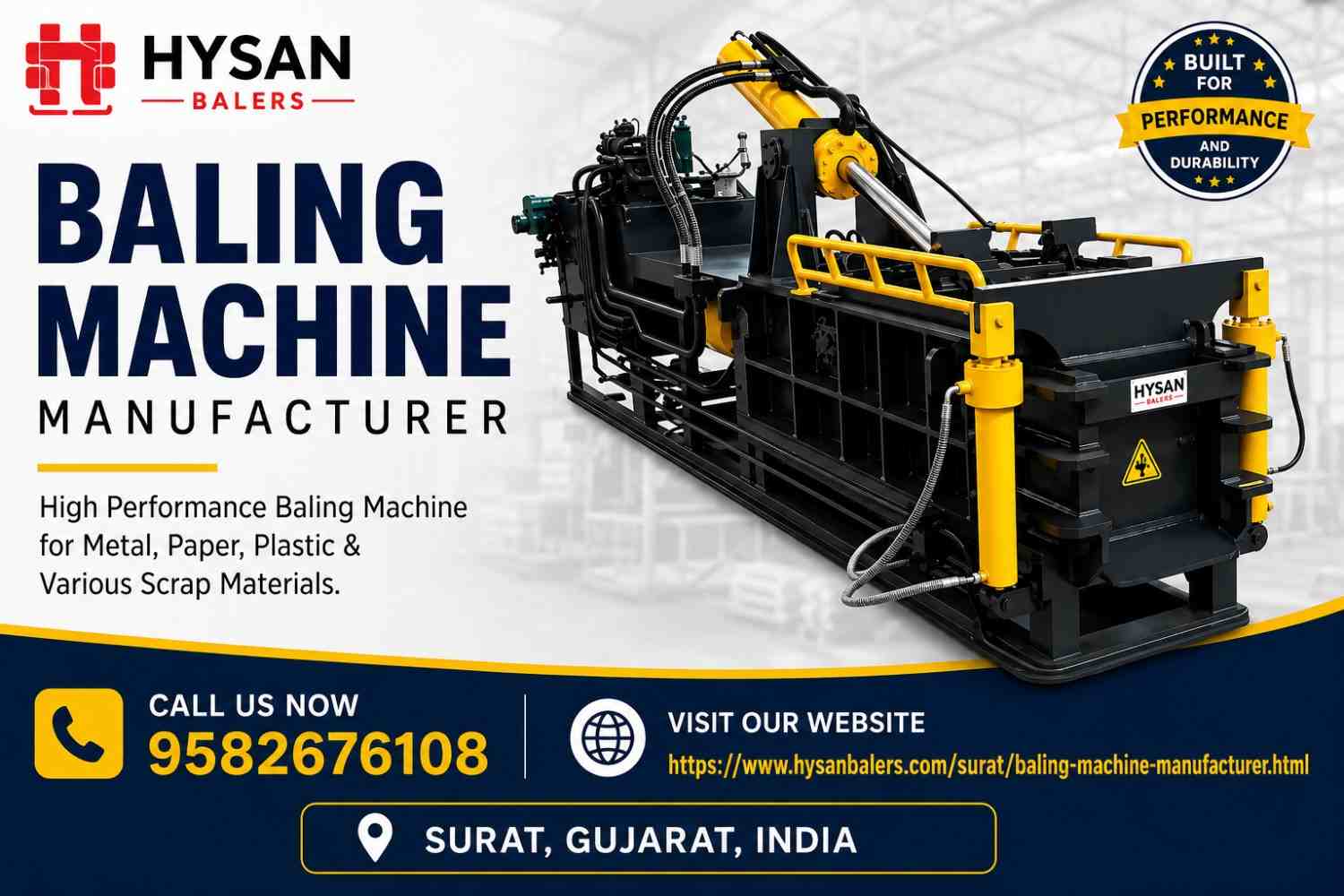
How Modern Baling Solutions Can Improve Recycling Operations in Surat is a topic that makes sense for businesses that deal with recyclable material every day. In many factories warehouses and recycling facilities waste is generated almost continuously. A few cardboard boxes here some plastic packaging there and a growing amount of scrap can soon turn into a storage problem.
At the beginning loose waste may not seem like a serious concern. But as the quantity increases it starts affecting the way a workplace functions. Workers have to find room for it move it out of busy areas and arrange transportation when enough material has been collected. If there is no proper system these small tasks can become part of the daily routine.
This is where compression equipment can be useful. By pressing suitable recyclable materials into compact bundles businesses can make them easier to store and move. The idea is quite simple: instead of trying to manage a large amount of loose material bring it together into a form that is easier to handle.
What Happens When Waste Keeps Piling Up?
Waste rarely arrives at a convenient time.
A manufacturing line may continue producing scrap while workers are already busy with other tasks. A warehouse may receive new packaging every day. A recycling center may have trucks arriving with material throughout the week.
If there is no convenient place to put everything waste starts finding its way into corners walkways or temporary storage areas.
Apart from making the workplace look untidy this can make movement more difficult. Valuable floor space can also disappear under piles of recyclable material.
Compressing suitable waste can help solve this particular problem. Once the material is formed into compact bundles it can be stacked in a planned storage area rather than spread across the facility.
For a company researching a Baling Machine Manufacturer in Surat this is one of the first practical questions to consider: How much space could be saved if the material were stored in a more compact form?
Why Is the Type of Material So Important?
A machine does not treat every material in exactly the same way.
Paper is light and flexible. Cardboard is bulky but relatively easy to compress. Plastic packaging can have a large volume compared with its weight. Metal scrap is heavier and may require considerably more force.
This is why the same setup may not be suitable for every business.
Common materials handled in these applications include:
- Paper and cardboard
- Plastic packaging
- Metal scrap
- PET bottles
- Industrial recyclable materials
- Commercial packaging waste
The quantity matters too. A small workshop producing a modest amount of recyclable material has different needs from a large facility working multiple shifts.
Before choosing equipment businesses should therefore look at both what they are processing and how much they are processing.
That simple evaluation can prevent a lot of confusion later.
Where Does Hydraulic Technology Fit In?
Hydraulic systems are widely used in industrial compression equipment because they can deliver substantial pressure in a controlled manner.
The benefit is easy to understand. Instead of workers manually trying to reduce the volume of bulky material the machine does the pressing.
For a hydraulic baler manufacturer designing the equipment involves more than simply adding a powerful hydraulic system. Factors such as material characteristics bale dimensions operating frequency compression requirements and safety also need to be considered.
This is important for customers too.
A machine with very high capacity may sound impressive but that does not automatically make it the right choice. If the business handles a smaller quantity of lightweight material a simpler setup may be more practical.
Good equipment selection starts with the application not the brochure.
How Can You Decide Which Arrangement Works?
The layout of the facility plays a surprisingly important role.
Suppose a business has plenty of floor space and handles recyclable material throughout the day. A horizontal arrangement may fit naturally into that type of operation.
Now consider a smaller facility where floor space is limited. In that situation a vertical arrangement may be easier to accommodate.
The amount of material also matters. A company producing a few bundles a day may not need the same level of automation as a recycling facility processing material continuously.
Before deciding it helps to walk through the actual process:
Where does the waste come from? Where is it collected? Who moves it? Where will the machine be installed? Where will the finished bales go?
These simple questions often reveal what kind of setup would work best.
Is Automation Always Necessary?
Not necessarily.
Automation can be useful when the workload is high and the business wants to reduce repeated manual tasks. But not every facility needs a highly automated system.
For a smaller operation a straightforward machine may be enough. For a larger recycling unit additional automation may help keep the workflow moving without requiring constant manual intervention.
The right level of automation should be based on actual workload.
There is little benefit in paying for features that a business will rarely use. At the same time choosing a system that is too basic for a high-volume operation can create unnecessary work for employees.
Finding that middle ground is important.
What Should You Ask Before Buying Equipment?
When businesses purchase industrial machinery they naturally look at price and specifications. Those things matter but they are not the whole story.
It is equally important to think about how the machine will fit into everyday work.
Consider questions such as:
- What material will be processed?
- How much material is produced each day?
- How large should each bale be?
- How much space is available?
- How will material reach the machine?
- Where will completed bales be stored?
- What maintenance will be required?
- Who will operate the equipment?
- What support is available after installation?
These questions provide a much clearer picture than simply comparing machine capacities.
An experienced baling machine supplier in India should be able to discuss these points and help customers understand their options.
For businesses looking for a scrap baling machine manufacturer Surat explaining the nature and quantity of scrap is especially useful. Heavy industrial scrap and lightweight packaging waste should not be approached in exactly the same way.
Can Compact Bales Really Make Storage Easier?
This is often one of the most noticeable benefits.
Imagine a warehouse collecting cardboard packaging for several weeks. If every box is stored loose the pile can quickly become difficult to manage.
Now imagine that material being compressed at regular intervals. Instead of a loose mountain of cardboard the warehouse has compact bundles that can be stacked in a designated area.
The difference is not complicated. It is simply a better use of available space.
The same idea applies to suitable plastic waste paper PET bottles and other recyclable materials. Compact bundles can be easier to organize and move than loose pieces.
For businesses operating in areas where storage space is expensive or limited this can be particularly useful.
What About Moving and Transporting the Material?
Moving loose material can be inconvenient.
Workers may need to handle individual pieces or deal with awkwardly shaped piles. Once material is compressed into bundles handling becomes more straightforward.
The finished bales can be moved using suitable equipment and stored together until they are ready for collection or transportation.
For recycling businesses this can make the overall process more organized. Material comes in gets sorted and compressed and can then move to the next stage without creating unnecessary piles around the facility.
The exact benefit depends on the material and operation but reducing unnecessary bulk can make logistics easier.
Why Should You Pay Attention to the Manufacturer?
A machine is a long-term investment. Once it becomes part of the daily workflow its reliability and suitability become important.
That is why the manufacturer should not be treated as an afterthought.
Different businesses have different requirements. A good manufacturer should be able to understand the customer's application and explain which type of equipment makes sense for it.
Hysan Balers provides machinery for various recycling and waste-handling applications. Its equipment can be considered for materials such as paper plastic metal and PET bottles.
Businesses can discuss their expected workload material type bale requirements available space and operating process before making a final decision.
This application-based approach is often more useful than simply choosing a machine because it has the highest capacity or the longest list of features.
How Can a Simple System Improve the Workplace?
Good waste management does not always require a complicated process.
A business can start by deciding where recyclable materials should be collected. Materials can then be separated according to type before suitable waste is compressed.
Once the bales are produced they can be moved to a specific storage area. When enough material has been collected it can be sent for recycling or transportation.
The real benefit comes from doing this consistently.
Workers know where to put waste. The storage area remains easier to control. Loose material is less likely to spread throughout the workplace.
Over time these small improvements can make everyday work feel much more manageable.
Why Is the Right Approach Different for Every Business?
There is no universal solution for waste handling.
A small manufacturing unit a large recycling plant and a busy warehouse may all need different equipment. Even two businesses handling the same material may have different requirements because their production volumes and available spaces are not the same.
That is why businesses should avoid copying another company's setup without first understanding their own needs.
The better approach is to start with the basics: material quantity space bale size workflow and handling requirements.
Once those things are clear choosing suitable equipment becomes much easier.
Conclusion
Managing recyclable waste is one of those everyday challenges that can become frustrating when there is no proper system in place. Loose cardboard plastic paper metal and bottles can quickly occupy valuable space and create extra work for employees.
A suitable compression system can make the situation more manageable. By turning loose recyclable material into compact bundles businesses can improve storage simplify handling and make transportation more organized.
The important thing is not to choose equipment simply because it looks powerful or has impressive specifications. The machine should suit the material workload available space and actual working conditions.
For businesses in Surat taking a little time to understand these requirements can make the entire purchasing process easier. More importantly the right setup can turn waste handling from a recurring workplace headache into a simple and organized part of the daily routine.