Comparative Analysis of Resin Transfer Molding vs. Other Composite Manufacturing Techniques for Off-Highway Applications
-

- Published Updated
- 1,716 views
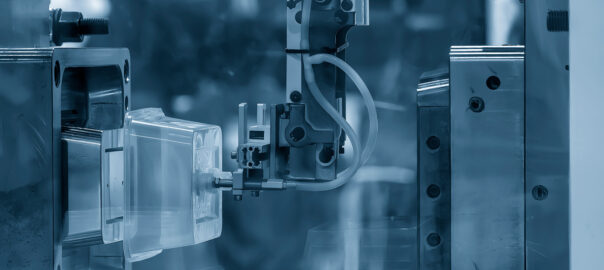
Composite materials have become increasingly important in the off-highway industry because they offer several benefits, including reduced weight, high strength, and improved durability. Resin Transfer Molding (RTM) is one of the major methods used to manufacture composite components, but it is not the only available option. This article compares RTM with other composite manufacturing techniques, including vacuum infusion, hand lay-up, and autoclave molding, while examining their advantages, challenges, and suitability for off-highway applications.
Resin Transfer Molding (RTM): Overview and Advantages
Resin Transfer Molding (RTM) is a closed-mold manufacturing process in which resin is injected into a mold containing a pre-formed fiber reinforcement. The process is widely recognized for producing high-quality and complex components with excellent surface finishes. RTM provides several important advantages for off-highway applications:
- Precision and Repeatability: RTM provides accurate control over resin flow and fiber placement, helping produce consistent and repeatable components. This level of precision is important for off-highway parts that need to meet strict performance requirements.
- Complex Geometry: RTM can manufacture components with complex shapes and integrated features. This makes it suitable for producing intricate parts such as vehicle body panels, structural components, and enclosures.
- Surface Finish: Since RTM uses a closed mold, it can provide a smooth finish on both sides of the component. This reduces the need for additional post-processing and improves the appearance of visible parts.
Despite these benefits, RTM also has some challenges. It requires accurate mold design, and tooling costs can be relatively high, particularly when producing components in low volumes.
Vacuum Infusion: A Flexible Alternative
Vacuum infusion is another closed-mold composite manufacturing process that shares similarities with RTM but operates differently. Instead of injecting resin under pressure, vacuum pressure is used to draw the resin into the mold.
- Lower Tooling Costs: Vacuum infusion generally requires more affordable tooling than RTM, making it a practical and cost-effective choice for large components or lower-volume production.
- Material Flexibility: The vacuum infusion process can work with various fiber types and resin systems, providing greater flexibility when selecting materials according to application requirements.
- Improved Fiber Wet-Out: Vacuum pressure helps distribute resin throughout the fiber reinforcement, supporting thorough fiber wet-out and potentially improving the mechanical properties of the finished component.
However, vacuum infusion may not provide the same level of precision as RTM when manufacturing components with highly complex geometries. Its surface finish may also be less smooth than an RTM-produced part, which can result in the need for additional finishing.
Hand Lay-Up: Traditional and Cost-Effective
Hand lay-up is one of the oldest and simplest methods used in composite manufacturing. The process involves manually placing layers of fiber reinforcement into an open mold and applying resin by hand.
- Low Capital Investment: Hand lay-up requires relatively little equipment and tooling, making it an economical choice for prototypes, small-scale production, and limited quantities.
- Flexibility in Design: This process offers considerable flexibility because fiber orientation and resin application can be adjusted during production. This can be particularly useful for custom fiberglass components and one-off parts.
However, hand lay-up is labor-intensive and generally provides less consistency than more controlled manufacturing processes such as RTM. The quality of the finished component can depend heavily on the operator's skill. In addition, its slower production cycle makes it less suitable for high-volume manufacturing.
Autoclave Molding: High-Performance Composites
Autoclave molding is commonly used to manufacture high-performance composite components, especially in industries such as aerospace and defense. The process involves placing a resin-impregnated fiber preform into a mold and curing it under controlled heat and pressure inside an autoclave.
- Superior Mechanical Properties: The combination of elevated temperature and pressure during curing can produce components with excellent mechanical properties, including high strength and stiffness.
- High-Quality Surface Finish: Similar to RTM, autoclave molding can produce components with high-quality surface finishes, reducing the need for extensive post-processing.
However, autoclave molding can be expensive and time-consuming. Both tooling and operating costs are generally high. As a result, it is typically selected for applications where performance requirements are more important than manufacturing cost.
Suitability for Off-Highway Applications
When selecting a composite manufacturing process for off-highway applications, several factors should be considered, including production cost, volume, part complexity, and required performance.
- RTM is suitable for producing complex, high-performance components in medium- to high-volume production. Its precision and ability to achieve high-quality surface finishes make it appropriate for structural components, body panels, and enclosures used in off-highway vehicles.
- Vacuum Infusion provides a balance between cost and performance. It can be a suitable option for larger components and lower-volume production where material flexibility is an important consideration.
- Hand Lay-Up is generally better suited for prototypes, customized components, and small production runs where lower manufacturing costs are a priority and performance requirements are less demanding.
- Autoclave Molding is suitable for high-performance components that need to withstand demanding mechanical and environmental conditions. However, its high cost generally makes it less practical for high-volume off-highway production.
Conclusion
Selecting the appropriate composite manufacturing process is important for achieving the desired balance between component performance, manufacturing cost, and production efficiency in off-highway vehicles. RTM offers several advantages, particularly when producing complex and high-performance components. However, vacuum infusion, hand lay-up, and autoclave molding also provide specific benefits and may be more suitable for particular applications.
By understanding the advantages and limitations of each manufacturing technique, manufacturers can select a process that aligns with their production requirements, performance goals, and the specific demands of the off-highway industry.
Related Articles