ERW Tubes, Billets, and CBAM: Shaping the Future of Sustainable Steel Manufacturing
-

- Published Updated
- 6,832 views
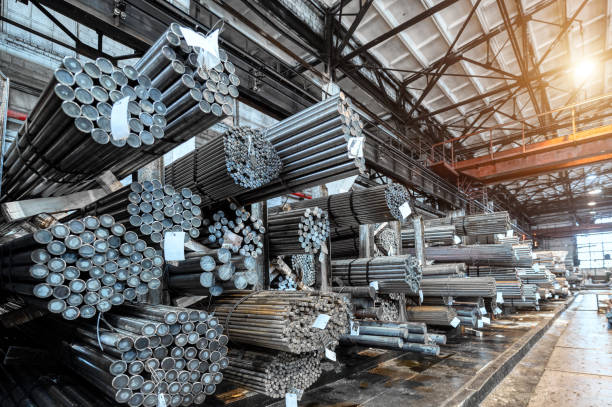

The global steel industry is undergoing a major transformation driven by sustainability, efficiency, and international environmental regulations. Among the key products supporting industrial growth are ERW Tubes and Billets, while emerging policies such as the Carbon Border Adjustment Mechanism (CBAM) are reshaping how steel manufacturers operate and compete in international markets.
Understanding ERW Tubes
Electric Resistance Welded (ERW) Tubes are widely used across construction, infrastructure, automotive, oil and gas, and engineering sectors. These tubes are manufactured by rolling steel strips into a cylindrical shape and welding the edges through electrical resistance.
Key Advantages of ERW Tubes
- High dimensional accuracy
- Excellent strength and durability
- Cost-effective production
- Smooth surface finish
- Suitable for structural and industrial applications
The growing demand for infrastructure development and industrial projects worldwide continues to drive the consumption of ERW Tubes, making them a vital component of modern engineering.
Benefits of ERW Tubes
- High strength and structural integrity
- Excellent dimensional accuracy
- Smooth surface finish
- Cost-effective manufacturing process
- Easy fabrication and installation
- Suitable for diverse industrial applications
Common Applications of Billets
- Reinforcement bars for construction
- Wire rods and fasteners
- Structural steel products
- Engineering components
- Industrial machinery parts
- Automotive applications
The demand for billets continues to rise as construction, manufacturing, and infrastructure sectors expand across emerging and developed economies. Their importance within the steel supply chain makes them one of the most valuable semi-finished steel products.
The Importance of Steel Billets
Billets are semi-finished steel products that serve as the raw material for manufacturing bars, rods, wires, and various structural steel products. Produced through continuous casting processes, billets play a critical role in the steel value chain.
Applications of Billets
- Reinforcement bars
- Wire rods
- Structural sections
- Industrial components
- Engineering products
High-quality billets contribute significantly to the mechanical properties and performance of finished steel products, ensuring consistency and reliability across applications.
Impact of CBAM on Steel Manufacturers
The implementation of CBAM is prompting steel manufacturers to evaluate and improve their production processes. Companies are increasingly investing in advanced technologies that reduce energy consumption and lower greenhouse gas emissions.
Several key strategies are being adopted by steel producers:
Energy Efficiency Improvements
Modern steel plants are implementing energy-efficient equipment and optimized production processes to reduce overall energy consumption while maintaining high productivity levels.
Renewable Energy Integration
Many manufacturers are incorporating solar, wind, and other renewable energy sources into their operations to decrease dependence on fossil fuels and lower their carbon footprint.
Sustainable Raw Material Management
The use of recycled steel scrap and responsibly sourced raw materials is becoming increasingly important in achieving sustainability targets and meeting CBAM requirements.
Carbon Monitoring and Reporting
Accurate tracking and reporting of carbon emissions are essential for compliance. Manufacturers are investing in adv
What is CBAM?
The Carbon Border Adjustment Mechanism (CBAM) is a regulatory framework introduced by the European Union to reduce carbon leakage and encourage cleaner industrial production. CBAM requires importers of carbon-intensive products, including steel, to report and eventually pay for the embedded carbon emissions associated with their products.
Objectives of CBAM
- Promote low-carbon manufacturing
- Create fair competition between domestic and imported products
- Encourage industries to reduce greenhouse gas emissions
- Support global climate goals
For steel manufacturers exporting to European markets, compliance with CBAM is becoming increasingly important.
Impact of CBAM on Steel Manufacturers
CBAM is encouraging steel producers to adopt sustainable manufacturing practices and invest in cleaner technologies. Companies with lower carbon footprints can gain a competitive advantage in international markets.
Manufacturers are focusing on:
- Energy-efficient production systems
- Renewable energy integration
- Waste heat recovery
- Sustainable raw material sourcing
- Advanced emission monitoring
These initiatives not only support regulatory compliance but also improve operational efficiency and brand reputation.
The Future of ERW Tubes and Billets in a Low-Carbon Economy
As sustainability becomes a central focus for governments, industries, and consumers, ERW Tubes and Billets will continue to play a vital role in supporting global economic development. However, their production will increasingly be influenced by environmental considerations and carbon management strategies.
Manufacturers that embrace sustainable practices can gain several advantages, including improved market access, enhanced brand reputation, greater operational efficiency, and stronger customer trust. Compliance with regulations such as CBAM can also position companies as preferred suppliers in international markets.
The combination of advanced manufacturing technologies, responsible resource management, and environmental stewardship is helping create a more resilient and competitive steel industry.
ERW Tubes and Billets in a Sustainable Future
As global demand for infrastructure and industrial development continues to grow, ERW Tubes and Billets will remain fundamental products in the steel sector. At the same time, sustainability regulations such as CBAM are accelerating the industry's transition toward greener manufacturing.
Steel producers that combine high-quality products with environmentally responsible operations will be best positioned to meet evolving customer expectations and international market requirements.
Conclusion
ERW Tubes and Billets form the backbone of numerous industries worldwide, supporting construction, engineering, and manufacturing activities. With the introduction of CBAM and increasing emphasis on sustainable production, steel manufacturers are embracing innovative technologies and greener practices. This shift is creating a more resilient, efficient, and environmentally responsible steel industry capable of meeting future global demands.