Nelson 100 kVA Isolation Transformer: Keeping Industrial Power Clean, Stable and Reliable
-

- Published Updated
- 2,053 views
In a modern factory, electricity is not just another utility. It is what keeps machines moving, automation running, control systems responding, and production schedules on track. Because so much depends on electrical power, even a small disturbance can eventually become an expensive problem.
The obvious concern is a power outage, but industrial facilities also have to deal with problems that are much harder to notice. Electrical noise, transient disturbances, voltage spikes, sags, and swells can affect equipment without bringing an entire production line to a stop. Their impact may appear slowly through overheating, electronic errors, repeated maintenance, or premature component failure.
This is particularly important for equipment containing sensitive PCBs, PLCs, servo motors, drives, and electronic control systems. When these components are repeatedly exposed to unsuitable electrical conditions, their reliability and useful life can be affected.
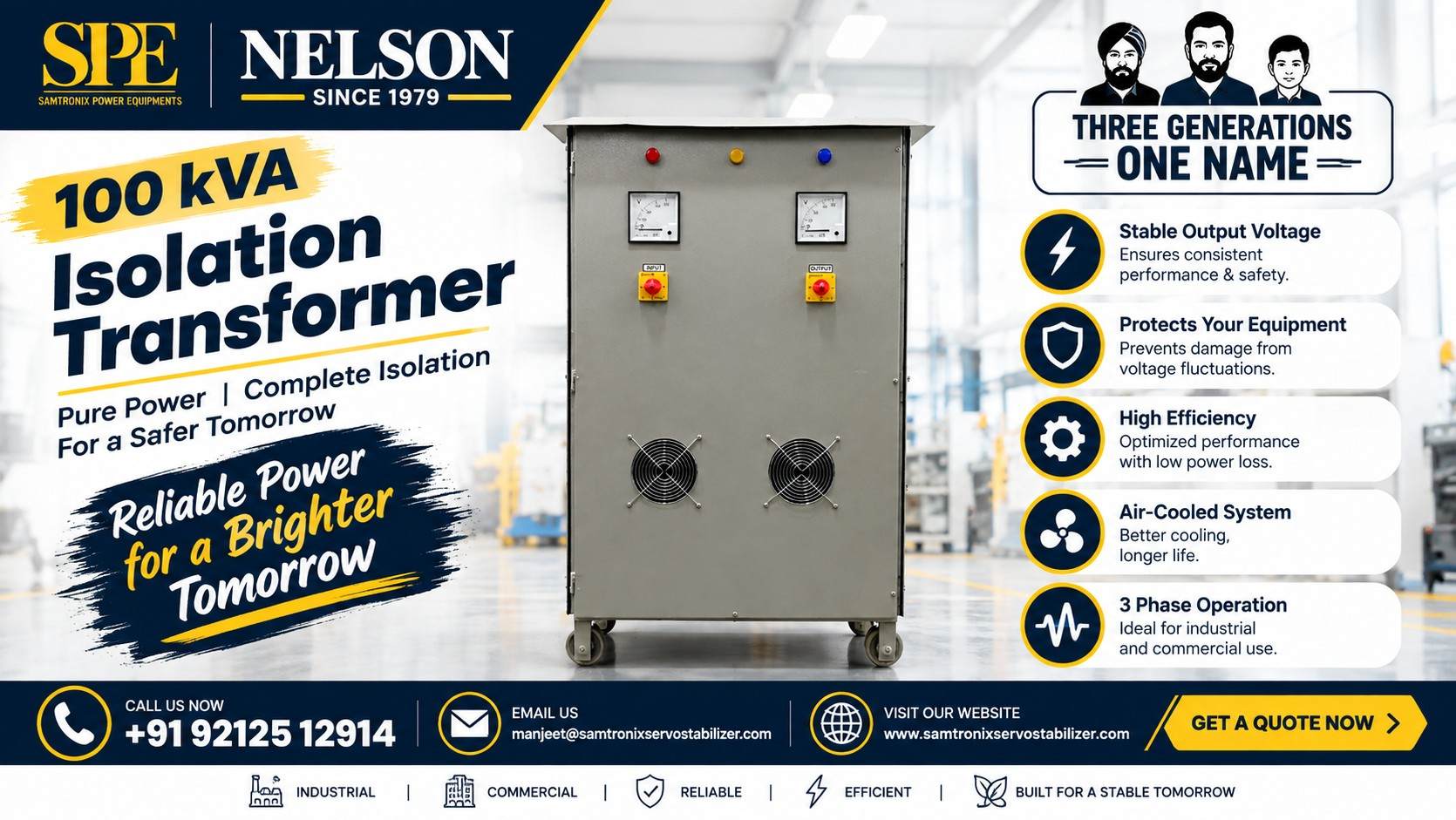
An Isolation Transformer provides an additional layer of electrical protection by separating the utility supply from the connected equipment. The Nelson 100 kVA Isolation Transformer from SPE | NELSON is designed for industrial and large commercial applications where reliable electrical isolation and dependable power handling are important.
Built on the legacy of "Three Generations, One Name" since 1979, the Nelson solution is intended to help businesses create a cleaner electrical environment while protecting valuable equipment and supporting long-term operational reliability.
The Power Quality Problem Most Businesses Notice Too Late
Power quality is often ignored because its effects are not always immediate.
A major electrical failure is easy to identify. A brief transient or small voltage fluctuation is different. It may pass unnoticed while sensitive components continue operating under additional electrical stress.
Industrial machinery can contain numerous electronic systems that depend on stable and suitable power. PLCs control processes, servo motors drive movement, PCBs manage electronic functions, and control systems coordinate different parts of a machine.
When disturbances occur repeatedly, the effects can accumulate. A motor may operate at a higher temperature, an electronic component may occasionally produce an error, or a control system may become less dependable.
Eventually, these small issues can turn into larger expenses. Maintenance calls may increase, components may need to be replaced sooner, and unexpected equipment failures can interrupt production.
This gradual equipment degradation can increase the Total Cost of Ownership and reduce the overall efficiency of an industrial operation.
What Electrical Isolation Brings to the System
The key feature of an Isolation Transformer is the electrical separation between its primary and secondary windings.
Instead of allowing the utility supply and connected equipment to share a direct electrical connection, the transformer creates a separation between the two sides.
This separation acts as a barrier that helps reduce the transfer of unwanted electrical noise and transient disturbances from the utility side to sensitive equipment.
The goal is simple: provide connected machinery with a cleaner and more controlled electrical environment.
For an industrial facility, this can support more dependable equipment operation, reduce problems associated with dirty power, and help limit unnecessary stress on sensitive components.
Over time, these benefits can translate into fewer breakdowns, reduced maintenance requirements, and better utilization of expensive machinery.
Inside the Nelson 100 kVA Isolation Transformer
The SPE | NELSON 100 kVA Isolation Transformer is intended for applications that require substantial electrical capacity along with dependable isolation.
Its major features address some of the most important requirements of an industrial transformer, including load capacity, voltage stability, three-phase compatibility, cooling, and efficiency.
100 kVA Capacity
The transformer provides a rated capacity of 100 kVA, making it suitable for substantial electrical loads when properly matched to the application.
Depending on the facility and its electrical requirements, this capacity can be considered for production modules, heavy-duty CNC machines, server installations, critical HVAC systems, and other significant loads.
Selecting the correct transformer capacity is essential. A properly sized unit can support current operations while providing useful room for future requirements.
This approach can also help prevent the disruption and expense that may occur when an undersized transformer has to be replaced earlier than expected.
Stable Output Voltage
Stable voltage is essential for dependable equipment performance.
When the incoming voltage fluctuates, motors, drives, control systems, and electronic components can experience additional stress. Continued stress can contribute to overheating and premature component deterioration.
A quality Isolation Transformer helps provide a stable output environment for connected equipment.
With more consistent electrical conditions, motors, drives, and control systems can operate under more suitable conditions. For production facilities, this can also help support consistent machine performance and reduce issues related to rework and material waste.
Three-Phase Operation
Three-phase power is a common requirement in industrial environments.
Heavy machinery, CNC equipment, pumps, compressors, and other substantial electrical systems frequently operate on three-phase power.
The Nelson Isolation Transformer is designed for three-phase operation, making it suitable for industrial electrical installations that use this configuration.
Proper transformer selection remains important, as the capacity and configuration need to correspond with the facility's electrical system and connected load.
Air-Cooled System
Heat is one of the important factors that must be managed during transformer operation.
A transformer naturally generates heat while operating. If temperatures become excessive, internal insulation and other components can experience additional stress, potentially affecting reliability and service life.
The Nelson transformer incorporates an air-cooling system with dual front-mounted fans. These fans assist with airflow and help manage the operating temperature of the unit.
Effective temperature management helps the transformer operate within its appropriate range and supports dependable long-term performance.
High Efficiency and Low Power Loss
Efficiency becomes increasingly important when electrical equipment operates continuously or for extended working hours.
Electrical losses within a transformer are converted into heat. Unnecessary losses can therefore increase energy consumption while also adding to the thermal load.
The Nelson Isolation Transformer is designed for high-efficiency operation with low power loss. Reducing these losses can help minimize energy wastage and control heat generation.
Across a long operating life, efficient performance can contribute to lower running costs and better overall thermal management.
Where Reliable Power Creates Real Business Value
The benefits of an Isolation Transformer become more meaningful when viewed from the perspective of the entire business.
A transformer may be installed inside an electrical room, but its influence can extend to production schedules, maintenance planning, equipment life, and operating expenses.
The Nelson 100 kVA Isolation Transformer carries the message "Pure Power | Complete Isolation For a Safer Tomorrow" and "Reliable Power for a Brighter Tomorrow," reflecting this long-term approach to dependable power.
Keeping Downtime From Becoming a Major Expense
Few things affect industrial productivity as quickly as unexpected downtime.
When an important production line stops, output is immediately affected. Employees may remain unproductive, materials can be wasted, and production schedules can fall behind.
The cost of downtime can therefore include lost revenue, labour expenses, wasted material, and other operational losses.
For facilities where every hour of production matters, avoiding even a limited number of serious power-related interruptions can create significant long-term value.
Helping Expensive Machinery Stay Productive
Industrial machinery represents a major investment.
Businesses want their equipment to remain operational and productive for as long as possible. Repeated electrical stress can contribute to premature deterioration of internal components.
By helping provide cleaner and more stable power, an Isolation Transformer can reduce unnecessary electrical and thermal stress on connected equipment.
When machinery remains reliable for longer, replacement decisions may be postponed, allowing businesses to continue using their existing assets productively.
Reducing Unexpected Maintenance
Unexpected repairs can quickly increase operating costs.
A failure involving a servo drive, PLC, variable-speed controller, or other electronic component may require replacement parts, specialist assistance, and labour. At the same time, production may be interrupted.
Reducing problems associated with poor power quality can help limit unexpected component failures and make maintenance requirements more predictable.
Providing Support During Warranty Considerations
Modern industrial equipment contains complex electronic systems that depend on appropriate operating conditions.
When an electronic component fails, the power environment may sometimes be considered when investigating the reason for the failure.
Maintaining suitable electrical conditions and using appropriate protection can help demonstrate that reasonable measures were taken to protect the equipment.
This can be particularly valuable when expensive machinery and sensitive electronic systems are involved.
Supporting Consistent Product Output
Reliable power also matters for production quality.
When machinery operates consistently, manufacturing processes can remain more stable. This can help reduce unnecessary waste, rework, interruptions, and customer returns.
For applications where precision and repeatability are important, dependable electrical conditions can therefore contribute to consistent output.
7 Meaningful FAQs About Isolation Transformers
1. Why is an Isolation Transformer used in an industrial system?
It electrically separates the input and output circuits and helps reduce the transfer of electrical noise and transient disturbances to connected equipment.
2. Can poor power quality affect equipment without causing an immediate failure?
Yes. Repeated disturbances can gradually place stress on sensitive components and may contribute to premature deterioration.
3. What does the 100 kVA rating represent?
It represents the transformer's rated electrical capacity and helps determine the amount of load it can support when properly sized.
4. Why is three-phase operation suitable for industrial applications?
Many heavy-duty machines, CNC systems, pumps, compressors, and other industrial loads operate using three-phase electrical power.
5. What is the role of the dual cooling fans?
They help circulate air and manage the transformer's operating temperature, reducing excessive heat-related stress.
6. Can an Isolation Transformer help improve equipment reliability?
By providing electrical separation and helping create a cleaner power environment, it can reduce unnecessary electrical stress on connected equipment.
7. Does an air-cooled Isolation Transformer require regular maintenance?
The Nelson air-cooled design is intended for long-term operation and generally requires routine maintenance rather than frequent major servicing.