4 Key Strategies for Quality Control in Plastic Injection Molding
-

- Published Updated
- 1,818 views
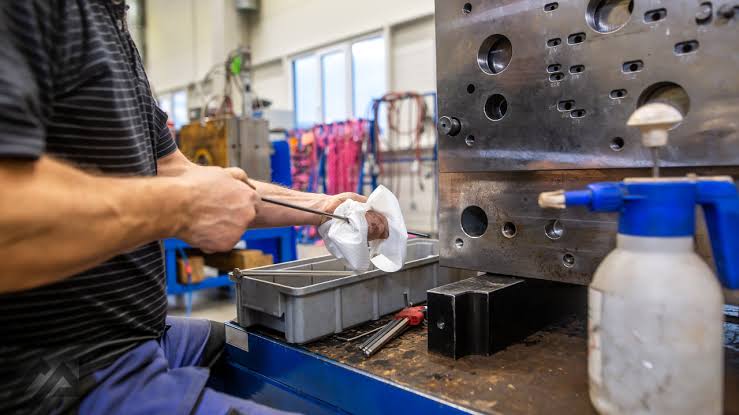
For sourcing and purchasing managers, maintaining consistent quality is one of the most important factors when selecting a plastic injection molding partner. A reliable manufacturer should have strong quality control procedures in place to ensure every part meets the required specifications, performance standards, and delivery expectations.
Working with an ISO 9001 certified manufacturer can provide additional confidence because the company follows an established quality management system focused on consistency, customer satisfaction, and continuous improvement.
From advanced inspection methods to process monitoring and traceability, here are four key strategies used to maintain quality in plastic injection molding.
Key Quality Control Strategies
- Inspection Techniques: Use advanced measurement equipment and inspection software to identify defects and dimensional variations.
- Process Monitoring: Monitor important production parameters in real time to maintain consistency throughout manufacturing.
- Traceability: Track materials, production stages, inspections, and finished parts to quickly identify and resolve quality issues.
- ISO 9001 Certification: Follow internationally recognized quality management practices to maintain reliable production standards.
1. Inspection Techniques
Inspection plays a critical role in maintaining the quality of injection molded parts. Manufacturers use different inspection tools and technologies to identify defects, dimensional variations, and other issues before products reach the customer.
Coordinate Measuring Machines (CMMs) are commonly used to verify precise dimensions and compare finished parts with engineering specifications. Optical comparators can help with visual and dimensional inspections, while laser scanners provide detailed measurements of complex components.
Automated vision systems and high-speed cameras can also inspect parts during different stages of production. These technologies help manufacturers identify defects more efficiently and maintain consistent quality across large production runs.
Effective injection molding design also supports quality control by considering factors such as material flow, wall thickness, draft angles, and part geometry before production begins. Addressing these factors during the design stage can help reduce manufacturing problems later.
Software used for Geometric Dimensioning and Tolerancing (GD&T) further helps manufacturers verify that components meet required engineering tolerances.
For sourcing managers, strong inspection procedures can reduce unexpected quality problems and provide greater confidence that every shipment meets the required specifications.
What Is a CMM?
A Coordinate Measuring Machine (CMM) is a precision inspection device used to measure the physical dimensions and geometry of manufactured components. It can compare measurements against engineering drawings or digital models to verify dimensional accuracy.
2. Process Monitoring
Consistent production requires careful monitoring of the molding process. Even small changes in temperature, pressure, cooling time, or cycle time can affect the final quality of an injection molded component.
Manufacturers use process monitoring systems to track important production parameters in real time. Supervisory Control and Data Acquisition (SCADA) systems, for example, can collect and display manufacturing data so operators can identify unusual changes quickly.
Statistical Process Control (SPC) is another important method used to analyze production data and identify trends before they become significant quality problems. By monitoring process variation, manufacturers can keep production within established limits.
Modern injection molding machines may also use automated process-control software to monitor and adjust specific parameters during production. This helps maintain consistency across high-volume manufacturing runs.
These practices are particularly important when producing components through Injection Molding Solutions, where repeatability and dimensional consistency are essential.
For customers, effective process monitoring means more reliable parts, fewer production interruptions, and greater consistency from one order to the next.
What Is Supervisory Control and Data Acquisition?
Supervisory Control and Data Acquisition, commonly called SCADA, is a system used to collect and monitor real-time data from manufacturing equipment and processes. It helps operators identify changes and respond to potential production issues quickly.
Using SPC to Improve Performance
SPC uses production data and statistical methods to monitor process performance. It can help manufacturers identify unusual variations, improve consistency, and take corrective action before defects become widespread.
3. Traceability
When a quality issue occurs, manufacturers need to know where and when the problem originated. A strong traceability system makes it easier to identify the materials, machines, processes, and production batches involved.
Many manufacturers use Enterprise Resource Planning (ERP) systems to record important production information. These systems can track materials from procurement through manufacturing and final delivery.
Barcode scanners and RFID technology can also be used to track materials and components throughout the production process. Manufacturing Execution Systems (MES) can provide additional records such as material certifications, inspection results, machine information, and production data.
Traceability is especially valuable for complex manufacturing processes such as Insert Molding and over molding. When different materials or components are combined during production, maintaining accurate records can help manufacturers investigate issues and identify the affected batches.
For applications requiring plastic insert molding, traceability can also help confirm that the correct inserts, materials, and production processes were used for each batch.
For sourcing managers, detailed production records provide greater visibility into manufacturing and make it easier to respond quickly if a quality concern occurs.
4. ISO 9001 Certification
Selecting an ISO 9001 certified plastic injection molding manufacturer can provide an additional level of confidence in its quality management practices.
ISO 9001 is an internationally recognized quality management standard. It focuses on areas such as customer requirements, process control, documentation, risk management, corrective actions, and continuous improvement.
Certified manufacturers may use Quality Management System (QMS) software to organize documentation, manage audits, monitor corrective actions, and track improvement activities.
Manufacturing methodologies such as Total Quality Management (TQM) and Kaizen can also support continuous improvement by encouraging teams to identify opportunities to improve processes and reduce waste.
For companies sourcing components through injection molding manufacturers, evaluating a supplier's quality management system can be an important part of the supplier selection process.
Quality management is also important when developing an insert injection molding process, where proper material selection, insert placement, mold design, and process control can directly influence the quality of the finished component.
An ISO 9001 certified supplier can help reduce the risk of inconsistent products, avoid unnecessary production delays, and support more predictable manufacturing outcomes.
Conclusion
Quality control is essential when sourcing plastic injection molded components. Manufacturers that combine advanced inspection technologies, process monitoring, detailed traceability, and established quality management practices can maintain greater consistency throughout production.
From injection molding design and plastic insert molding to complex Insert Molding and over molding applications, effective quality control should be considered throughout the entire manufacturing process.
For sourcing and purchasing managers, choosing an experienced supplier with reliable Injection Molding Solutions, strong inspection procedures, and an ISO 9001 certified quality management system can help support product quality, production timelines, and long-term supply chain reliability.