Best Battery Backup Power Supply for Home: A Complete Guide by Lumelio Renewable Power Systems
-

- Published Updated
- 68 views
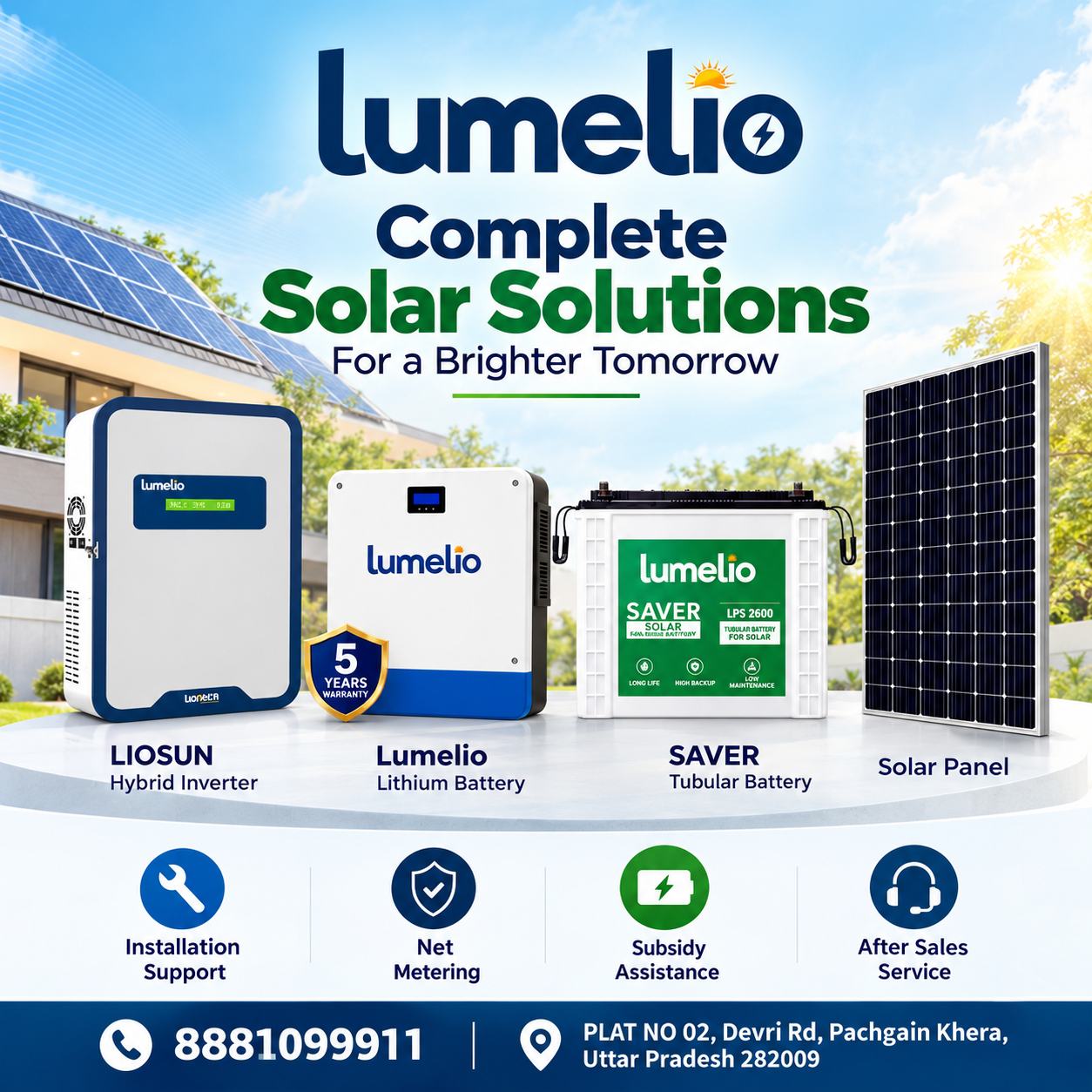
Power cuts can interrupt your daily routine, whether you are working from home, using household appliances, or spending time with your family. A reliable battery backup power supply for home helps you stay comfortable and continue your daily activities even when electricity is unavailable. Choosing the right battery can improve your backup experience and help you make better use of solar energy. Lumelio Renewable Power Systems offers battery and inverter solutions for homeowners looking for dependable power backup according to their needs and budget.
Why Is a Battery Backup Power Supply Important for Home?
A home battery backup system stores electrical energy and supplies power when the main electricity connection is unavailable. Depending on the battery capacity and inverter rating, it can support essential appliances such as lights, fans, televisions, Wi-Fi routers, and other household equipment. A suitable battery backup system helps reduce the inconvenience of frequent power cuts and provides greater flexibility for everyday electricity use. For homes with solar panels, a compatible battery can also store surplus solar energy generated during the day for use in the evening or during an outage.
Which Battery Is Best for Home Backup?
Choosing the best battery for your solar home system depends on your electricity consumption, required backup time, budget, available space, and maintenance preferences. Lead-acid batteries and lithium batteries are two common options for home inverter systems. Lead-acid batteries are often considered by homeowners who want a familiar and comparatively affordable backup solution. Lithium batteries, on the other hand, are becoming popular because of their compact design, lower routine maintenance requirements, and potential for a longer cycle life. Lumelio Renewable Power Systems can help customers explore suitable battery and inverter options based on their household power requirements.
Understanding Lead-Acid Batteries for Home Inverters
Lead-acid batteries have been used in home inverter systems for many years and remain an option for households looking for dependable backup power at an affordable initial cost. They are available in different capacities and can support common household appliances when paired with a compatible inverter. However, maintenance requirements, charging practices, battery weight, and expected service life should be considered before purchasing one. If you are searching for the Best lead acid battery near me, compare the battery specifications, warranty, service availability, and compatibility with your existing inverter. Selecting a battery that matches your daily electricity needs can help you get better value from your investment.
Benefits of Choosing a Lithium Battery for Home Backup
Lithium batteries offer a modern approach to home energy storage. They are generally lighter and more compact than comparable lead-acid batteries and often require less routine maintenance. Depending on the battery chemistry, design, and operating conditions, they can also provide a longer cycle life. Many lithium batteries include a battery management system that monitors important operating conditions and helps protect the battery. These features make lithium batteries worth considering for homes that want a convenient backup solution or plan to install a solar energy system. Before purchasing, homeowners should check the usable capacity, warranty, safety specifications, and compatibility with their inverter.
Is a 5kWh Lithium Battery Suitable for Your Home?
A 5kWh Lithium Battery can be a suitable choice for households that need more stored energy for their backup requirements. It may support several essential appliances for an extended period, depending on their combined power consumption and the system's usable capacity. For example, a household using a continuous load of 500 watts would theoretically consume 5kWh in ten hours. Actual backup time will usually be lower because of inverter losses, battery operating limits, and variations in appliance usage. A 5kWh battery may also be useful for storing surplus electricity from compatible solar panels, allowing homeowners to use more of their generated energy after sunset. Before choosing this capacity, calculate your household load and discuss your requirements with a qualified installer.
Why Consider a 2.56kWh Lithium Battery?
A 2.56kWh Lithium Battery can be a practical option for homes with moderate backup requirements. It may provide power for essential appliances such as LED lights, fans, a television, and a Wi-Fi router, depending on their combined load and the desired backup duration. For example, a continuous load of 200 watts would theoretically use 2.56kWh in approximately 12.8 hours, although actual operating time will be shorter after accounting for usable capacity and system losses. This battery size may appeal to homeowners who want a compact storage solution without purchasing more capacity than they need. Comparing your daily electricity consumption with the battery's usable energy can help you determine whether this option suits your home.
How to Choose the Best Battery Manufacturer
Choosing the right supplier is an important step towards reliable home backup. When comparing products from a Best Battery Manufacturer, consider the battery's rated capacity, quality, warranty, safety features, and after-sales support. For lithium batteries, check whether the product includes a suitable battery management system and whether its safety certifications and technical specifications meet your requirements. You should also confirm that the battery is compatible with your inverter, including its voltage, charging limits, and communication requirements where applicable. A low purchase price should not be the only deciding factor. Expected service life, usable capacity, maintenance, and replacement costs all contribute to the overall value of a battery system. Lumelio Renewable Power Systems encourages homeowners to understand these details before choosing a suitable battery backup solution.
The Role of Lithium Ion Battery Manufacturers in Solar Energy
Reliable energy storage begins with good battery design, quality materials, and proper manufacturing standards. Experienced lithium ion battery manufacturers develop products for different applications, including residential backup power and solar energy storage. Battery performance can vary according to chemistry, cell quality, temperature, charging practices, and the design of the battery management system. For this reason, buyers should compare technical specifications rather than relying only on price or advertised capacity. In solar installations, a compatible lithium battery can store excess electricity generated during the day and make it available when sunlight is limited. Choosing a battery designed for stationary energy storage and confirming compatibility with the inverter can help support safe and dependable operation.
How to Find the Right Battery Backup System for Your Home
Before selecting a battery, think about which appliances you want to operate during a power cut and how many hours you need them to run. A household that only needs lights, fans, and internet connectivity may require less capacity than a home that also wants to run a refrigerator or other high-power appliances. You should also consider the starting power required by appliances with motors or compressors, because this can be higher than their normal running consumption. Your inverter must be capable of handling the expected load safely. A qualified installer can assess your requirements, estimate the necessary battery capacity, and recommend a compatible system. These steps can help you avoid purchasing a battery that is either too small or unnecessarily large for your household.
Why Choose Lumelio Renewable Power Systems?
Lumelio Renewable Power Systems helps homeowners explore battery and inverter solutions for their power backup and solar energy needs. Whether you are considering a compact 2.56kWh lithium battery or a larger 5kWh lithium battery, the right choice should depend on your electricity usage, preferred backup duration, budget, and system compatibility. Understanding these factors before purchasing can help you make a more confident decision. With careful product selection and proper installation, a suitable battery backup system can provide greater convenience during power cuts and help households get more value from their energy setup.
Conclusion
Finding the best battery backup power supply for home starts with understanding your daily electricity needs. Lead-acid batteries can be an option for homeowners looking for a lower initial investment, while lithium batteries offer benefits such as compact construction, reduced routine maintenance, and potentially longer cycle life. A 2.56kWh lithium battery may suit basic backup requirements, whereas a 5kWh lithium battery provides greater energy storage for homes with higher demands. Before making a decision, compare battery specifications, usable capacity, warranty, inverter compatibility, and service support. Lumelio Renewable Power Systems can help homeowners explore suitable battery and inverter solutions for a more dependable home power backup experience.