How to Choose the Best Home Automation Company in Dubai: Practical Checklist and Comparison
-

- February 23rd, 2026
- 991 views

👉 Best IPTV Services 2026 – 10,000+ Channels, 4K Quality – Start Free Trial Now
Finding the best home automation company Dubai requires a clear evaluation of capabilities, standards compliance, and after-sales support. This guide explains decision criteria, provides a named evaluation checklist, and shows how to compare suppliers so selection is practical and defensible.
Quick guide: compare technical certifications, integration platforms, warranty and support, project process, and total cost of ownership. Use the Dubai Home Automation Evaluation (DHAE) Checklist in this article to score vendors and pick the best match for budget and lifestyle.
Detected intent: Commercial Investigation
best home automation company Dubai: what to evaluate
Choosing the best home automation company Dubai means assessing both product technology and the company's delivery process. Prioritize companies that show clear expertise in system integration, local code compliance, and ongoing support. A candidate should explain device interoperability (Zigbee, Z-Wave, Wi‑Fi, KNX), mobile and voice control, and maintenance options.
Key evaluation categories
- Standards and certifications — look for integrators familiar with KNX, ISO quality processes, or equivalent building automation standards.
- Integration capability — ability to connect HVAC, lighting, security, AV and solar or EV chargers into a single control layer.
- Project process — clear phases for design, demo, installation, commissioning and warranty.
- Local experience — track record in Dubai and UAE regulations, neighborhood electrical constraints, and local supplier networks.
- Aftercare and support — response SLAs, remote diagnostics, spare parts and firmware update policy.
Standards and proof points
Request documentation: system architecture diagrams, sample site commissioning reports, and references. For industry standards and interoperability guidance, refer to the KNX Association site for wiring and protocol practices: knx.org.
Dubai Home Automation Evaluation (DHAE) Checklist — a decision framework
Use this named framework to score proposals. Score items 1–5 and total to compare vendors side-by-side.
- Design & scope clarity — Are deliverables, diagrams, and user journeys included?
- Technology fit — Does the stack (controllers, protocols, cloud) match desired features?
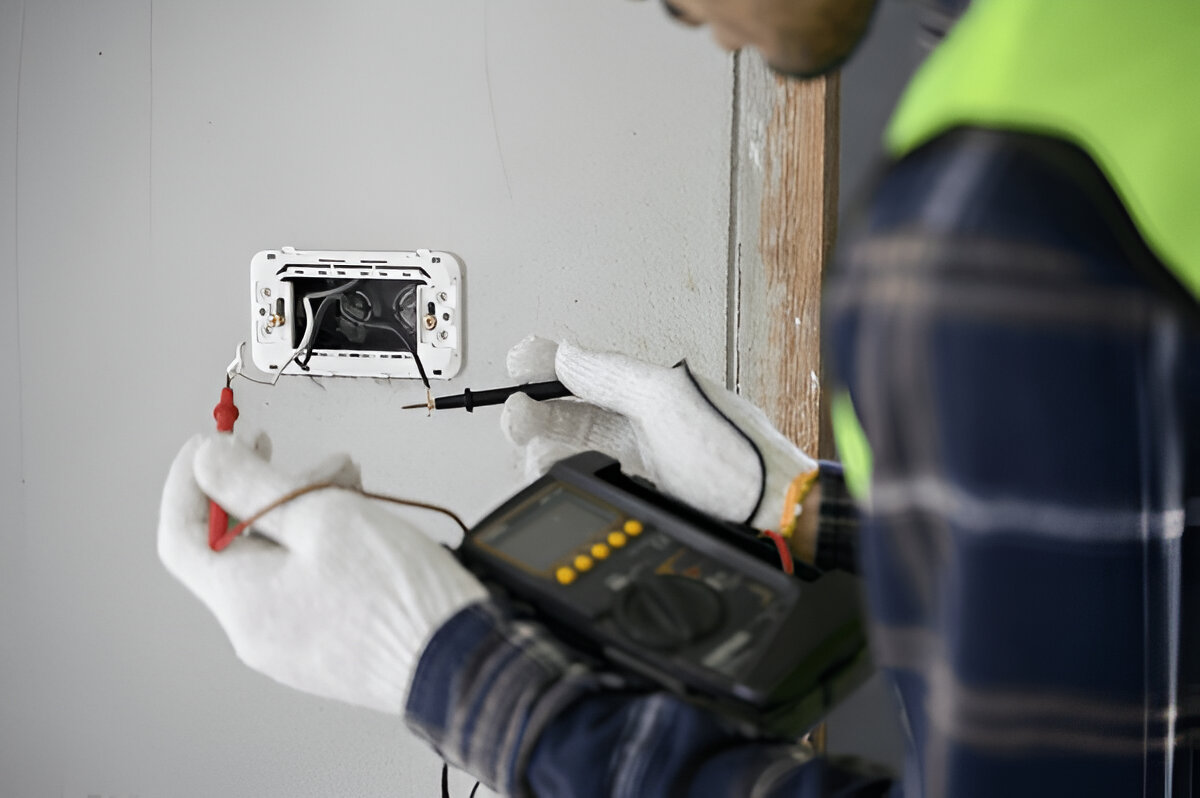
- Installation competence — Certified technicians, test plans, cable labeling?
- Commissioning & QA — Formal testing, client sign-off process?
- Warranties & SLAs — Hardware warranty length, remote support SLA?
- Total cost of ownership — Initial cost plus subscription, maintenance and upgrades.
Scoring and selection
Set minimum acceptable scores per category (for example, allocate heavier weight to Technology fit and Warranties for long-term value). Choose the vendor with the best weighted total or the one that meets mandatory minimums for safety and warranty.
Comparing home automation systems Dubai comparison: types and trade-offs
Home automation systems in Dubai typically follow three paths: cloud-first smart devices, hybrid local+cloud controllers, or full local-bus systems (KNX/ wired). Each has trade-offs.
Trade-offs and common mistakes
- Cloud vs. local — Cloud services offer ease of use but can incur subscription costs and privacy considerations; local systems reduce latency and dependency on vendors but may require higher upfront engineering.
- Under-specifying integration — Common mistake: planning only for lighting and later discovering AV or HVAC cannot be integrated without rework.
- Ignoring upgrade paths — Select systems with modular expansions and open APIs to avoid vendor lock-in.
Real-world example
Scenario: A villa in Dubai Marina needs automated shading, lighting, and pool control. Vendor A proposes a cloud-managed lineup of Wi‑Fi devices; Vendor B proposes a hybrid controller combining KNX for lights and shading with a cloud portal for remote access. Using the DHAE Checklist showed Vendor B scored higher on long-term reliability and integration, despite a higher initial cost. The homeowner chose Vendor B because serious automation required wired reliability and future-proofing.
Practical tips for hiring smart home installers UAE
- Ask for a site-specific design and a bill of materials — generic proposals hide integration gaps.
- Require a staged handover: demo, user training, and documentation in writing.
- Negotiate warranty terms tied to response times and replacement parts availability.
- Verify power and IT pre-works: networking, separate circuits for critical controllers, and labeling save time and cost during commissioning.
Core cluster questions
- How to compare costs between wired bus systems and cloud smart devices?
- What warranty and SLA terms matter most for home automation installations?
- Which integration protocols are best for future-proof smart homes?
- How to evaluate installers’ competence when choosing a smart home company?
- What are realistic timelines for a full-home automation installation in Dubai?
FAQ: Is this the best home automation company Dubai?
That depends on priorities. Use the DHAE Checklist to compare companies on design, technology fit, commissioning, and support. The "best" vendor meets required technical standards, demonstrates local experience, and offers transparent warranties and SLAs.
How much should a full home automation system cost in Dubai?
Costs vary widely by scope. Basic smart-device packages start low, while full-wired systems integrated with AV, HVAC and security typically represent a notable portion of a renovation budget. Use total cost of ownership (purchase + subscriptions + maintenance) when comparing proposals.
How long does a typical installation take?
Small retrofit projects can take days to weeks; full new-build integrations usually require several weeks for wiring, a week for devices, and several days for commissioning and user training. Schedule buffers for testing and tuning.
What are common mistakes when choosing smart home installers?
Common mistakes include selecting purely on price, skipping proof of local experience, failing to verify written warranties, and not requiring a documented integration plan. These lead to misaligned expectations and costly rework.
Which maintenance and support terms should be required?
Require response SLAs, firmware update policies, and an emergency contact. Ideally, include a minimum one-year warranty on installation labor and parts, with clearly defined extension options.