Best Type of Shilajit: Resin, Powder, or Extract — Evidence and Safety
-

- Published Updated
- 1,723 views
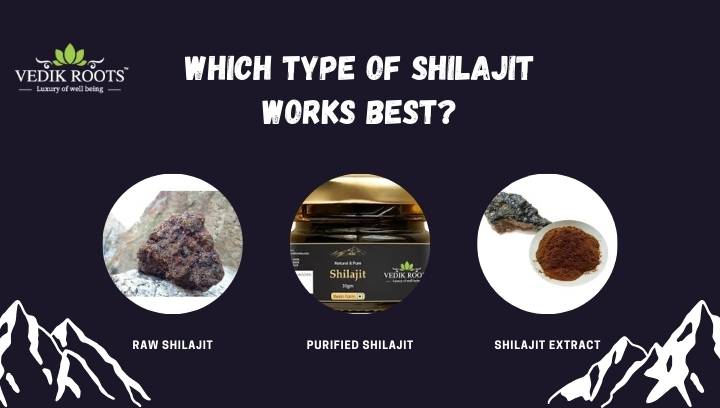
The question of which type of shilajit works best is common among people researching traditional supplements, bioactive fulvic acid content, and product safety. This article compares popular forms of shilajit—resin, powder, and extracts—explains laboratory testing and standardization, and outlines practical considerations for choosing a product.
- Resin (natural, sticky) is the traditional form and often retains full-spectrum compounds.
- Powders and extracts offer convenience and dosing control but vary in purity and concentration.
- Look for third-party testing for fulvic acid content and heavy metals; check a Certificate of Analysis (CoA).
- Regulatory oversight varies by country; in the U.S., shilajit is marketed as a dietary supplement and subject to FDA rules for supplements.
Types of shilajit and how they differ
Resin (traditional form)
Resin is an as-harvested, tar-like substance sometimes referred to as 'mineral pitch.' It is the most traditional form used in historic systems of medicine. Resins typically contain a complex mixture of fulvic and humic acids, trace minerals, and other plant-derived organic molecules. Because resin is less processed, it may retain a broader range of compounds found in the raw material.
Powder and dried extracts
Powdered shilajit is produced by drying and grinding resin or concentrated extract. Powders are easier to dose, mix, and encapsulate. Concentrated extracts may enrich for specific components such as fulvic acid, but manufacturing methods (heat, solvents, filtration) affect final composition and bioavailability.
Standardized extracts and capsules
Some products advertise a standardized percentage of fulvic acid or other markers. Capsules and tinctures provide convenience and consistent dosing but can mask variability in raw material quality. Standardization improves comparability if the testing behind it is transparent and reliable.
Purified vs raw
Raw or crude shilajit contains the full matrix of compounds. Purified products remove certain impurities (e.g., inorganic debris, microbial contaminants) and may concentrate targeted constituents. Purification methods influence both safety and the presence of desirable compounds.
How shilajit is processed and tested
Common analytical markers
Laboratory testing often measures fulvic acid percentage, total humic substances, moisture, and trace mineral profiles. Screening for heavy metals (lead, arsenic, mercury), pesticide residues, and microbial contamination is important for safety.
Third-party testing and Certificates of Analysis
Independent third-party labs provide Certificates of Analysis (CoA) that report analytical results. Look for CoAs that include methods (for example, ICP-MS for metals) and accredited lab identification. CoAs help confirm claimed fulvic acid content and absence of contaminants.
Regulatory context
Shilajit is typically sold as a dietary supplement in many countries. In the United States, for example, dietary supplements are overseen by the Food and Drug Administration (FDA) under labeling and safety rules, but the FDA does not pre-approve supplements for effectiveness before marketing. National and regional regulators vary; it is useful to consult official guidance from health authorities or scientific reviews when available.
Which Type of Shilajit Works Best?
Determining which type of shilajit works best depends on the goals, quality control, and testing behind the product rather than format alone. Resin may preserve a fuller chemical profile, while powders and extracts can offer consistent dosing and concentrated markers such as fulvic acid. Scientific literature on specific advantages of one format over another is limited; product quality, laboratory verification, and absence of contaminants are stronger predictors of potential benefit than format.
Research into shilajit and its components has examined fulvic acid and humic substances for various biochemical properties; reviews and studies are published in peer-reviewed journals. Consumers and researchers often consult indexed medical literature for details on composition and study results (PubMed review and studies).
Safety and quality considerations
Heavy metals and contaminants
Some raw shilajit sources can contain heavy metals, depending on geology and processing. Certified lab testing for lead, arsenic, cadmium, and mercury is important. Choose products that provide recent CoAs from accredited laboratories.
Purity and adulteration
Adulteration with fillers or synthetic compounds is a documented risk in botanical and mineral supplements. Transparent ingredient lists, batch numbers, and third-party verification reduce uncertainty about product contents.
Labeling and claims
Regulatory agencies often restrict disease treatment claims for supplements. Products should avoid unverified therapeutic claims. Evaluate product information for clear composition data rather than marketing promises.
How to choose and store shilajit
Choosing a product
Prioritize products with an accessible CoA, clear fulvic acid or humic substance reporting, and third-party lab accreditation. Consider the form that fits the intended use: resin for traditional preparation, powder or capsules for dosing convenience, and standardized extracts for consistent marker levels.
Storage and handling
Store shilajit in a cool, dry place away from direct sunlight. Resin can be sticky—use a dry spoon and reseal packaging to limit moisture exposure. Follow any manufacturer instructions on storage temperature and shelf life.
Conclusion
No single “best” form of shilajit fits all users. The most important factors are quality, testing, and transparent sourcing. Resin preserves a broad spectrum of constituents, powders and extracts provide convenience and standardized dosing, and reliable laboratory verification is essential regardless of format.
Frequently Asked Questions
Which type of shilajit works best?
Effectiveness depends on product quality and testing rather than format alone. Resin is traditional and often less processed; powders and extracts can offer consistent dosing and concentrated markers. Choose products with third-party Certificates of Analysis and testing for fulvic acid content and contaminants.
How important is fulvic acid percentage?
Fulvic acid is a commonly reported marker because it represents a key class of organic compounds in shilajit. A higher reported fulvic acid percentage indicates enrichment of that fraction, but overall product quality and absence of contaminants remain critical.
What tests should be on a Certificate of Analysis (CoA)?
Useful CoAs include tests for fulvic acid percentage, total humic substances, heavy metals (lead, mercury, arsenic, cadmium), microbiological contamination, and method details (e.g., ICP-MS for metals). Accreditation of the testing lab adds confidence.
Are there regional differences in shilajit?
Shilajit is sourced from different mountain ranges and geological settings (for example, the Himalaya, Altai, or Caucasus). Chemistry and mineral content can vary with source geology; reputable suppliers provide sourcing information and analytical data.