Black Marble: A Timeless Stone for Luxury Interiors
-

- April 22nd, 2026
- 7,793 views
Black marble has long been associated with luxury, elegance, and architectural sophistication. Designers and homeowners often choose this natural stone to create dramatic visual impact while maintaining a refined aesthetic. From sleek modern apartments to high-end commercial spaces, black marble offers a bold contrast that instantly elevates interiors.
Natural stone surfaces have always played a significant role in architecture. Among them, black marble stands out because of its deep color, distinctive veining patterns, and polished finish. These features allow it to function as both a structural material and a decorative centerpiece.
In contemporary design, black marble is frequently used for flooring, countertops, wall cladding, and statement furniture pieces. Architects appreciate the way it interacts with light, producing subtle reflections that enhance spatial depth. Whether used in minimalist interiors or classic luxury spaces, the stone delivers a balance of durability and visual appeal.
Understanding the characteristics, varieties, and applications of black marble helps homeowners and designers choose the right material for their projects.
What Is Black Marble? Understanding the Stone
Black marble is a natural metamorphic rock formed when limestone undergoes intense heat and pressure deep within the earth. This geological transformation produces dense stone with intricate veining patterns and unique mineral compositions.
Unlike synthetic materials, each slab of black marble is distinct. Natural mineral deposits create patterns ranging from delicate white lines to dramatic golden streaks. These variations give the stone its artistic character.
Most high-quality black marble is extracted from quarries in regions known for natural stone production, including Italy, Spain, and India. These locations produce some of the world’s most sought-after slabs used in architecture and luxury design.
Professionals typically polish marble surfaces to highlight the stone’s natural depth and patterns. The polishing process enhances the reflective quality of the surface, making it ideal for elegant interiors.
Because of its distinctive appearance and durability, black marble continues to be a preferred material for high-end construction and interior projects.
Popular Types of Black Marble Around the World
Different regions produce unique varieties of black marble, each with its own visual identity and structural characteristics.
Nero Marquina Marble
One of the most recognizable varieties is Nero Marquina Marble. Quarried primarily in northern Spain, this marble features a deep black background with striking white veins.
Interior designers often select Nero Marquina for luxury flooring, fireplace surrounds, and statement countertops. The strong contrast between black and white veining makes it particularly effective in modern minimalist interiors.
Sahara Noir Marble
Another premium variety is Sahara Noir Marble. This stone displays bold gold and white veining that runs across a rich black surface.
Sahara Noir is frequently used in upscale hotels, boutique stores, and high-end residential projects. Its dramatic pattern allows designers to create visually striking feature walls or decorative panels.
Other Premium Dark Stones
Although technically not marble, stones like Black Galaxy Granite are sometimes used as alternatives in similar applications. Granite tends to be harder and more resistant to scratching, making it suitable for kitchens with heavy daily use.
Choosing between these materials often depends on design preferences, durability requirements, and budget considerations.
Why Black Marble Is Popular in Modern Interior Design
Interior design trends consistently favor materials that combine aesthetics with functionality. Black marble fits perfectly into this category because it offers several design advantages.
One of the most notable benefits is visual contrast. Dark marble surfaces create a strong backdrop that highlights lighter furniture, metal fixtures, and decorative lighting.
Another reason for its popularity is versatility. Black marble works well across multiple design styles, including:
- Minimalist interiors
- Contemporary luxury spaces
- Industrial-style apartments
- Classic European-inspired designs
Designers also appreciate the way black marble pairs with other materials such as brass, stainless steel, glass, and natural wood. These combinations allow for creative architectural compositions.
Lighting also plays a major role in showcasing marble surfaces. Under soft lighting, the polished stone reflects subtle highlights that emphasize its natural veining patterns.
Because of these qualities, black marble often becomes a focal point in modern interior projects.
Best Applications of Black Marble in Homes and Commercial Spaces
Black marble can transform ordinary interiors into visually striking environments. Its versatility allows it to be used in multiple architectural elements.
Flooring
Black marble flooring is often installed in entryways, living rooms, and luxury commercial spaces. The polished surface reflects light, making large spaces appear more open and sophisticated.
Hotels, corporate offices, and shopping centers frequently use marble flooring to create a premium first impression.
Kitchen Countertops
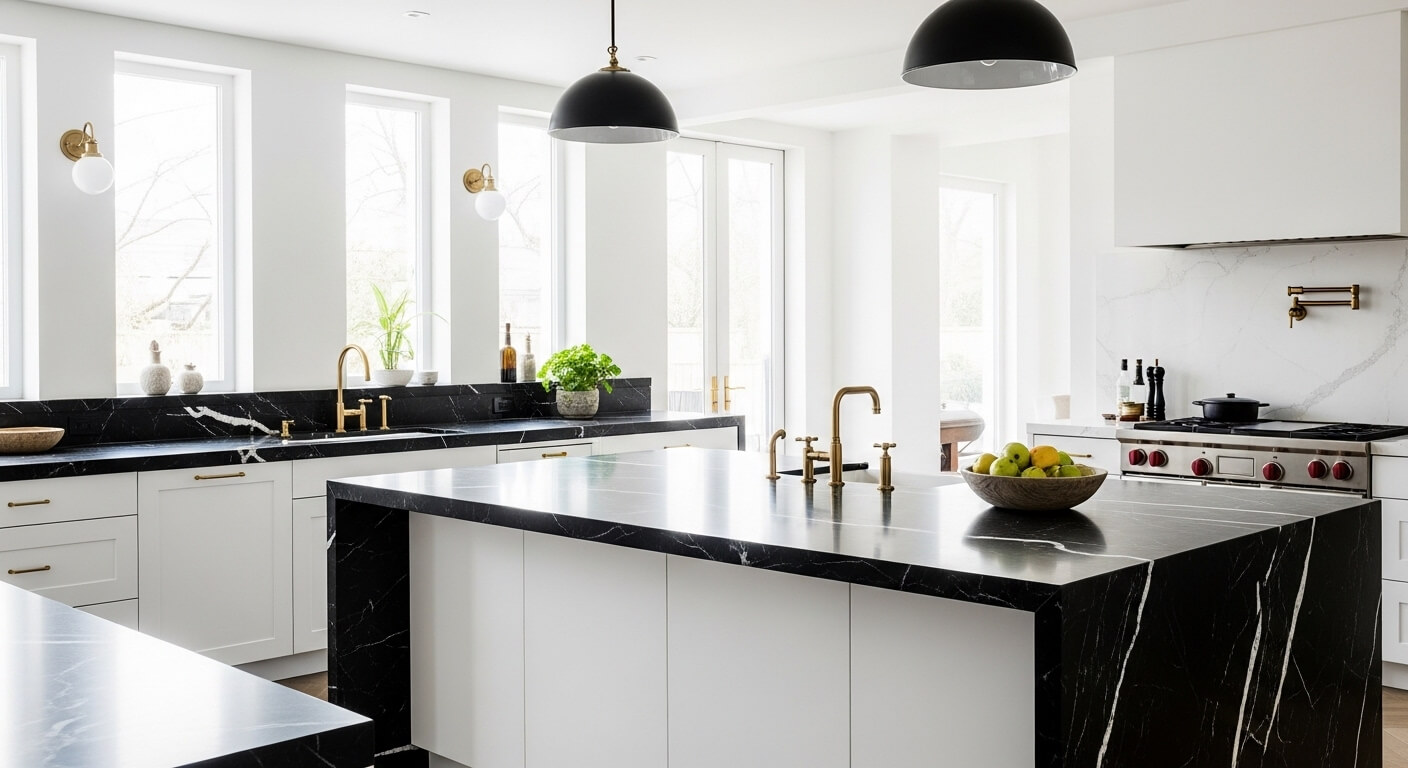
Kitchen countertops made from black marble offer a dramatic yet refined appearance. The stone pairs well with white cabinets, metallic fixtures, and minimalist design elements.
Many homeowners choose marble countertops to create a luxury kitchen aesthetic.
Bathroom Surfaces
Bathrooms benefit greatly from marble surfaces. Black marble tiles or slabs can be used for:
- Vanity countertops
- Shower walls
- Bathtub surrounds
The result is a spa-like environment that feels elegant and relaxing.
Feature Walls and Decorative Panels
One of the most visually impactful uses of black marble is in feature walls. Large marble slabs with continuous veining can transform a plain wall into a natural art piece.
These installations are commonly seen in hotel lobbies, luxury residences, and high-end retail stores.
Maintenance and Care for Black Marble Surfaces
Although black marble is durable, proper maintenance helps preserve its beauty over time.
Natural marble is slightly porous, which means it can absorb liquids if left unsealed. Regular sealing protects the stone from stains and moisture damage.
Daily cleaning usually requires only a soft cloth and mild pH-neutral cleaner. Harsh chemicals should be avoided because they can damage the polished finish.
Professional maintenance practices include:
- periodic sealing of marble surfaces
- polishing to restore shine
- using coasters and protective mats
- cleaning spills quickly to prevent stains
With proper care, black marble surfaces can maintain their luxurious appearance for decades.
Black Marble vs Other Natural Stones
Many homeowners compare black marble with materials like granite or engineered quartz before making a decision.
Marble is valued for its elegant veining patterns and timeless visual appeal. Granite, on the other hand, is typically harder and more resistant to scratches.
Engineered quartz offers uniform patterns and low maintenance, but it lacks the natural character that marble provides.
Designers often recommend marble for spaces where aesthetics and luxury are top priorities, while granite may be preferred for heavy-duty kitchen environments.
Choosing the Right Black Marble for Your Project
Selecting the right marble involves several important considerations.
First, examine the veining patterns. Some slabs feature subtle lines, while others display bold dramatic patterns.
Second, consider the finish. Polished marble provides a glossy appearance, while honed finishes create a softer matte look.
Finally, evaluate the intended application. Flooring, countertops, and wall cladding may require different thicknesses and finishes.
Consulting experienced stone suppliers and architects helps ensure that the selected marble suits both the design vision and functional requirements of the project.
Frequently Asked Questions (FAQs)
1. Is black marble suitable for kitchen countertops?
Yes, black marble can be used for kitchen countertops, but it should be sealed properly to protect it from stains and acidic substances.
2. Is black marble more expensive than other stones?
Pricing varies depending on the variety and origin. Premium types like Nero Marquina or Sahara Noir are often more expensive due to their rarity and appearance.
3. Does black marble scratch easily?
Marble is softer than granite, so it can develop scratches if not maintained carefully. Proper sealing and gentle cleaning help reduce damage.
4. Can black marble be used for outdoor spaces?
It is typically recommended for indoor use. Outdoor exposure to weather conditions may affect the surface over time.
5. How often should black marble be sealed?
Most experts recommend sealing marble surfaces every 6–12 months depending on usage.
6. What design styles work best with black marble?
Black marble complements modern, minimalist, industrial, and luxury interior design styles.
7. Is black marble durable for flooring?
Yes, when installed and maintained correctly, black marble flooring can last for many years while maintaining its visual appeal.