Can Non-Healthcare Workers Take a BLS Course?
-

- Published Updated
- 6,460 views
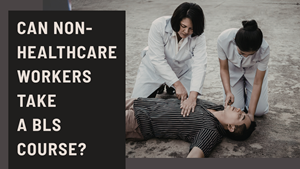
Imagine you are at a local coffee shop, enjoying your morning brew, when the person at the next table suddenly collapses. They aren't breathing, and their lips are turning blue. In that split second, what do you do?
Most people freeze. But if you have the right training, you step in, start chest compressions, and save a life before the paramedics even arrive. When we think of life-saving interventions, we usually picture doctors, nurses, and paramedics. But medical emergencies don’t just happen in hospitals. They happen in grocery stores, gyms, schools, and living rooms. This reality begs a common question: can non-healthcare workers take a BLS course?
The short answer is a resounding yes. You do not need a medical degree, a nursing license, or any prior healthcare experience to enroll in a Basic Life Support (BLS) class. In this post, we’ll break down exactly what BLS is, why everyday people are signing up for these courses, and how you can get certified.
What Exactly is a BLS Course?
Before diving into the logistics, it helps to understand what BLS actually entails. BLS stands for Basic Life Support. It is a foundational level of medical care used to treat individuals experiencing life-threatening illnesses or injuries until full medical care is available.
A standard BLS course curriculum—often governed by organizations like the American Heart Association (AHA) or the Red Cross—covers a variety of critical skills. These include:
- High-quality Cardiopulmonary Resuscitation (CPR) for adults, children, and infants.
- The proper use of an Automated External Defibrillator (AED).
- Relief of choking (foreign-body airway obstruction).
- Working effectively in a multi-rescuer team.
- Rescue breathing and bag-valve-mask (BVM) ventilation techniques.
While standard CPR classes are heavily geared toward the general public, BLS courses dive a bit deeper into the mechanics of resuscitation and team dynamics. But again, this deeper knowledge is not locked behind a medical license.
Can Non-Healthcare Workers Take a BLS Course?
Let’s address the core question head-on: can non-healthcare workers take a BLS course?
Absolutely. Training centers across the United States actively encourage non-medical individuals to take BLS classes. While the course was originally designed with healthcare providers in mind—giving them a standardized baseline of emergency care knowledge—the curriculum is highly accessible to anyone willing to learn.
There are no prerequisites. You don’t need to know medical terminology, and you don’t need a background in anatomy. The instructors are trained to break down complex concepts into simple, actionable steps. Whether you are an office manager, a teacher, or a stay-at-home parent, the step-by-step nature of BLS training is designed to be easily absorbed and executed by anyone.
Who Should Consider BLS Certification?
While anyone can take a BLS course, there are certain groups of non-healthcare workers who absolutely should consider it. If you fall into any of the following categories, having a BLS certification is a massive asset.
1. Fitness Professionals and Coaches
Gyms, CrossFit boxes, and yoga studios are hotspots for sudden cardiac arrest. Pushing the body to its physical limits can sometimes trigger undiagnosed heart conditions. Personal trainers and fitness instructors have a duty of care to their clients. Having a BLS certification ensures that if a client collapses mid-workout, the trainer can immediately initiate high-quality CPR and use the gym’s AED.
2. Teachers and School Staff
Schools are responsible for the safety of hundreds of children every day. While school nurses are the primary medical responders, they can't be everywhere at once. Teachers, playground monitors, and coaches who hold a BLS certification can act immediately if a student chokes, has an asthma attack that leads to respiratory failure, or suffers a cardiac event.
3. Construction and Industrial Workers
Industrial job sites are inherently dangerous. Heavy machinery, heights, and electrical equipment create environments where severe accidents can occur. In the time it takes for an on-site medic or local EMS to arrive at a sprawling construction site, a worker could bleed out or suffer irreversible brain damage from a lack of oxygen. Site managers and crew members trained in BLS can bridge that critical gap.
4. Childcare Providers and Nannies
Parents are notoriously picky about who they trust with their children. A nanny or daycare worker who can confidently say they are BLS certified has a distinct edge in the job market. More importantly, if an infant chokes on a toy or a toddler has a severe allergic reaction that compromises their airway, a BLS-certified provider knows exactly how to perform infant CPR and back blows.
5. Office Workers and HR Managers
Workplace safety isn't just about ergonomic chairs and fire drills. HR managers who oversee employee wellness programs should strongly consider bringing BLS training into the office. Sudden cardiac arrest doesn't care if you are wearing a hard hat or a business suit. Having staff members who can respond in the first few minutes of an emergency drastically increases survival rates.
BLS vs. Standard CPR: What’s the Difference?
If you are wondering why a non-medical person should opt for BLS over a standard community CPR class, it comes down to depth and team dynamics.
Standard CPR classes (often called Heartsaver courses) are fantastic. They teach you how to recognize an emergency, call 911, and perform hands-only CPR. However, they generally focus on single-rescuer scenarios.
BLS, on the other hand, teaches you how to work as part of a team. In a real emergency, you will likely not be alone. BLS teaches the "Chain of Survival" and how to rotate compressors so you don't get fatigued. It also covers the use of a Bag-Valve-Mask (BVM), which is a device used to provide positive pressure ventilation. Even if you don’t have a BVM at your office, understanding how ventilations work and how to coordinate with another rescuer makes you far more effective in a crisis.
So, when people ask, "can non-healthcare workers take a BLS course?", the follow-up question is usually, "is it too advanced?" The answer is no. It simply makes you a more capable, well-rounded lifesaver.
What to Expect During the Training
If you’ve never taken a medical certification class, the idea of taking a BLS course can be slightly intimidating. Don't let it be. The modern BLS course is incredibly user-friendly.
Typically, the course takes about 4 to 5 hours to complete. Many training centers offer a "blended" learning option, where you complete the cognitive coursework online at your own pace, followed by a shorter, in-person skills session.
During the in-person portion, you will work with specialized manikins. These aren't the foam dummies you might remember from high school health class. Modern manikns are equipped with feedback devices that measure how deep and how fast you are pushing. If you aren't pushing hard enough, the manikin will let you know. This immediate feedback ensures that by the time you leave the class, your muscle memory is perfectly calibrated to the American Heart Association's guidelines (pushing at least 2 inches deep into the chest at a rate of 100 to 120 compressions per minute).
At the end of the course, there is a brief written exam and a practical skills test. The instructors want you to pass. They are there to guide you, correct your form, and build your confidence. Once you pass, you will receive a digital certification card valid for two years.
The Benefits of BLS for Non-Medical Professionals
Why go through the effort? Why take a course designed for medical professionals when you aren't one?
First, it builds immense confidence. Panic is the enemy in an emergency. When you know exactly what to do, your brain shifts from panic mode to action mode. You become the calm in the storm.
Second, it makes you highly employable. In today’s job market, employers are looking for candidates who go above and beyond. Having "BLS Certified" on your resume tells an employer that you are proactive, responsible, and capable of handling high-stress situations. For managers and business owners, having BLS-certified employees can even positively impact liability insurance and workplace safety ratings.
Finally, and most importantly, it prepares you for the worst day of your life. Over 350,000 out-of-hospital cardiac arrests happen in the US every year. The vast majority happen at home. If you perform BLS on a loved one, you double or even triple their chances of survival.
Conclusion
To bring it all full circle: can non-healthcare workers take a BLS course? Yes, they absolutely can, and they absolutely should.
You don't need to wear scrubs to save a life. Basic Life Support is exactly that—basic. It relies on simple, proven techniques to keep blood flowing to the brain and heart until advanced help arrives. By taking a BLS course, you are equipping yourself with the ultimate insurance policy. You hope you never have to use it, but if the worst happens, you won't be a helpless bystander. You will be a lifesaver.
Find a local American Heart Association or Red Cross training center near you, sign up for a weekend class, and get certified. The life you save might just be someone you love.