Bogie Hearth Furnaces: Applications, Benefits and How They Work
-
- Published Updated
- 3,339 views
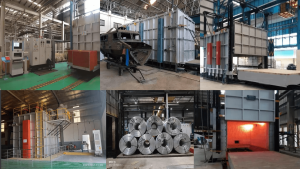
In industries where large and heavy metal components need to undergo heat treatment, choosing the right furnace is essential for achieving consistent results. Components such as large castings, forgings, fabricated structures, steel parts and heavy machinery components often cannot be easily processed in conventional furnaces. This is where Bogie Hearth Furnaces become an important solution for industrial heat treatment applications.
A bogie hearth furnace is a type of industrial furnace designed with a movable hearth, commonly known as a bogie. The movable hearth allows heavy components to be loaded outside the furnace and then transported into the heating chamber. This arrangement makes the furnace particularly useful for industries handling large or heavy workpieces.
What Is a Bogie Hearth Furnace?
A bogie hearth furnace consists of a heating chamber and a movable hearth mounted on wheels or a suitable movement mechanism. The components to be heat treated are placed on the hearth before it is moved into the furnace.
Once the bogie enters the furnace chamber, the furnace doors are closed and the programmed heating cycle begins. Depending on the application, the furnace can be operated at different temperatures and with specific heating and cooling cycles.
The furnace can be designed with electric heating elements or fuel-fired heating systems depending on the required temperature, furnace size, production capacity and operating conditions.
How Does a Bogie Hearth Furnace Work?
The operation of a bogie hearth furnace is relatively straightforward.
First, the components are loaded onto the movable hearth using an overhead crane, forklift or other suitable material-handling equipment. Once the loading process is completed, the bogie is moved toward the furnace chamber.
The hearth then enters the furnace, and the furnace door is closed to minimize heat loss. The heating system gradually raises the temperature according to the programmed heat treatment cycle.
Temperature sensors and controllers continuously monitor the furnace temperature. Depending on the process, the components may be heated, soaked at a specific temperature and then cooled according to the required treatment.
After the cycle is completed, the bogie is moved out of the furnace and the treated components can be unloaded.
This loading arrangement is particularly useful when dealing with components that are too large, long or heavy for fixed-hearth furnace designs.
Applications of Bogie Hearth Furnaces
Bogie hearth furnaces are used in many industries where large components require controlled heating or heat treatment. Some common applications include:
Annealing of steel components
Normalizing of forgings and castings
Hardening of suitable metal components
Tempering after hardening
Stress relieving of fabricated structures
Post-weld heat treatment
Heat treatment of heavy castings
Heat treatment of large forgings
Processing of fabricated steel structures
Industrial component preheating
The exact furnace configuration depends on the material, component dimensions, required temperature and heat treatment cycle.
Major Advantages of Bogie Hearth Furnaces
One of the biggest advantages of bogie hearth furnaces is their ability to handle large and heavy components. The movable hearth provides a convenient method of transferring workpieces into and out of the furnace.
1. Easy Loading and Unloading
Large components can be loaded directly onto the movable hearth outside the furnace. This can simplify material handling and reduce the difficulty associated with loading oversized workpieces.
2. Suitable for Heavy Components
Bogie hearth furnaces can be engineered with different hearth capacities according to the weight of the components. This makes them suitable for heavy engineering and manufacturing applications.
3. Flexible Heat Treatment
A single furnace can be configured for different processes such as annealing, normalizing, tempering and stress relieving, depending on the required operating conditions.
4. Controlled Temperature
Modern industrial furnaces can incorporate temperature controllers, thermocouples and multi-zone heating systems. These features help maintain the required temperature during different stages of the heat treatment cycle.
5. Customizable Furnace Design
The furnace dimensions, hearth capacity, heating arrangement, operating temperature and control system can be selected according to the customer's production requirements.
Electric vs Fuel-Fired Bogie Hearth Furnaces
Bogie hearth furnaces can be manufactured with different heating systems.
Electric bogie hearth furnaces use electrical heating elements to generate heat. They can provide accurate temperature control and are commonly considered where precise temperature management is important.
Fuel-fired furnaces use fuels such as gas or other suitable industrial fuels. These systems can be useful for large furnaces and applications where high heating capacity is required.
The selection between electric and fuel-fired heating depends on several factors, including energy availability, operating temperature, production requirements, furnace size and operating cost.
Factors to Consider Before Buying a Bogie Hearth Furnace
Selecting a furnace should be based on the actual heat treatment requirements rather than simply choosing a standard furnace size.
Important factors include:
Component Size: The length, width and height of the largest workpiece should be considered when determining furnace chamber dimensions.
Component Weight: The total loading weight determines the required bogie and hearth capacity.
Operating Temperature: The maximum process temperature should be determined before selecting the heating system and insulation.
Heat Treatment Process: Annealing, hardening, tempering, normalizing and stress relieving may require different heating and cooling cycles.
Production Capacity: Batch size and the number of cycles required per day can influence furnace dimensions and heating capacity.
Temperature Uniformity: Applications requiring strict temperature uniformity may require multi-zone heating and advanced temperature control systems.
Material Handling: The loading and unloading method should be considered to ensure safe movement of heavy components.
Why Choose Experienced Bogie Hearth Furnace Manufacturers?
Choosing experienced Bogie Hearth Furnace Manufacturers in India can be important when the furnace needs to be customized for large or unusual components. A manufacturer with industrial furnace experience can help determine suitable furnace dimensions, heating capacity, insulation, hearth load capacity and temperature control requirements.
It is also useful to evaluate the manufacturer's design capabilities, manufacturing experience, testing procedures, installation support and after-sales service before making a purchase.
Companies looking for detailed information about industrial bogie hearth furnace systems can explore the JR Furnace bogie hearth furnace page for additional information about applications and furnace configurations.
Conclusion
Bogie Hearth Furnaces are widely used for industrial applications involving large and heavy components that require controlled heating and heat treatment. Their movable hearth design simplifies the loading and unloading of heavy workpieces, while customizable heating systems and temperature controls allow the furnace to be adapted to different production requirements.
Before selecting a bogie hearth furnace, industries should carefully evaluate component dimensions, loading weight, operating temperature, heat treatment cycle, production capacity, heating method and temperature uniformity requirements.
With the right furnace design and appropriate operating parameters, bogie hearth furnaces can provide a practical and flexible solution for heat treatment applications across heavy engineering, steel, forging, casting and fabrication industries.