How to Check Whether It Is a Bruised Toenail or Melanoma?
-

- Published Updated
- 1,845 views
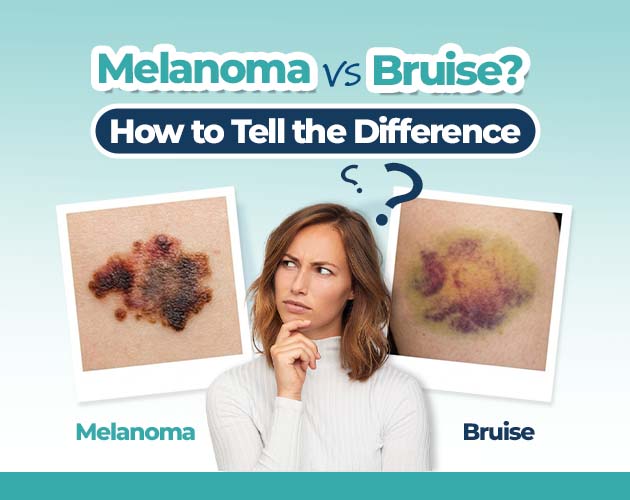
Noticing a dark spot, streak, or discoloration beneath your toenail can be concerning. In most cases, subungual discoloration stems from minor physical trauma such as stubbing a toe, dropping a heavy object, or wearing tight footwear during long walks or runs. This common condition is known as a subungual hematoma, or a bruised toenail.
However, dark marks under the nail can occasionally signal a much more serious underlying condition: subungual melanoma. This rare form of skin cancer originates in the nail matrix the tissue beneath the cuticle responsible for producing the nail plate.
Because a bruised toenail or melanoma can appear similar in their early stages, knowing how to evaluate the mark, track its progression, and spot clinical warning signs is critical for your health and peace of mind.
What Causes Dark Spots Under the Toenail?
To tell these conditions apart, it helps to understand what is happening biologically beneath the nail plate.
Subungual Hematoma (Bruised Toenail)
A subungual hematoma is an accumulation of blood beneath the nail. Physical impact ruptures small capillaries in the nail bed, causing blood to pool in the space between the nail plate and the underlying tissue.
Primary Cause: Acute trauma (impact injury) or micro-trauma (repetitive friction from running or tight shoes).
Behavior: The pooled blood becomes trapped. As the healthy nail plate grows outward over time, the discolored spot moves toward the free edge of the toe.
Subungual Melanoma
Subungual melanoma is a rare subtype of acral lentiginous melanoma (ALM). Unlike cutaneous melanomas caused by ultraviolet (UV) radiation from sunlight, subungual melanoma develops independently of sun exposure when melanocytes in the nail matrix undergo malignant transformation.
Primary Cause: Genetic factors and abnormal cellular proliferation in the nail matrix.
Behavior: The pigment-producing cells continuously generate melanin at the root of the nail. As a result, the discoloration remains fixed at the nail matrix and creates a dark vertical band that persists as the nail grows.
Step-by-Step: How to Check Your Toenail at Home?
If you discover an unexpected dark mark on your toenail, follow this systematic visual check to evaluate its characteristics:
[Step 1: Trace Trauma History] ➔ [Step 2: Observe Color & Shape] ➔ [Step 3: Track Outward Growth] ➔ [Step 4: Check Surrounding Skin]
1. Evaluate Your Injury History
Reflect on the past 2 to 4 weeks. Did you stub your toe, drop something heavy, or complete a long run in snug shoes?
Bruise: Almost always linked to a clear incident or physical exertion.
Melanoma: Appears spontaneously without any injury or physical cause.
2. Examine the Shape and Pigmentation
Look closely at the outline and hue of the discoloration.
Bruise: Typically presents as a rounded, oval, or irregular dark spot or pool of blood. Colors range from deep red and purple to dark brown or black.
Melanoma: Commonly presents as a continuous vertical stripe or band extending from the cuticle (proximal nail fold) down to the tip of the nail plate. Color may be uneven, featuring mixed shades of brown, black, or gray.
3. Track the Mark Over Time (The Growth Test)
The most reliable way to tell the difference at home is to monitor the spot as your toenail grows. Toenails grow slowly roughly 1 to 2 millimeters per month.
The Bruise Pattern: Take a clear photograph of your toenail with good lighting. Wait 3 to 4 weeks and take another photo. If the dark spot moves outward toward the tip of the toe, leaving clear, healthy nail growth behind it near the cuticle, it is a healing bruise.
The Melanoma Pattern: If the dark mark remains anchored at the cuticle line, expands in width, or grows darker over time, it is not a standard hematoma.
4. Inspect the Surrounding Skin (Hutchinson's Sign)
Examine the skin immediately surrounding the toenail, including the cuticle and lateral nail folds.
Hutchinson's Sign: When dark pigment spreads from the nail bed onto the surrounding cuticle or skin, this is known as Hutchinson's sign. It is a key clinical indicator of subungual melanoma that requires immediate medical evaluation.
For a broader perspective on differentiating skin cancers from traumatic injuries across different areas of the body, read this comprehensive clinical guide on melanoma or bruise key differences, which covers diagnostic criteria and visual comparisons.
Bruised Toenail vs. Subungual Melanoma: Key Differences
Feature |
Bruised Toenail (Hematoma) |
Subungual Melanoma |
Primary Trigger |
Physical trauma or friction |
Spontaneous cellular alteration |
Shape / Pattern |
Spot, blob, or irregular pool |
Vertical band/stripe from cuticle to tip |
Movement |
Moves outward as the nail grows |
Remains anchored at the nail matrix |
Surrounding Skin |
Skin around the nail remains normal |
Pigment may spill onto cuticle (Hutchinson's sign) |
Pain Level |
Sore or throbbing initially, then subsides |
Usually painless unless advanced |
Nail Structure |
Nail remains intact (unless heavy impact) |
Nail may split, crack, or lift (onycholysis) |
Common Misconceptions to Avoid
Myth: "I don't get much sun on my feet, so it can't be skin cancer."
Subungual melanoma is not triggered by UV radiation. It can develop on areas shielded from sunlight, including toenails and soles of the feet.Myth: "Dark skin tones don't get nail melanoma."
While cutaneous melanoma is more common in lighter skin types, acral lentiginous melanoma (including subungual melanoma) accounts for a higher percentage of melanoma diagnoses in individuals with darker skin tones, including African, Asian, and Hispanic populations.Myth: "If it doesn't hurt, it must be harmless."
Subungual hematomas are often painful immediately after an injury. Conversely, early-stage melanoma is usually completely painless. Painlessness should never be assumed to mean a spot is harmless.
When to Consult a Podiatrist or Dermatologist?
Schedule a professional medical examination if you notice any of the following warning signs:
A dark line or spot under the nail that does not move outward as the nail grows over 4 to 6 weeks.
A vertical pigmented band that widens, darkens, or changes shape.
Pigment spreads onto the skin surrounding the nail (Hutchinson's sign).
The toenail begins lifting from the nail bed, cracking, or splitting without clear physical injury.
You have a dark mark under a nail without any history of trauma or pressure.
A specialist can examine the nail matrix using a dermatoscope. If the lesion appears suspicious, a small biopsy of the nail matrix can be performed to yield a definitive diagnosis.
Frequently Asked Questions
1. How long does it take for a bruised toenail to grow out completely?
Toenails grow at an average rate of 1.5 to 2 millimeters per month. Depending on where the injury occurred on the nail bed, a bruised toenail can take anywhere from 6 to 12 months to grow out completely and be replaced by clear nail tissue.
2. Can a bruised toenail cause the nail to fall off?
Yes. Severe hematomas create pressure beneath the nail plate. If enough blood accumulates, it can separate the nail plate from the underlying bed (onycholysis), causing the damaged nail to eventually loosen and shed.
3. What does early subungual melanoma look like?
Early subungual melanoma often presents as a faint brown or black vertical stripe running down the length of the nail. Over time, the stripe may widen, darken unevenly, or cause the nail plate to split.
4. Are there other conditions that cause dark lines under toenails?
Yes. Other common causes include longitudinal melanonychia (benign pigment production), fungal nail infections (onychomycosis), bacterial infections, or side effects from certain prescription medications (such as chemotherapy agents).
Summary
Differentiating between a bruised toenail and melanoma comes down to tracking how the mark behaves over time. A bruise is linked to physical injury, fades, and moves outward as the nail grows. Subungual melanoma appears spontaneously, stays anchored at the cuticle, and may widen or spill onto the surrounding skin.