Bucket Bath or Shower: Which Uses More Hot Water?
-

- Published Updated
- 1,217 views
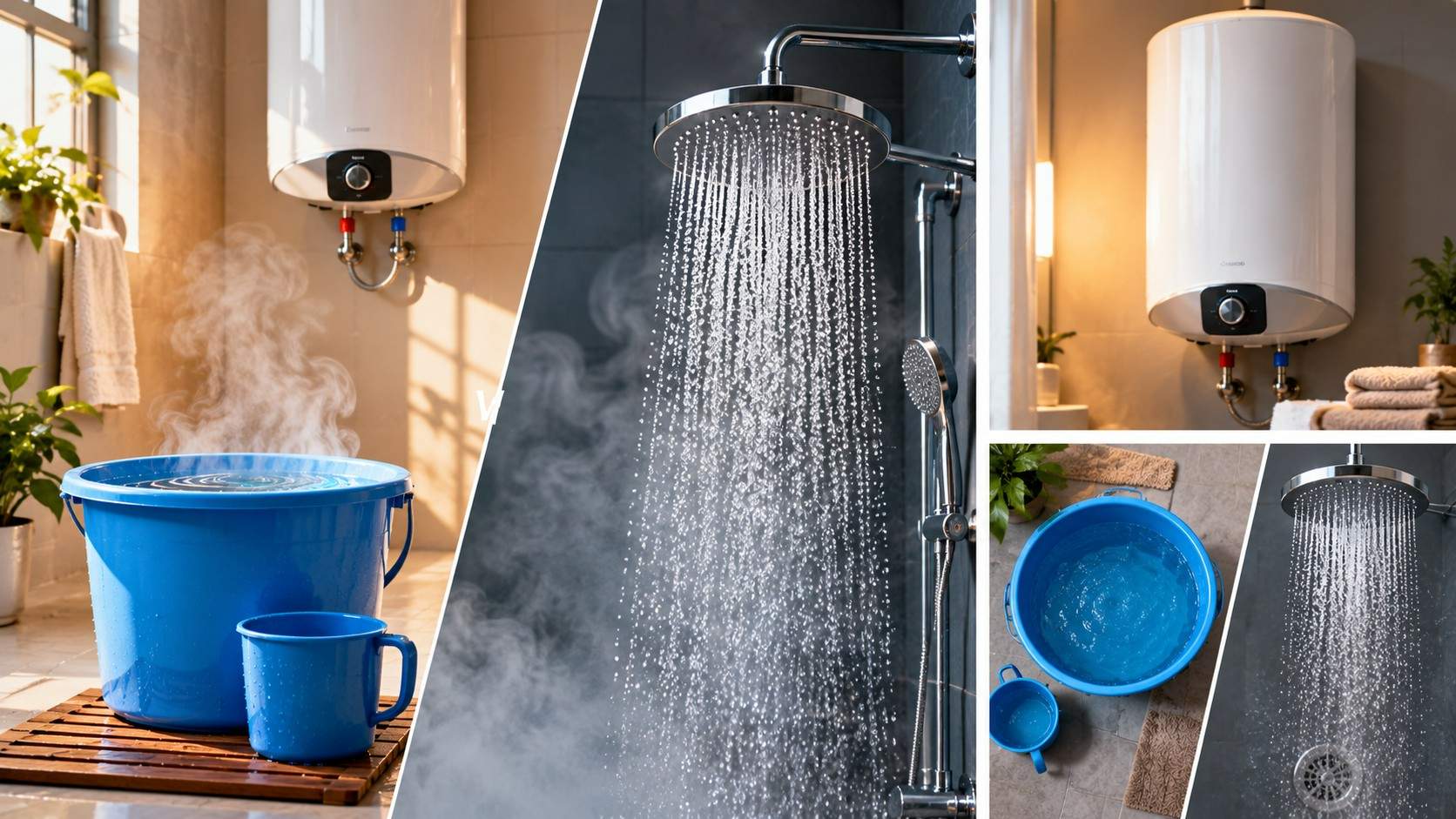
When you're trying to decide what size geyser your home needs, one question is surprisingly important: how do you actually bath? A bucket bath and a shower may accomplish exactly the same thing, but they don't necessarily use the same amount of water. A bucket naturally limits how much water you draw, while a shower continues flowing for as long as you leave it running. That difference becomes much more important in winter, when hot water demand rises and several people may need the bathroom one after another.
It also explains why two homes with the same number of people can have completely different geyser requirements. One family may comfortably manage with a smaller storage geyser because everyone takes short bucket baths. Another household of the same size may need a larger capacity because everyone takes longer showers.
How Much Water Does a Bucket Bath Actually Use?
Most bucket baths in Indian homes use somewhere between one and three buckets, and each standard bucket holds roughly 20–25 litres. That puts a typical bucket bath somewhere in the 20–60 litre range with two buckets (around 40–50 litres) being a pretty common reference point for an average bath. Bathing habits vary a lot here, though. Someone who fills one bucket, uses it carefully, and stops has a very different total from someone who refills a second or third bucket partway through.
How Much Water Does a Shower Actually Use?
This one depends heavily on your showerhead. Most Indian homes use low-flow showerheads that put out around 3.5 litres per minute, which means a 5-minute shower uses roughly 17–18 litres, and a 10-minute shower uses around 35 litres. A standard (non-low-flow) showerhead runs closer to 5 litres per minute, pushing a 10-minute shower up to around 50 litres. So the honest range for a shower is genuinely wide: a short one can use well under half of what a typical bucket bath does, while a longer one at standard flow can match or exceed it. If you're not entirely sure yet, renting a geyser in differnt range gives you room to test that against your actual routine, without committing to a capacity guess you can't easily undo.
Side by Side: What the Numbers Actually Look Like
- 2-bucket bath: ~40-50 litres
- 5-minute low-flow shower: ~17-18 litres
- 10-minute low-flow shower: ~35 litres
- 10-minute standard-flow shower: ~50 litres
Looking at this, a quick shower is usually the more water-efficient option. But the moment a shower runs past 10 minutes, or the showerhead isn't low-flow, that advantage disappears fast.
What This Means for Your Geyser Capacity
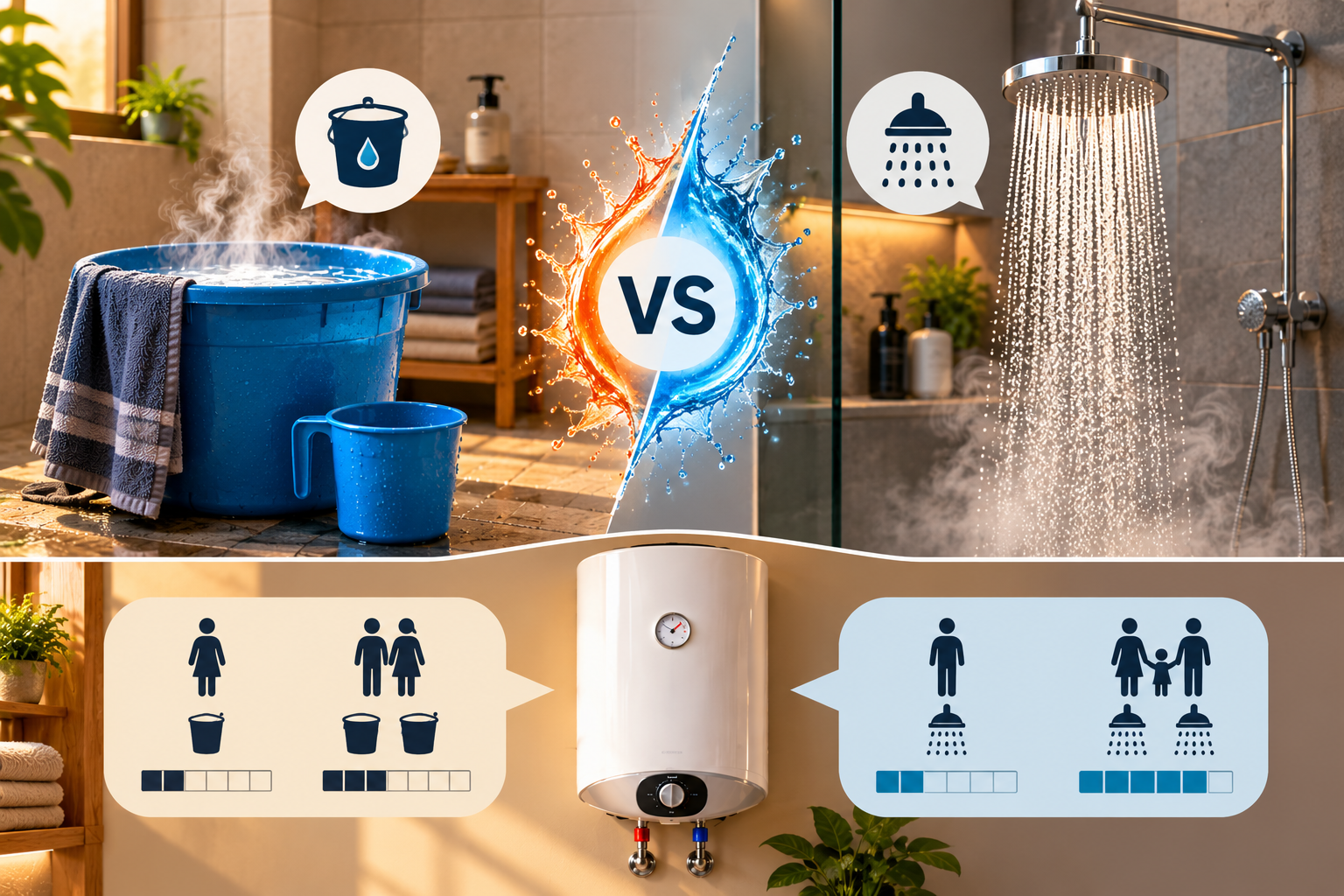
This connects directly to a question we covered in 10 Litre vs 15 Litre Geyser: Which One Is Right for Your Home? how much hot water your household actually uses day to day is exactly what determines whether a 10-litre or 15-litre geyser fits. A household of bucket-bathers using 2 buckets each might comfortably run on a 10-litre geyser reheating between uses, while a household of longer, standard-flow showerers is likely to find 15 litres or more a better fit.
A Few Ways to Use Less Hot Water, Either Way
- If you shower: a low-flow showerhead makes the single biggest difference, and keeping showers under 5–6 minutes keeps you well below bucket-bath usage.
- If you bucket-bathe: using one bucket deliberately, rather than refilling automatically, keeps usage on the lower end of the range.
- Either way: set your geyser thermostat to a moderate temperature rather than the highest setting, you'll just end up adding cold water to cool it down, which wastes both water and the electricity used to heat it.
Bucket Bath vs Shower: What Is the Actual Difference?
The biggest difference is control. With a bucket bath, you decide how much water to fill before you start. Once the bucket is full, the amount available for bathing is naturally limited. A shower works differently. Water continues to flow while the tap is open. A five-minute shower and a ten-minute shower can therefore have very different water consumption.
The Central Water Commission's draft water-audit guidance gives an illustrative comparison of about 18 litres for bathing with a bucket versus 100 litres for bathing with a shower. That is a water-conservation benchmark rather than a universal measurement for every bathroom, but it clearly demonstrates the difference that the method of bathing can create. UNICEF India similarly notes that a seven-minute shower can use around 63 litres of water, depending on the showerhead and water pressure, and recommends shorter showers or bucket bathing to reduce water consumption. It is that running water removes the natural limit that a bucket creates.
Conclusion
There's no single winner between a bucket bath and a shower, the real difference comes down to how much water your household actually uses, not which method sounds more efficient on paper. If you're deciding on geyser capacity, it's worth thinking honestly about your own bathing habits bucket count or shower length rather than assuming one method automatically means less hot water.