Car Insurance Agent: How to Choose the Right Agent and Car Insurance Coverage in 2026
-

- Published Updated
- 76 views
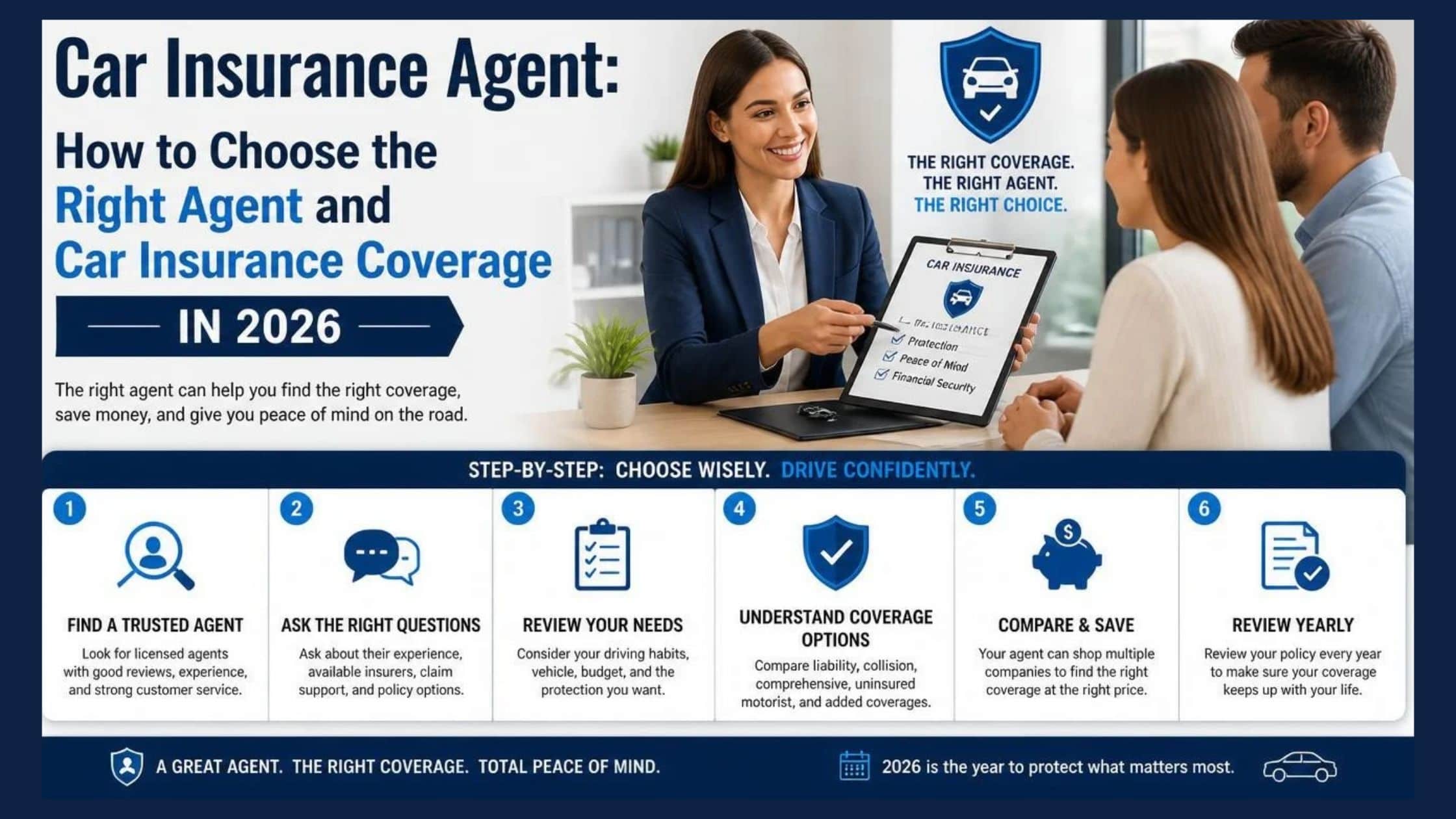
Choosing car insurance can be confusing when you have to understand policy types, coverage limits, add-ons, deductibles, exclusions, premiums and claim procedures. A Car Insurance Agent can help simplify this process by explaining insurance options and helping customers understand which types of coverage may be relevant to their vehicle and driving requirements.
However, choosing an agent should not be based only on convenience. Customers should understand the agent’s role, compare available insurance options and carefully review the policy before making a decision.
What Is a Car Insurance Agent?
A Car Insurance Agent is a professional who assists customers with car insurance-related services. Depending on the agent’s authorization and role, this may include explaining insurance products, helping with policy applications, assisting with renewals, answering policy-related questions and guiding customers through documentation or claim procedures.
For a customer, the main benefit of dealing with an agent is having someone who can explain insurance terminology in simpler language.
For example, terms such as third-party liability, own damage, IDV, No Claim Bonus, deductible and zero depreciation can be unfamiliar to first-time car owners. An agent can explain what these terms generally mean and how they relate to a car insurance policy.
How Can a Car Insurance Agent Help You Choose Coverage?
A Car Insurance Agent can start by understanding the customer’s vehicle and insurance requirements. Factors such as the car’s age, usage, location, previous insurance history and expected level of protection can influence the type of policy a customer considers.
Instead of choosing a policy simply because it has a lower premium, customers can discuss what protection they actually need.
For example, someone who drives a car every day may have different requirements from someone who uses a vehicle occasionally. Similarly, the needs of a new-car owner can differ from those of someone driving an older vehicle.
This type of requirement-based discussion can help customers understand their available insurance choices.
Third-Party vs Comprehensive Car Insurance
One of the most important decisions is understanding the difference between third-party and comprehensive car insurance.
Third-party car insurance primarily covers certain legal liabilities arising from injury to another person or damage to third-party property, subject to applicable policy terms.
Comprehensive car insurance generally combines third-party liability protection with coverage for the insured vehicle against covered risks. Depending on the policy, these risks can include accidents, theft, fire and certain natural or other specified events.
A Car Insurance Agent can explain these differences and help customers understand what protection each type of policy is designed to provide.
Understanding Car Insurance Add-Ons
Car insurance add-ons can provide additional protection beyond the basic policy, but they are not automatically suitable for every driver.
Depending on the insurer and policy, available options may include:
- Zero depreciation cover
- Roadside assistance
- Engine protection
- Return-to-invoice cover
- Consumables cover
- Key replacement cover
The usefulness of an add-on depends on factors such as the vehicle, driving pattern, location and customer's requirements.
A Car Insurance Agent can explain what an add-on generally covers, its limitations and how it can affect the overall premium. Customers should review the specific policy wording before selecting any add-on.
Why Is IDV Important in Car Insurance?
IDV, or Insured Declared Value, is an important concept in comprehensive motor insurance.
It broadly represents the insured value of the vehicle for certain situations such as theft or total loss, subject to the policy terms. IDV can also influence the premium.
A Car Insurance Agent can explain how IDV works and why customers should pay attention to the value selected during policy purchase or renewal.
The objective should not simply be to select the highest or lowest available value. Customers should understand the insurer's applicable terms and select an appropriate option.
How Does a Car Insurance Agent Help During Renewal?
Car insurance renewal is an opportunity to review the existing policy rather than simply repeating the previous purchase.
A Car Insurance Agent can help customers check whether their current coverage still matches their requirements. Customers can discuss changes in vehicle usage, available add-ons, No Claim Bonus, policy details and other relevant factors.
Before renewing, customers should also check the policy expiry date, coverage details, deductibles, exclusions and any changes to the policy terms.
Can a Car Insurance Agent Help With Claims?
A Car Insurance Agent may provide guidance about the claim process, required documentation and communication with the insurer.
For example, after an accident, customers may need to understand how to notify the insurer, what documents are required and what steps need to be followed according to the policy.
However, an agent cannot guarantee claim approval. Claim decisions are made according to the insurer's assessment, policy wording, exclusions, documentation and applicable conditions.
This distinction is important when choosing a Car Insurance Agent: an agent can provide assistance and information, but the insurer determines the outcome of an eligible claim.
What Should You Check Before Choosing a Car Insurance Agent?
Before working with an agent, customers can consider several practical factors.
First, check whether the person is appropriately authorized to distribute or service the relevant insurance products. Second, ask clear questions about coverage, exclusions, deductibles and add-ons.
Customers should also avoid selecting a policy solely because an agent promises the lowest premium or a guaranteed claim outcome. Insurance decisions should be based on documented policy terms.
It is also useful to ask whether the agent provides support for renewals, policy servicing and claim-related guidance.
Car Insurance Agent vs Buying Insurance Online
Both assisted and online insurance journeys can involve comparing coverage and purchasing a policy.
An online purchase may allow customers to review information independently and complete the process digitally. An agent-assisted process can provide an opportunity to ask questions and receive explanations from a person.
The appropriate approach depends on how comfortable the customer is with researching insurance, the complexity of the coverage required and the type of assistance they prefer.
Regardless of the purchase method, customers should read the policy documents and understand the coverage before completing the purchase.
Frequently Asked Questions
What does a Car Insurance Agent do?
A Car Insurance Agent can explain car insurance products, assist with policy-related documentation, support renewals and provide guidance about coverage and claims, depending on their authorized role.
How do I find a Car Insurance Agent near me?
You can search for local agents through insurer or insurance-distribution channels, verify their authorization and then compare the services and support they provide.
Can a Car Insurance Agent help me choose the right policy?
Yes. An agent can explain available coverage options and help you understand how different features relate to your vehicle and requirements. You should still compare policies and review the terms before purchasing.
Can a Car Insurance Agent guarantee claim approval?
No. Claim approval depends on the insurer's assessment, policy terms, exclusions, documentation and applicable conditions.
Is a Car Insurance Agent useful for policy renewal?
An agent can help explain renewal options, coverage changes, add-ons and policy-related requirements. Customers should review their policy before renewing.
What should I ask a Car Insurance Agent?
Ask about coverage, exclusions, IDV, deductibles, add-ons, No Claim Bonus, renewal terms, claim procedures and documentation requirements.
Conclusion
A Car Insurance Agent can make the insurance-buying process easier by translating complicated policy terms into practical information. From understanding third-party and comprehensive coverage to discussing add-ons, IDV, renewals and claims, an agent can provide useful assistance throughout the insurance journey.
For customers, the most important step is to remain informed. Compare available coverage, ask questions, understand exclusions and deductibles, and read the policy wording before purchasing. A well-informed decision should be based on the protection and terms of the policy rather than premium price alone.