Best cartridge filter dust collector | Shimi Research
-

- Published Updated
- 1,661 views
A busy industrial workplace can become dusty very quickly. Machines run for hours, raw materials move from one place to another, and processes such as grinding, cutting, polishing, and mixing create fine particles. At the end of the day, dust may be found on machines, floors, workbenches, and other surfaces. Regular cleaning helps, but it does not solve the problem at its source.
This is where a properly planned dust collection system becomes useful. Best Cartridge Filter Dust Collector equipment can help capture dust during production and prevent it from spreading around the facility. Shimi Research provides industrial filtration and dust management solutions for businesses that want a cleaner and more comfortable working environment.
Why Is Dust Such a Common Problem in Industrial Areas?
Dust is produced by many everyday industrial activities. A worker cutting a material, a machine grinding a component, or a process moving dry powder can all release particles into the air.
Some particles are easy to notice because they settle quickly. Others are extremely fine and can remain in the air for longer periods. Once these particles move away from the production point, controlling them becomes more difficult.
This is why collecting dust near its source is generally a practical approach. Instead of allowing particles to travel across the workshop, an extraction system can pull them away from the process and send them through suitable filtration equipment.
The exact requirement depends on the industry. A metalworking unit will not necessarily need the same arrangement as a woodworking shop or a material-processing facility.
How Does a Cartridge Filter Dust Collector Work?
The basic working process is quite straightforward.
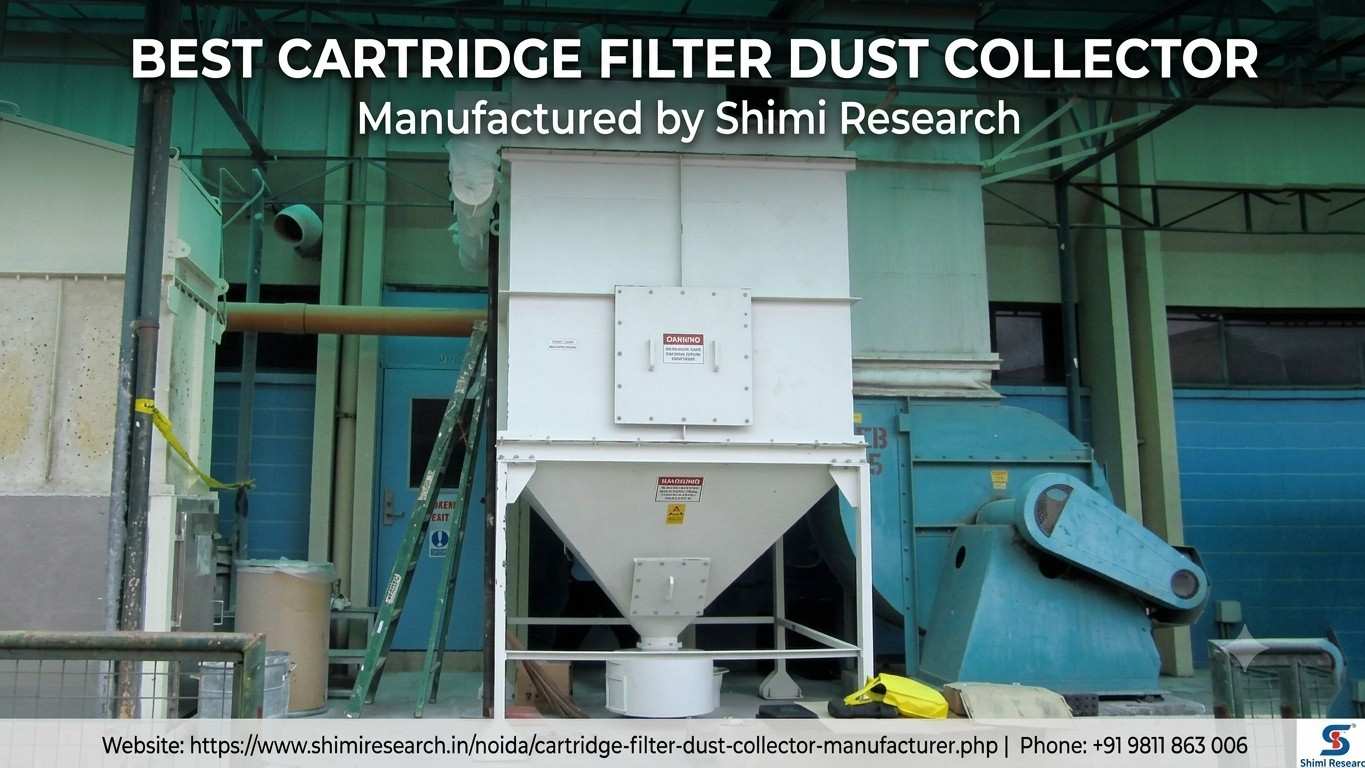
Dusty air is drawn from the production area through an extraction point. It then enters the collector, where filter cartridges capture the dust particles. The filtered air passes through the filter media while the collected material remains on the cartridge surface.
As more dust builds up, the filters need to be cleaned. A cleaning mechanism removes the accumulated dust from the filter surface and allows it to fall into a collection hopper or another suitable container.
The collected material can then be removed and handled according to the requirements of the facility.
One useful feature of cartridge-based systems is their compact design. They can provide a good amount of filter area within a relatively manageable footprint. This can be helpful for factories where installation space is limited.
Where Can These Systems Be Useful?
Dust collection is not limited to one particular industry. Many manufacturing and processing activities can benefit from suitable extraction.
For instance, a fabrication workshop may generate particles while grinding or finishing metal components. A woodworking facility may deal with sawdust, while a processing unit may produce fine particles while handling dry materials.
In each situation, the collection system should be designed around the process.
Extraction points can be positioned near machines that generate the most dust. Ducting then carries the dusty air toward the filtration unit.
Companies searching for an Industrial Dust Collector India solution should first understand the type of dust their process creates. Particle size, dust concentration, moisture, temperature, and airflow requirements can all influence the final equipment selection.
What Should You Consider Before Buying a System?
There is no benefit in purchasing a large machine if it does not match the actual requirement. The right equipment is the one that fits the process.
Start by identifying the machines or activities that produce dust. Then consider how many extraction points are required and how much air needs to be moved through the system.
The factory layout is also important. There should be enough room for installation, filter inspection, maintenance, and dust removal.
Filter selection deserves attention as well. The filter media should be suitable for the type of particles being collected. Working temperature, moisture, and material characteristics can all affect filter performance.
It is also worth thinking about what happens after the dust is collected. A simple and accessible disposal arrangement can make everyday operation much easier.
Can Good Filtration Make Factory Maintenance Easier?
A cleaner production area is easier to maintain. When dust is captured before it spreads, there may be less material settling on machines, floors, and nearby workstations.
However, the collector itself is only one part of the solution. The extraction hood, ducting, fan, and filter all need to work together.
For example, placing an extraction point too far from the dust source may reduce the amount of material captured. Poorly planned ducting can also affect airflow.
This is why Air Filtration Systems Delhi should be planned around the complete workplace rather than treating the filtration unit as a standalone machine.
How Does It Help With Industrial Pollution Control?
Dust collection also forms an important part of broader pollution-control practices. Industrial processes can release particles during normal operation, and these need to be managed responsibly.
A suitable extraction arrangement can capture particles close to where they are produced. This can reduce the amount of dust travelling through the production area.
Companies considering Pollution Control Equipment Delhi should look at their complete process before selecting equipment. The nature of the material, production volume, airflow, and site conditions all have an impact on what type of solution is appropriate.
Good planning can also make the system easier to operate and maintain over time.
Why Is Choosing the Right Manufacturer Important?
Industrial equipment is not something businesses usually replace frequently. Once a system is installed, it becomes part of the daily production setup.
For this reason, it is useful to work with a manufacturer that understands the practical side of dust collection. The discussion should cover more than just machine capacity.
Shimi Research works with industrial dust collection, filtration, and pollution control solutions. Businesses can discuss their production process, dust characteristics, available space, and operating requirements before deciding on an appropriate system.
For facilities that also need Industrial Ventilation Solutions India, it can be helpful to consider ventilation and local extraction together. Each serves a different purpose, and the right combination depends on the workplace.
How Can You Find a Suitable Dust Collection Solution?
The easiest way to begin is to understand the problem inside your own facility.
Look at where dust is produced and where it eventually settles. Check which machines create the most particles and whether the dust is fine, coarse, dry, or affected by moisture.
Next, consider the number of collection points, airflow requirements, ducting route, available space, filter type, and maintenance schedule.
Once these details are clear, they can be discussed with an experienced Cartridge Filter Dust Collector Manufacturer Delhi. This application-based approach can help businesses avoid choosing equipment that looks suitable on paper but does not work well with their actual production process.
Conclusion
Industrial dust is often unavoidable, but allowing it to spread throughout a workplace is not the only option. A properly designed collection system can capture particles closer to their source and make the production area easier to manage.
Cartridge filtration can be a practical choice for applications involving suitable types of fine and dry dust. Its success, however, depends on proper airflow, filter selection, extraction points, sizing, installation, and maintenance.
Shimi Research provides solutions for businesses dealing with industrial dust and air filtration requirements. By understanding the production process first and selecting equipment around those needs, companies can create a dust management system that fits naturally into their everyday operations.