Cat5e Ethernet Cable: Is It Still a Good Choice for Networking?
-

- Published Updated
- 3,754 views
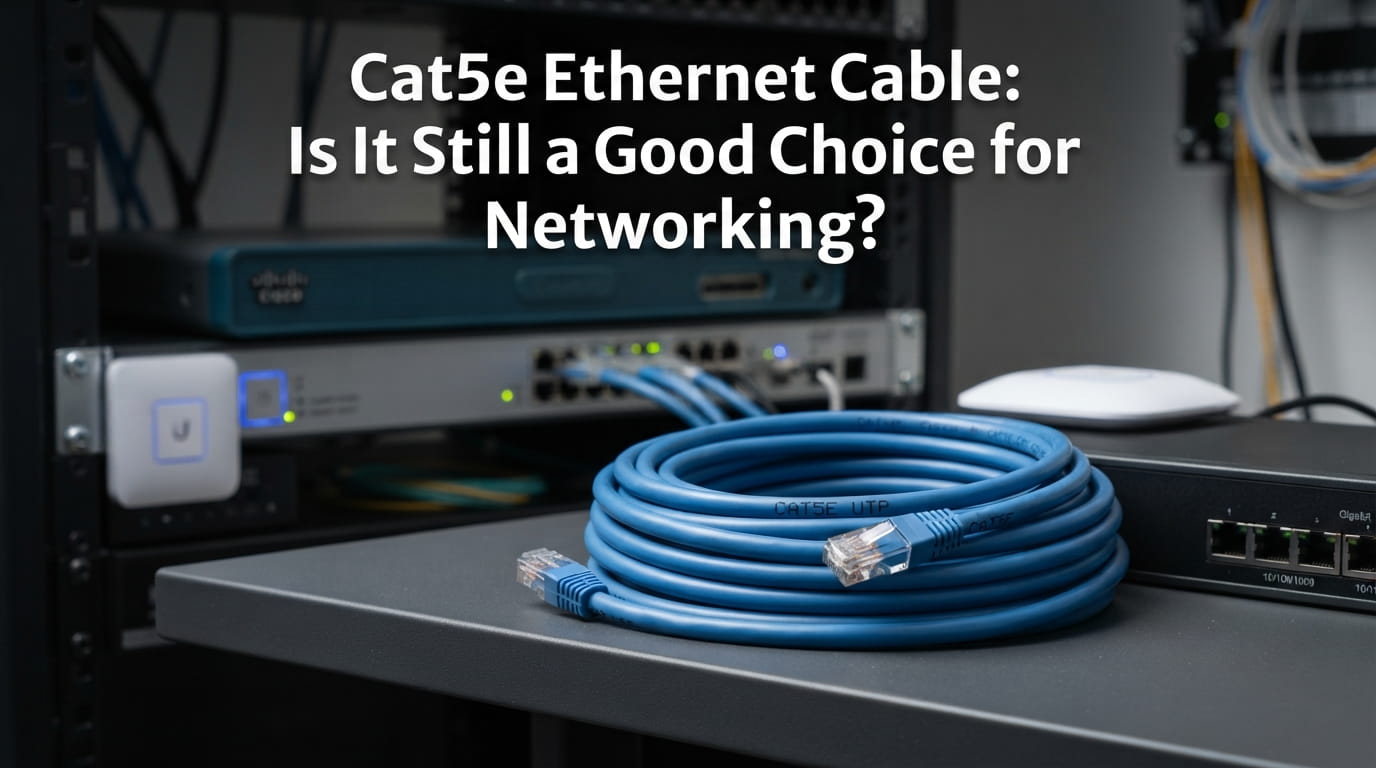
If you've ever opened a box of networking supplies or peeked behind a router, chances are you've come across a Cat5e Ethernet cable. It's been a staple of home and office networks for years, and even with newer cable standards on the market, it hasn't disappeared. That raises a fair question: does Cat5e still hold up in 2026, or is it time to move on?
The answer isn't a simple yes or no. Cat5e remains widely used because it strikes a practical balance between performance, cost, and compatibility. For a lot of everyday networking needs, it still gets the job done without unnecessary expense. But like any technology, it has limits worth understanding before you commit to it.
What Is a Cat5e Ethernet Cable?
Cat5e stands for "Category 5 enhanced." It's an improved version of the original Cat5 cable, designed to reduce crosstalk the unwanted signal interference that can occur between wire pairs inside the cable. This enhancement made Cat5e more reliable for consistent data transmission, especially as networks began demanding faster and more stable connections.
A Cat5e Ethernet cable uses twisted-pair copper wiring, typically with four pairs, to carry data between devices like computers, routers, switches, and network-attached storage. It became the go-to replacement for Cat5 largely because it could handle Gigabit Ethernet speeds reliably, something the original Cat5 standard wasn't built to guarantee.
You'll still find Cat5e in homes, small businesses, schools, and general commercial spaces. It's not exotic or specialized equipment—it's simply a dependable, well-established option for wired connections.
What Performance Can You Expect From Cat5e?
In terms of raw specifications, Cat5e supports speeds up to 1 Gigabit per second (1000 Mbps) and a bandwidth of up to 100 MHz. For most home and small-office applications web browsing, streaming, file sharing, video calls this is more than sufficient.
That said, real-world performance depends on more than just the cable's rating. Cable length plays a role; Cat5e is generally rated for reliable performance up to 100 meters, but longer runs can introduce signal degradation. The quality of the connectors and the care taken during installation also matter. A poorly terminated connection can bottleneck performance regardless of the cable's theoretical capabilities.
Your networking equipment matters too. If your router, switch, or network card only supports Fast Ethernet speeds, a Cat5e Ethernet cable won't be the limiting factor your hardware will be. Conversely, if you have Gigabit-capable equipment throughout your network, Cat5e will generally let you use that speed without issue for typical distances.
Where Is Cat5e Ethernet Cable Still a Good Choice?
There are several everyday situations where Cat5e continues to make sense.
Home networks are a common example. If you're connecting a desktop computer, a smart TV, or a gaming console to your router, and your internet plan tops out well below Gigabit speeds, Cat5e will handle that traffic without any noticeable compromise.
Small offices often rely on Cat5e for connecting workstations, printers, and basic network infrastructure. When the office isn't running bandwidth-intensive applications like large-scale video editing over the network or heavy server-to-server data transfers, Cat5e is a sensible and cost-effective choice.
Standard commercial networks, such as those in retail stores or small clinics, frequently use Cat5e for point-of-sale systems, security cameras with modest bandwidth needs, and general office connectivity.
Ethernet-connected devices like smart home hubs, VoIP phones, and basic IoT equipment typically don't require more than what Cat5e offers.
For budget-conscious networking projects, Cat5e is usually the more affordable option compared to newer cable categories, which matters when you're wiring an entire building or setting up multiple connection points.
Cat5e vs. Newer Ethernet Cable Categories
To put Cat5e in context, it helps to compare it against the categories that followed it.
Cat6 offers improved bandwidth (250 MHz) and can support 10 Gigabit speeds over shorter distances, typically up to 55 meters. It's a reasonable step up if you anticipate needing more headroom.
Cat6a extends that 10 Gigabit support to the full 100-meter distance and offers better shielding against interference, making it suitable for busier network environments or areas with more electrical noise.
Cat7 and Cat8 push bandwidth and speed even further, with Cat8 designed primarily for short-distance data center applications requiring extremely high throughput. These categories also tend to use thicker, more rigid cabling and shielded connectors, which can make installation more demanding.
Cost increases as you move up this ladder, both for the cable itself and often for compatible connectors and equipment. A newer category isn't automatically the better choice if your network doesn't need 10 Gigabit speeds or isn't operating in a high-interference environment, paying more for that capability may not deliver a noticeable benefit.
What Are the Limitations of Cat5e?
Cat5e isn't the right fit for every situation. Its ceiling of 1 Gigabit Ethernet becomes a real constraint in environments handling large file transfers, high-resolution video production, or data-intensive server applications.
If you're planning for future upgrades say, moving to multi-gigabit internet service or building out a home lab with heavier data demands installing Cat5e now might mean rewiring sooner than you'd like. Installation quality also becomes more critical at scale; in larger buildings with many cable runs, inconsistent installation can lead to uneven performance across the network.
Businesses that rely on data-heavy operations, such as media production studios or facilities running extensive surveillance systems, often benefit from investing in Cat6 or Cat6a from the start, even if it costs more upfront.
How to Decide If Cat5e Is Right for Your Network
A few practical questions can help clarify whether Cat5e suits your situation:
- What speed does your current internet connection actually provide? If it's below 1 Gbps, Cat5e won't be a bottleneck.
- What devices are you connecting, and do any of them require high-bandwidth transfers?
- Are you setting up a home, a small office, or a larger commercial space?
- Do you anticipate upgrading your network speed or equipment within the next few years?
- What's the installation environment like are there long cable runs or significant electrical interference nearby?
- What does your budget allow, especially if you're wiring multiple rooms or floors?
If your answers point to modest, standard networking needs without an urgent case for future-proofing, Cat5e likely remains a sound option.
Why Cat5e Can Still Be a Practical Networking Solution
Affordability is one of Cat5e's clearest advantages. It costs less than newer categories, both per foot of cable and often in terms of compatible hardware, which matters when outfitting an entire home or office.
Compatibility is another strength. Cat5e works well with existing Gigabit equipment that many households and small businesses already use, so there's no need to overhaul your setup to take advantage of it. It's also widely available, well understood by installers, and straightforward to work with, which reduces the chances of installation complications.
For businesses and homeowners looking for reliable networking cables and cabling solutions without overspending on capacity they may never use, providers like BN Cables offer Cat5e alongside other categories, making it easier to choose based on actual need rather than guesswork. This kind of flexibility is part of why Cat5e continues to hold a place in modern networking, even as newer standards become more common.
Final Thoughts
Cat5e Ethernet cable isn't outdated in any meaningful sense it's simply suited to a particular range of networking needs. For home use, small offices, and standard commercial setups where Gigabit speeds are sufficient, it remains a reliable, cost-effective, and widely compatible option.
Where it falls short is in high-bandwidth, future-focused, or large-scale environments, where Cat6 or Cat6a may offer better long-term value despite the higher initial cost. The right choice ultimately depends on your current requirements, your growth plans, and how much performance headroom you actually need. Cat5e isn't a relic of the past it's a tool that still fits many networking jobs quite well