How Structured Cabling Supports Modern Security Camera Systems
-

- Published Updated
- 1,154 views
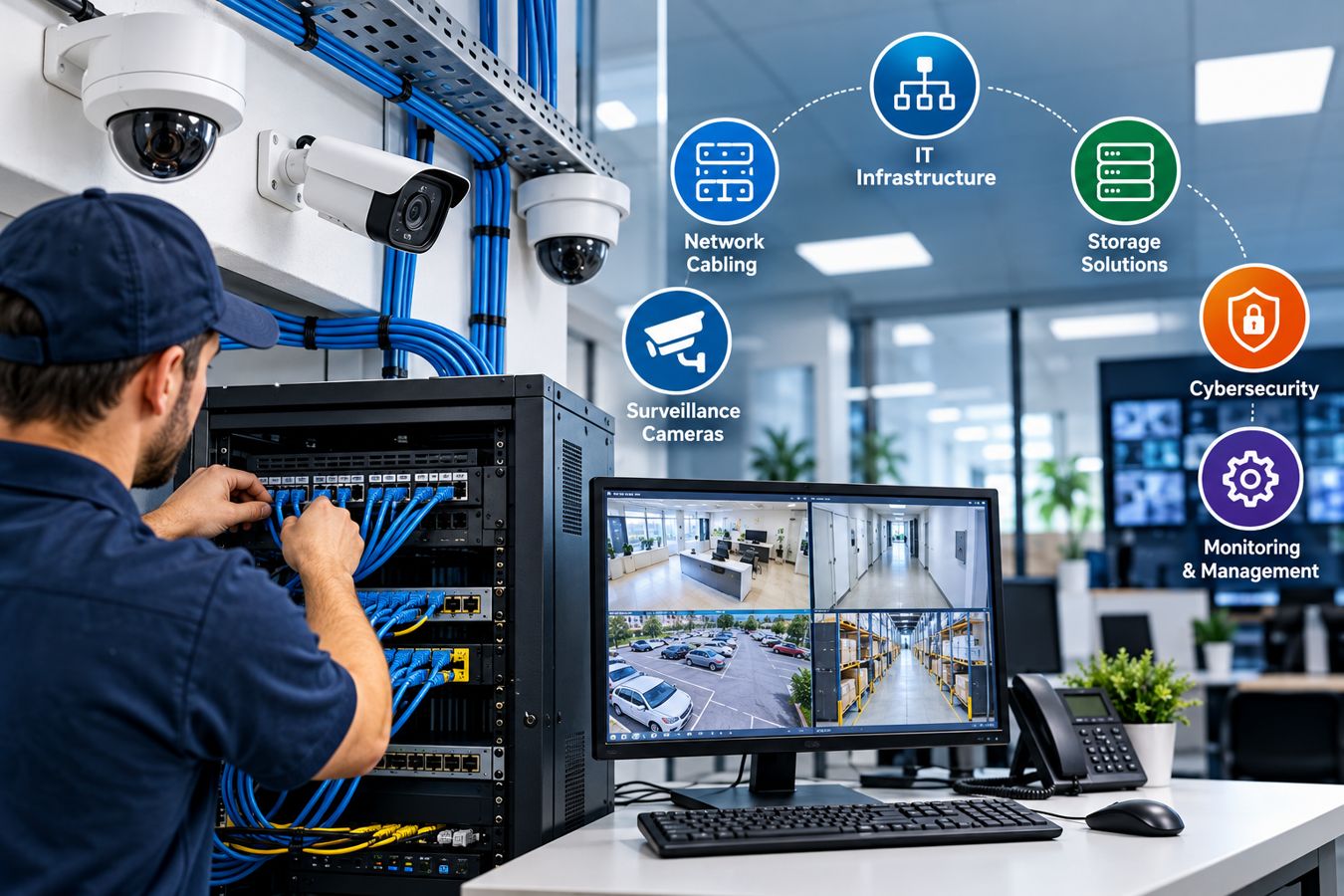
Modern security camera systems depend on much more than the cameras themselves. Behind every reliable IP surveillance system is a network infrastructure capable of carrying video data, delivering power, connecting recording equipment, and supporting communication between multiple devices. This is where structured cabling becomes an important part of the overall security solution.
As businesses move toward high-resolution IP cameras, remote monitoring, cloud-based systems, and intelligent video analytics, the quality of the underlying cabling infrastructure can directly affect system performance. A poorly designed network can lead to dropped camera connections, delayed footage, unstable video streams, and difficult troubleshooting. A properly planned cabling system, on the other hand, creates a dependable foundation that can support current surveillance requirements and future upgrades.
What Is Structured Cabling?
Structured cabling is an organized network cabling system designed to provide connectivity throughout a building or facility. Instead of installing individual cables without a consistent plan, structured cabling uses standardized components, pathways, termination points, patch panels, network equipment, and labeling.
For security cameras, this infrastructure commonly connects IP cameras to network switches, recording systems, monitoring workstations, and other network devices. Ethernet cables such as Cat5e, Cat6, and Cat6a may be used depending on the requirements of the installation.
The benefit of structured cabling is that the network becomes easier to understand and maintain. Each cable can be labeled and connected to a specific patch-panel port or network switch port. If a camera develops a connectivity problem, technicians can identify its network path more quickly instead of searching through a collection of unidentified cables.
This organization becomes particularly valuable in large offices, warehouses, retail facilities, industrial buildings, and multi-floor properties where dozens or even hundreds of cameras may be installed.
Why Cabling Matters for Security Cameras
IP cameras continuously transmit video across the network. Higher-resolution cameras can generate significant amounts of data, especially when recording at higher frame rates or using advanced video features.
The network must therefore provide enough bandwidth for all connected cameras. If the infrastructure is not properly designed, congestion can affect video performance. A camera may remain connected but produce delayed, interrupted, or lower-quality footage.
Cable quality and installation practices also influence network reliability. Cables should be protected from physical damage, excessive bending, and interference from electrical equipment. Long cable runs should be planned according to Ethernet distance limitations, while outdoor installations may require appropriate weather-resistant solutions.
For businesses researching security camera installation Columbus, Ohio, structured cabling should be considered part of the surveillance project rather than an afterthought. The camera, cable, switch, power source, recorder, and network configuration all work together as one system.
Power Over Ethernet and Structured Cabling
One of the major advantages of IP surveillance is Power over Ethernet, commonly called PoE. PoE allows compatible network equipment to transmit both data and electrical power through the same Ethernet cable.
This simplifies many camera installations because a separate power cable may not be required at every camera location. A PoE-enabled switch can provide connectivity and power to compatible cameras through the network cable.
However, PoE requires proper planning. Network switches have specific power budgets, and each camera has its own power requirements. Cameras with infrared illumination, motorized functions, speakers, heaters, or other advanced features may require more power than basic models.
Structured cabling helps organize these connections and makes it easier to identify which cameras are connected to particular switch ports. Proper labeling and documentation can also simplify future maintenance.
Organized Installation Improves Reliability
A structured cabling system is designed around organization. Cables can be routed through appropriate pathways, terminated at patch panels, and connected to network switches using shorter patch cables.
This approach reduces cable clutter and makes the network easier to troubleshoot. It also allows technicians to make changes without disturbing unrelated connections.
Professional structured cabling installation services can include cable routing, termination, labeling, testing, rack organization, and documentation. These elements are particularly important for businesses that expect their surveillance system to remain operational for many years.
A clean installation also makes future expansion easier. If additional cameras are required later, technicians can identify available network capacity and existing cable pathways more easily.
Planning Cable Routes and Equipment Locations
Before installing cables, the building should be evaluated carefully. Camera locations, network equipment rooms, cable pathways, ceiling spaces, wall structures, and potential sources of interference should all be considered.
The network rack should ideally be positioned in a secure and accessible location. Switches, patch panels, power equipment, and recording systems can be organized within or near this area.
Cable routes should avoid unnecessary exposure to physical damage. In environments containing machinery, electrical equipment, or high levels of interference, additional planning may be required.
The distance between cameras and network equipment should also be considered. Standard copper Ethernet connections have practical distance limitations, so cameras located far from network equipment may require additional network infrastructure or alternative connectivity solutions.
Key Components of a Structured Camera Network
A structured surveillance network may include several interconnected components:
- Ethernet cabling between cameras and network equipment.
- Patch panels for organized cable termination.
- PoE network switches for connectivity and camera power.
- Network racks and cable-management systems.
- Network Video Recorders or server-based recording systems.
- Fiber connections for longer-distance network links.
- Backup power equipment for critical infrastructure.
- Labels and documentation for troubleshooting and maintenance.
Each component contributes to the overall reliability of the surveillance system. A high-quality camera cannot compensate for an unreliable network connection, just as a powerful network switch cannot solve problems caused by damaged or incorrectly terminated cables.
Testing and Documentation
Testing is an important stage of structured cabling installation. Every cable should be checked after termination to identify wiring faults, connection problems, or performance issues.
Professional testing can provide greater confidence that the cabling meets the required performance standards. Testing before cameras are fully deployed can also make troubleshooting easier because network problems can be identified separately from camera configuration problems.
Documentation is equally valuable. Camera names, cable numbers, patch-panel ports, switch ports, and equipment locations should be recorded. In a large facility, this information can significantly reduce the time required to locate a faulty connection.
Without documentation, a simple camera replacement or network repair can become unnecessarily complicated.
Preparing for Future Security Upgrades
Surveillance technology continues to evolve. Businesses may eventually replace standard cameras with higher-resolution models, add analytics, install additional cameras, or integrate other security technologies.
A structured cabling system can provide the foundation for these upgrades. Properly planned infrastructure can offer additional capacity and organized pathways for future equipment.
This is especially useful during building renovations or new construction. Installing appropriate cable pathways and network infrastructure during the initial project can be more efficient than adding cables after the building is fully occupied.
Final Thoughts
Structured cabling plays an essential role in modern security camera systems. It provides the physical network foundation required for reliable communication between cameras, switches, recording equipment, and monitoring systems.
A successful surveillance installation should therefore focus on more than camera selection. Cable quality, network capacity, PoE requirements, cable distances, equipment organization, testing, documentation, and future expansion all deserve attention.
When structured cabling is planned correctly, security cameras can operate more reliably while the overall system becomes easier to maintain and expand. For businesses investing in modern surveillance, treating cabling as a long-term infrastructure investment can help create a more organized, dependable, and scalable security environment.