Cat6 Plenum Cables: Installation Best Practices for Safe and Reliable Networking
-

- Published Updated
- 134 views
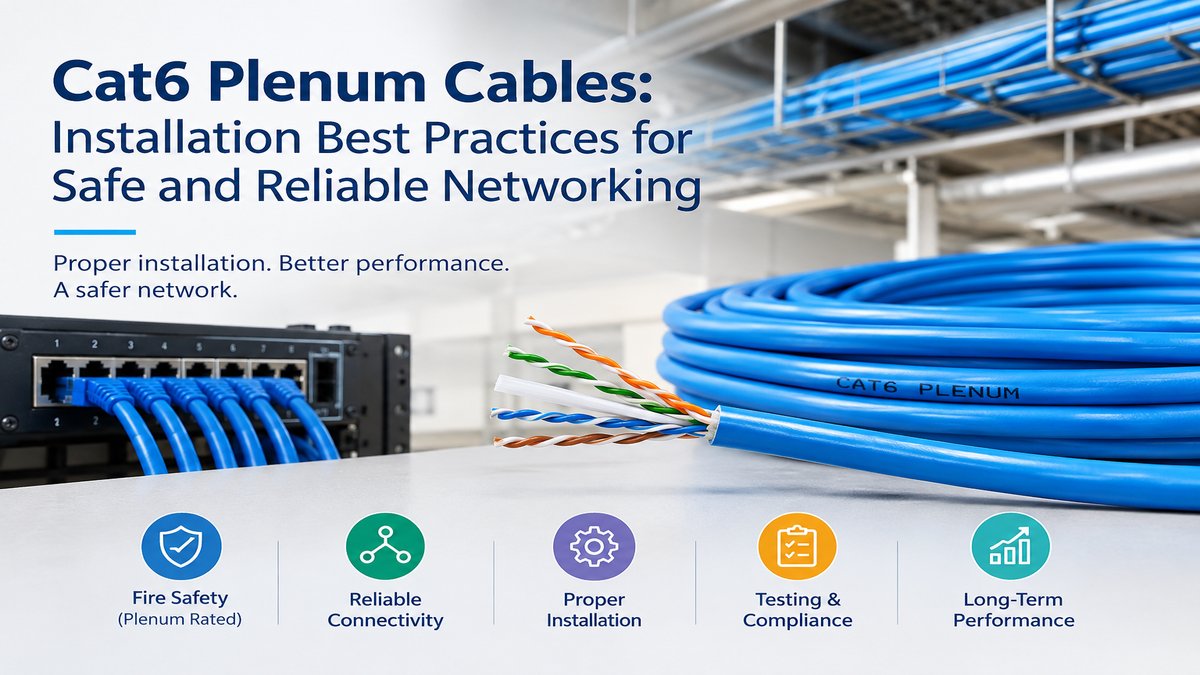
Modern businesses depend on reliable network connections for computers, communication systems, security devices, and other connected equipment. Choosing the right Ethernet cable is essential for building a dependable network. Cat6 Plenum cables are commonly used in commercial networking projects where plenum-rated cabling is required by applicable building codes.
However, choosing the right cable is only the beginning. Proper installation helps protect the cable, maintain network performance, and support compliance with relevant safety requirements. In this guide, we will explore the benefits of Cat6 Plenum cables, installation best practices, common mistakes, and tips for choosing the right cable.
What Are Cat6 Plenum Cables?
Cat6 Plenum cables are Category 6 Ethernet cables designed with specialized jackets that meet specific fire-performance and smoke requirements for use in designated plenum spaces.
Plenum spaces are areas used for air circulation in certain heating, ventilation, and air-conditioning systems. Depending on the building design, these spaces may include areas above suspended ceilings or below raised floors.
Cat6 Plenum cables support modern networking applications, including Gigabit Ethernet. They can also support 10 Gigabit Ethernet over shorter distances under suitable conditions. Actual performance depends on the cable, installation quality, connected equipment, and network configuration.
Why Proper Cat6 Plenum Cable Installation Matters
Proper installation is important for maintaining reliable connections and protecting the cabling infrastructure. Incorrect handling can damage the cable and create performance problems.
Reliable Network Connectivity
Careful cable routing and correct termination help reduce wiring faults and intermittent connections. This is particularly important in offices, educational institutions, and commercial buildings where multiple devices rely on stable network access.
Fire Safety and Code Compliance
Plenum-rated cables are designed to meet specific fire-performance and smoke requirements. Using the appropriate cable in designated spaces helps support building safety. These cables are not fireproof, so installers must verify product ratings and follow applicable building codes.
Long-Term Network Performance
Following manufacturer recommendations for cable handling, bend radius, and pulling tension helps protect the cable from damage. Proper installation also makes future troubleshooting and maintenance easier.
Essential Tools for Cat6 Plenum Cable Installation
Before beginning installation, prepare the necessary tools and materials. These may include cable cutters, stripping tools, compatible connectors, keystone jacks, patch panels, cable labels, cable supports, and an Ethernet cable tester.
For projects requiring verified Category 6 performance, suitable cable certification equipment may also be necessary. Selecting appropriate tools helps ensure accurate termination and reliable testing.
Step-by-Step Cat6 Plenum Cable Installation Guide
Step 1: Inspect the Installation Area
Examine the building layout and identify the intended cable pathway. Determine whether the cable will pass through a plenum space or another type of pathway. Confirm the required cable rating before starting work.
Step 2: Plan the Cable Route
Plan the route between network outlets, switches, patch panels, and other equipment. Avoid unnecessary bends, sharp edges, and obstacles. Measure the route carefully and allow suitable slack for termination and maintenance.
Step 3: Prepare the Cable
Measure and cut the required cable length. Inspect the jacket for damage and avoid removing more insulation than necessary. Keeping the cable in good condition helps preserve its intended performance.
Step 4: Pull the Cable Carefully
Pull the cable through the planned pathway without excessive force. Avoid crushing, kinking, or bending it too tightly. Follow the manufacturer's recommended pulling tension and bend radius.
Step 5: Terminate the Cable Correctly
Use compatible connectors, jacks, and patch panels. Follow the appropriate T568A or T568B wiring scheme and maintain consistency throughout the installation. Preserve the twists in each wire pair as close to the termination point as practical.
Step 6: Organize and Label Cable Runs
Keep cable runs organized using suitable supports and cable-management accessories. Avoid overtightening cable ties, which may damage the cable. Label both ends of each cable to simplify future maintenance and troubleshooting.
Step 7: Test the Installation
Test the completed cable run to identify wiring faults and verify connectivity. Basic testers can check continuity and wire mapping, while certification equipment can verify compliance with applicable Category 6 performance requirements.
Best Practices for Reliable Cat6 Plenum Cable Installation
Maintaining the recommended bend radius is essential because sharp bends can affect the cable's internal structure. Installers should also avoid excessive pulling tension and protect the cable jacket from sharp surfaces or crushing.
Keep Ethernet cables properly separated from electrical wiring where required by applicable codes and installation guidelines. Use suitable cable supports and follow the manufacturer's instructions throughout the installation.
Testing and documenting completed cable runs can help identify problems early and make future upgrades easier.
Common Installation Mistakes to Avoid
Some common mistakes include using a cable without the required plenum rating, ignoring building codes, applying excessive pulling force, bending the cable too tightly, and terminating wire pairs incorrectly.
Other mistakes include skipping cable testing, failing to label connections, and assuming every ceiling space is a plenum space. Careful planning and verification can help prevent these problems.
Cat6 Plenum vs. Cat6 Riser Cables
Cat6 Plenum cables are intended for plenum spaces where plenum-rated cabling is required. Cat6 Riser cables are designed for designated vertical pathways between floors where riser-rated cabling is permitted.
These cable types are not automatically interchangeable. The correct choice depends on the building layout, installation pathway, applicable codes, and project requirements.
How to Choose the Right Cat6 Plenum Cable
Before purchasing, check the cable category, intended application, conductor material, product markings, and relevant certifications. Consider the required cable length and ensure the product is suitable for the installation environment.
Choosing a supplier that provides clear product specifications can help installers and network planners make informed purchasing decisions.
Why Consider TS Cables for Networking Projects?
Selecting suitable Ethernet cabling is an important part of planning a dependable network. Buyers should compare cable specifications, ratings, construction, and intended applications before making a decision.
TS Cables provides a website where readers can explore bulk Ethernet cable options and review available product information. Visit the Cat6 bulk cable collection from TS Cables to explore available options for networking projects.
Always verify the specific product's rating and specifications before using it in a plenum space.
Final Installation Checklist
Before completing the project, confirm that the cable rating matches the installation environment. Inspect the jacket, check the cable routing and terminations, verify that cables are properly supported and labeled, and complete the required testing.
Documenting test results and cable locations can make future maintenance more efficient.
Conclusion
Cat6 Plenum cables are an important option for commercial networking projects that require plenum-rated cabling. However, reliable network performance depends on more than selecting the right cable. Careful routing, correct termination, appropriate cable support, and thorough testing all contribute to a dependable installation.
By following manufacturer recommendations and applicable building codes, installers can help protect the cabling infrastructure and support long-term network reliability.