Chemical Peel Dubai Guide: Types, Safety, Costs, and Recovery
-

- Published Updated
- 1,320 views
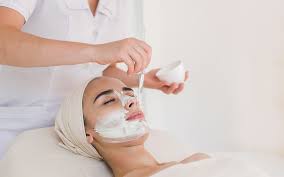
Chemical peel Dubai treatments are popular for improving skin texture, addressing pigmentation, and refreshing the complexion. Interest in peel procedures spans superficial glycolic peels to deeper trichloroacetic acid (TCA) and phenol peels, and understanding differences, risks, and local regulation helps with informed decisions.
- Chemical peels vary by depth: superficial, medium, and deep—each uses different agents and produces different downtime.
- Safety and outcomes depend on skin type (Fitzpatrick scale), clinician experience, and pre/post care.
- Clinics in Dubai are regulated by authorities such as the Dubai Health Authority; verification of practitioner credentials is an important step.
- Costs vary widely by peel type, clinic reputation, and additional services.
What is a chemical peel?
A chemical peel is a controlled application of an acidic solution to the skin to accelerate exfoliation and encourage regeneration of new skin layers. The procedure is commonly used to target fine lines, acne scars, uneven tone, and certain types of hyperpigmentation. Agents used include alpha-hydroxy acids (AHAs) like glycolic acid, beta-hydroxy acids (BHAs) such as salicylic acid, trichloroacetic acid (TCA), and, for deep peels, phenol.
Chemical peel Dubai: Types and how they differ
Peels are categorized by depth and expected downtime.
Superficial peels
Superficial peels typically use low-concentration AHAs or BHAs and produce mild exfoliation with little downtime. They are often chosen for routine maintenance and minor textural concerns.
Medium peels
Medium-depth peels commonly use moderate concentrations of TCA or stronger AHA/BHA combinations to affect the upper dermis. These can improve fine wrinkles and more pronounced pigmentation but require several days of recovery.
Deep peels
Deep peels (for example, phenol-based) penetrate into deeper dermal layers and may offer dramatic results but come with longer recovery periods and higher risk profiles. These are less commonly performed and often require specialized medical supervision.
How chemical peels are performed
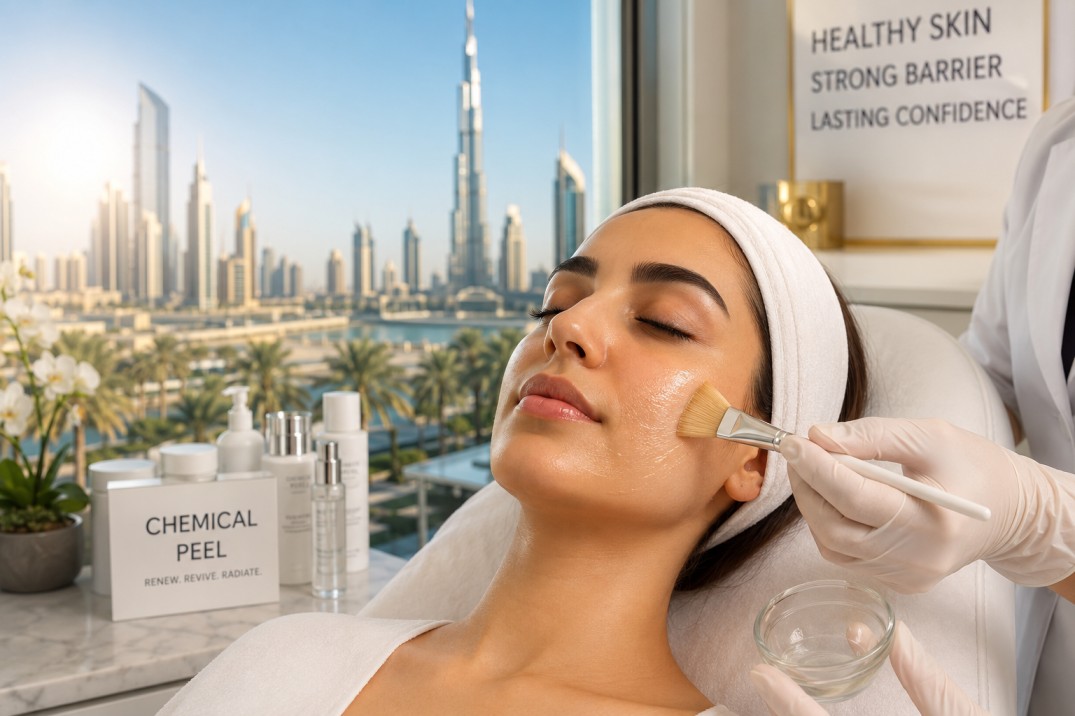
Procedural steps generally include skin cleansing, optional topical anesthetic for stronger peels, careful application of the chosen solution, and neutralization when appropriate. The process and duration vary according to peel type and clinician protocol. Pre-treatment evaluation often reviews medications, recent sun exposure, and history of cold sores or scarring tendencies.
Safety, regulation, and choosing a clinic
Regulation and practitioner credentials are important for procedural safety. In Dubai and the United Arab Emirates, health regulators such as the Dubai Health Authority (DHA) and the UAE Ministry of Health and Prevention set licensure and clinic standards for cosmetic procedures. Verification of a clinician's license and clinic accreditation can reduce risks associated with improperly performed treatments. International dermatology organizations, including the American Academy of Dermatology, provide clinical resources on indications and safety considerations for chemical peels.
For regulatory information, refer to the Dubai Health Authority: https://www.dha.gov.ae.
Recovery, aftercare, and expected results
Recovery time depends on peel depth. Superficial peels often cause minimal redness and scale for a few days. Medium peels can produce visible peeling and redness for 1–2 weeks. Deep peels may require several weeks of healing and carry a greater risk of pigmentary changes and scarring. Common aftercare steps include gentle cleansing, avoiding active exfoliants until healed, and diligent sun protection due to increased photosensitivity. Follow-up visits are commonly scheduled to monitor healing and address complications early.
Costs and factors that affect price in Dubai
Price ranges depend on peel depth, clinic location, practitioner expertise, and whether the procedure is combined with other treatments. Superficial peels generally cost less than medium or deep peels. Additional pre-treatment consultations, post-procedure follow-ups, and topical prescriptions can affect overall cost. Consumers should request an itemized estimate prior to scheduling.
Risks, contraindications, and skin-type considerations
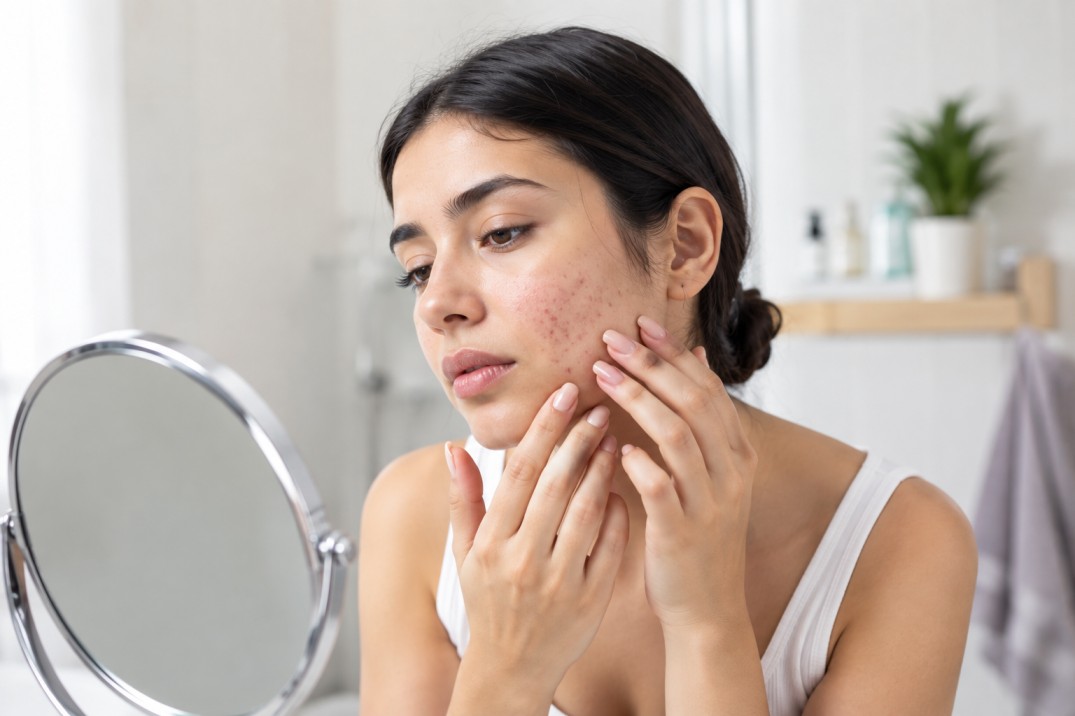
Potential risks include redness, infection, pigmentary changes (hyperpigmentation or hypopigmentation), scarring, and delayed healing. Individuals with darker Fitzpatrick skin phototypes may have a higher risk of post-inflammatory hyperpigmentation after medium or deep peels; clinicians typically tailor agent type and concentration to skin type. Contraindications can include recent isotretinoin use, active infection, certain medical conditions, or an inability to avoid sun exposure during recovery. Pre-procedure assessment helps identify relevant risk factors.
Practical steps before and after a peel
Before treatment
Common preparatory steps used by clinics include reviewing medical history, adjusting topical regimens (for example, stopping retinoids per clinician guidance), and planning for sun protection. Patch testing or a staged approach can be used for sensitive cases.
After treatment
Aftercare typically emphasizes gentle skin care, application of recommended moisturizers, avoidance of sun exposure, and use of broad-spectrum sunscreen. Signs that require prompt medical attention include spreading redness, increasing pain, fever, or signs of systemic infection.
Frequently asked questions
Is a chemical peel Dubai procedure suitable for all skin types?
Suitability depends on peel depth, individual skin type, and medical history. Clinicians often consider Fitzpatrick phototype and past reactions to procedures when recommending peel types and concentrations.
How long does it take to see results from a chemical peel?
Visible improvement timelines vary: superficial peels can show results within days to weeks, while medium and deep peels may require several weeks for full skin remodeling. Multiple superficial treatments may be used for gradual improvement.
What are common side effects and when should a clinician be contacted?
Common side effects include temporary redness, flaking, and tenderness. Immediate contact with the treating clinic or an appropriate healthcare provider is advised for signs of infection, severe pain, or unexpected pigment changes.
How does regulation affect chemical peel Dubai clinic choice?
Regulatory oversight from bodies such as the Dubai Health Authority establishes licensure and facility standards. Choosing a clinic that displays appropriate local licensure and that documents clinician qualifications supports procedural safety and access to follow-up care.
How should long-term skin care be managed after chemical peels?
Long-term management commonly includes sun protection, avoidance of aggressive exfoliants until fully healed, and periodic maintenance treatments as advised by a qualified skincare professional. Evidence-based guidance from dermatology associations may inform maintenance strategies.