Cisco Catalyst C1300-24XS Review: The 24-Port 10G Switch for Modern Networks
-

- Published Updated
- 7,970 views
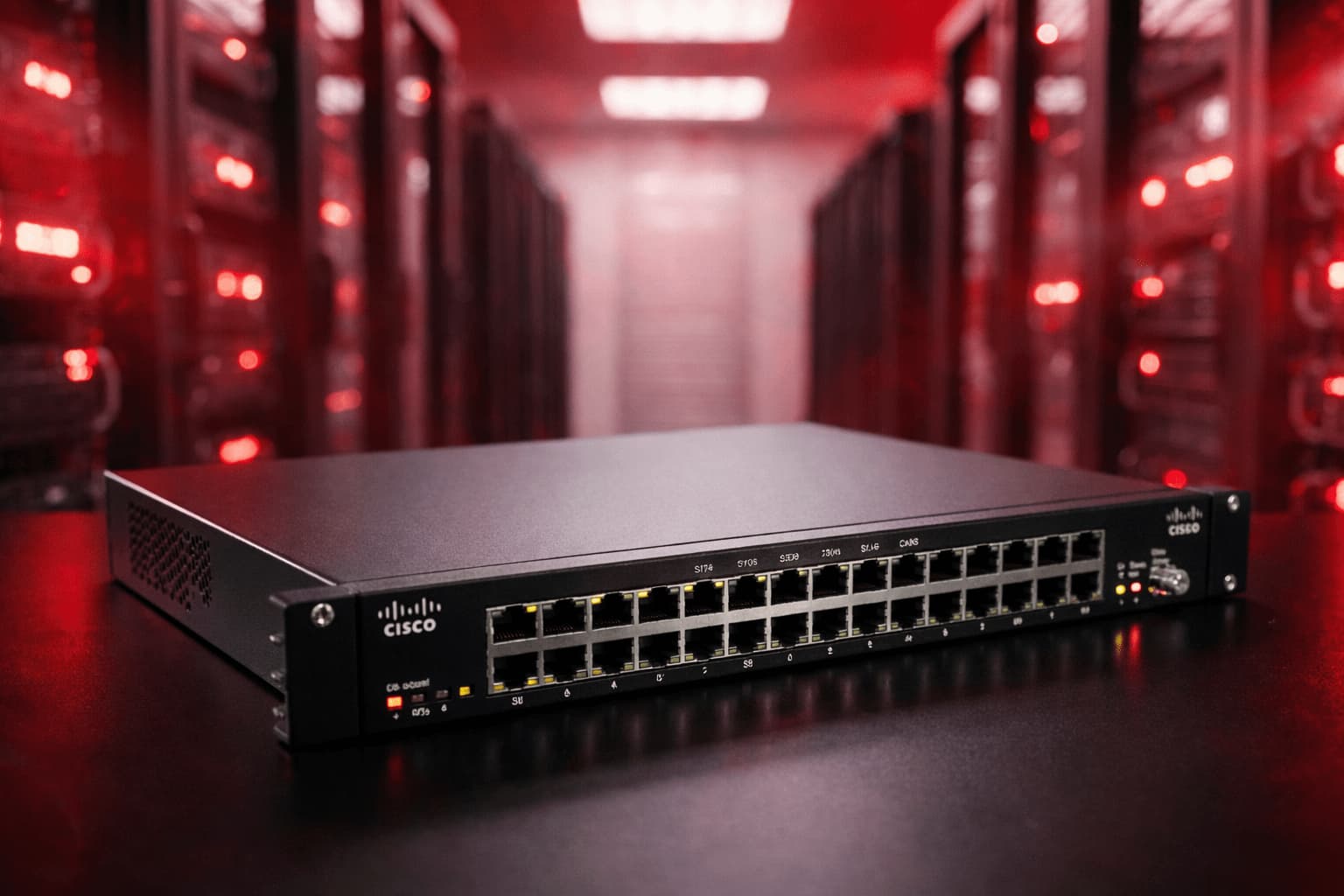
The Cisco Catalyst C1300-24XS is an advanced, enterprise-grade network switch featuring 24 10-Gigabit SFP+ ports designed to handle high-bandwidth applications. It provides organizations with robust Layer 3 routing capabilities, comprehensive security features, and seamless integration with the Cisco Business Dashboard. Choose the Cisco Catalyst C1300-24XS if your network demands high-speed fiber connectivity for server virtualization, large-scale storage arrays, or core switching in a small-to-medium business environment.
Upgrading network infrastructure requires balancing performance, reliability, and long-term scalability. Network bottlenecks can severely impact productivity, especially as organizations rely more heavily on cloud computing, high-definition video conferencing, and massive data transfers. Network administrators need hardware that can handle current data loads while providing enough headroom for future expansion.
The Cisco Catalyst 1300 Series represents a significant step forward for small and medium-sized business networking. Within this family, the Cisco Catalyst C1300-24XS stands out as a high-performance solution tailored for bandwidth-intensive environments. Moving away from traditional Gigabit Ethernet, this switch embraces 10-Gigabit speeds across all its primary interfaces, making it a formidable piece of hardware for modern IT deployments.
This comprehensive review will examine the core features, performance metrics, and management capabilities of the Cisco Catalyst C1300-24XS. By breaking down its hardware specifications and software ecosystem, network professionals can determine if this 24-port 10G switch aligns with their specific infrastructure requirements.
What are the key hardware specifications of the Cisco Catalyst C1300-24XS?
Understanding the physical and technical specifications of the Cisco Catalyst C1300-24XS is crucial for network planning and rack deployment. This switch is engineered to deliver high-speed connectivity without compromising on reliability.
How does the port configuration handle high-bandwidth traffic?
The defining feature of the Cisco Catalyst C1300-24XS is its port array. The switch includes 24 10-Gigabit SFP+ (Small Form-Factor Pluggable Plus) ports. These ports allow for flexible connectivity using fiber optic cables, which are essential for long-distance runs across large office buildings or campus environments. Fiber connectivity also ensures minimal latency and high data integrity, which copper cabling sometimes struggles to maintain over long distances.
By dedicating 24 ports to 10G speeds, the Cisco Catalyst C1300-24XS effectively eliminates the chokepoints commonly found in networks that still rely on 1G edge switches connecting to a 10G core. This configuration makes the switch ideal for connecting directly to high-performance servers, Network Attached Storage (NAS) devices, and Storage Area Networks (SANs).
What is the physical form factor and environmental design?
The Cisco Catalyst C1300-24XS occupies a standard 1U rackmount space, making it easy to integrate into existing server racks and wiring closets. Cisco has designed the chassis to optimize airflow, which is critical for maintaining ideal operating temperatures when processing large volumes of data. The internal cooling fans are engineered to operate quietly while ensuring the internal components remain within safe thermal limits.
Additionally, the switch includes energy-efficient Ethernet features. It dynamically adjusts power consumption based on cable length and traffic load. This capability helps organizations reduce their overall power footprint and manage cooling costs in dense data center environments.
How does the Cisco Catalyst C1300-24XS perform in enterprise environments?
Hardware specifications only tell part of the story. The true value of a network switch lies in how effectively it processes traffic under heavy loads and varying network conditions.
What is the switching capacity and forwarding performance?
Performance is the primary reason organizations invest in the Cisco Catalyst C1300-24XS. The switch boasts a massive switching capacity, typically reaching up to 480 Gigabits per second (Gbps). This high capacity ensures that the switch can achieve non-blocking wire-speed performance across all 24 ports simultaneously.
The forwarding rate is equally impressive, ensuring that data packets are processed and routed to their destinations with minimal delay. For environments hosting virtualized servers or handling real-time VoIP and video traffic, this low-latency performance is non-negotiable. The switch leverages advanced Quality of Service (QoS) protocols to prioritize critical network traffic, ensuring that a massive file download does not disrupt a crucial video conference.
How does the switch maintain network reliability and uptime?
Network downtime translates directly to lost revenue and decreased productivity. The Cisco Catalyst C1300-24XS incorporates multiple layers of redundancy and resiliency to prevent unexpected outages.
The switch supports spanning tree protocols (STP, RSTP, MSTP) to prevent network loops while providing backup paths for data in case of a cable or port failure. Link Aggregation Control Protocol (LACP) allows administrators to bundle multiple physical ports into a single logical link. This not only increases the total available bandwidth between switches or servers but also provides seamless failover if one of the aggregated links fails.
Furthermore, the Cisco Catalyst 1300 Series supports dual image firmware. During a software update, the switch retains the previous firmware version. If the update process encounters an error or introduces instability, administrators can quickly revert to the known working image, minimizing downtime.
What management and security features does the Catalyst 1300 series offer?
A powerful switch requires a capable management interface to unlock its full potential. Cisco provides network administrators with versatile tools to configure, monitor, and secure the network infrastructure.
How does the switch integrate with the Cisco Business Dashboard?
The Cisco Catalyst C1300-24XS can be managed through a traditional Command Line Interface (CLI) or a highly intuitive web-based Graphical User Interface (GUI). However, its integration with the Cisco Business Dashboard sets it apart.
The Cisco Business Dashboard provides a centralized platform for managing the entire network, including switches, routers, and wireless access points. From this single pane of glass, administrators can monitor network health, deploy configuration changes across multiple devices, and automate routine maintenance tasks. This centralized approach significantly reduces the time IT teams spend on individual device management.
The switch also supports Simple Network Management Protocol (SNMP), allowing it to integrate with third-party network monitoring tools. This flexibility ensures that the Cisco Catalyst C1300-24XS can fit into almost any existing IT management ecosystem.
What advanced security protocols protect the network data?
Security is foundational to the Cisco Catalyst C1300-24XS. The switch provides comprehensive access control lists (ACLs) that allow administrators to define granular rules restricting network access based on IP addresses, MAC addresses, or application types.
Port security features prevent unauthorized devices from connecting to the network. If an unrecognized device attempts to plug into a port, the switch can automatically disable that port and send an alert to the network administrator.
The switch also supports IEEE 802.1X port-based authentication. This protocol ensures that users must authenticate through a centralized RADIUS server before gaining access to the network resources. Additionally, advanced threat defense mechanisms help mitigate common Layer 2 attacks, such as ARP spoofing and DHCP snooping, ensuring the integrity of the local area network.
Who should choose the Cisco Catalyst C1300-24XS?
Selecting the right network hardware requires aligning the device's capabilities with the organization's strategic goals. The Cisco Catalyst C1300-24XS is highly capable, but it fits specific operational profiles better than others.
What are the ideal use cases and network sizes for this switch?
The Cisco Catalyst C1300-24XS is uniquely suited for medium-sized businesses and enterprise branch offices.
Choose the Cisco Catalyst C1300-24XS if your organization heavily utilizes server virtualization. Virtual machines generate massive amounts of east-west network traffic (traffic moving between servers). The 24 10G ports provide the necessary bandwidth to support live migrations of virtual machines and rapid data replication between storage arrays.
This switch also serves as an excellent aggregation or core switch for smaller networks. You can use the 10G SFP+ ports to uplink to multiple Gigabit access switches distributed throughout an office building, ensuring a fast, uncongested path back to the core servers and the internet gateway.
What alternatives should IT managers consider?
While the Cisco Catalyst C1300-24XS is powerful, it might not be the exact fit for every scenario.
Choose a switch with multi-gigabit copper ports (like the Cisco Catalyst 9300 Series) if your building is already wired with Cat6a cabling and you want to achieve 10G speeds without investing in new fiber optic transceivers.
If your primary goal is to connect high-powered wireless access points or IP security cameras, look for a switch that provides Power over Ethernet (PoE+ or PoE++). The Cisco Catalyst C1300-24XS is primarily a fiber switch and does not provide PoE capabilities. Therefore, an access-layer switch with copper PoE ports would be required to power those specific edge devices.
Make the transition to high-speed networking
The Cisco Catalyst C1300-24XS delivers on its promise of high-speed, reliable, and secure network connectivity. By combining 24 ports of 10-Gigabit SFP+ performance with a robust set of Layer 2 and Layer 3 features, Cisco has created a switch that meets the rigorous demands of modern data environments.
For IT professionals tasked with eliminating network bottlenecks and preparing infrastructure for future data demands, the Cisco Catalyst C1300-24XS represents a highly logical upgrade path. Evaluate your current bandwidth utilization, assess your future storage and server requirements, and consider deploying the Catalyst C1300-24XS to build a more resilient network core.
Frequently Asked Questions
What type of transceivers does the Cisco Catalyst C1300-24XS require?
The Cisco Catalyst C1300-24XS utilizes standard SFP+ transceivers for 10-Gigabit connectivity. It is highly recommended to use Cisco-branded or officially supported third-party transceivers to ensure full compatibility, accurate telemetry data, and optimal performance.
Does the Cisco Catalyst C1300-24XS support Layer 3 routing?
Yes, the Cisco Catalyst C1300-24XS supports dynamic Layer 3 routing features. This includes static routing, Policy-Based Routing (PBR), and Routing Information Protocol (RIP). These features allow the switch to handle inter-VLAN routing internally, reducing the load on the primary network router.
Can I manage the Cisco Catalyst C1300-24XS through the cloud?
Yes. When paired with the Cisco Business Dashboard, administrators can manage the Cisco Catalyst C1300-24XS remotely. This cloud-friendly management approach allows IT teams to push firmware updates, monitor traffic, and adjust configurations from any location.
Does the Cisco Catalyst C1300-24XS provide Power over Ethernet (PoE)?
No. The Cisco Catalyst C1300-24XS is designed primarily as a high-speed fiber aggregation switch using SFP+ ports. Because fiber optic cables do not conduct electricity, the switch does not support PoE. Organizations needing PoE will need to deploy a copper-based edge switch alongside this model.
What warranty and support options are available for this switch?
Cisco typically covers the Catalyst 1300 series with a limited lifetime hardware warranty. This generally includes return-to-factory replacement and basic technical support for the first year. Organizations can purchase additional Cisco Smart Net Total Care contracts for advanced hardware replacement and 24/7 technical assistance.