Cold Forging Machine Market Forecast: Automation, Precision, EV Demand, and Sustainable Manufacturing Growth
-

- September 16th, 2026
- 26 views
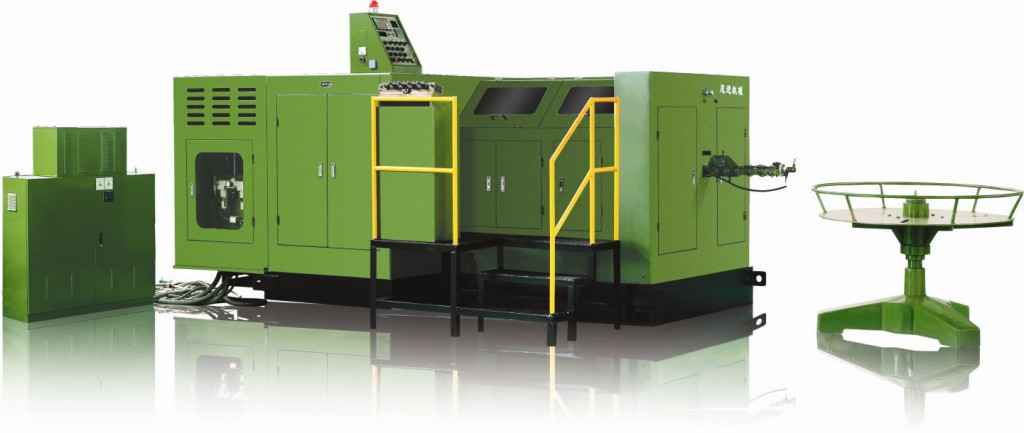
The cold forging machine market forecast is closely connected to the changing needs of precision manufacturing across automotive, electronics, industrial machinery, construction, transportation, and appliance industries. Cold forging machines enable manufacturers to shape metal components at room temperature using controlled mechanical force, supporting high-volume production with consistent dimensions and efficient material utilization.
As manufacturers pursue higher productivity, lower material waste, improved component quality, and greater automation, demand for advanced cold forging equipment is expected to evolve. At the same time, changing vehicle architectures, digital manufacturing, workforce requirements, and sustainability objectives will influence future investment decisions.
Automotive Manufacturing Will Continue to Influence Demand
Automotive production remains an important application area for cold forging machines. Vehicles require large quantities of precision components, including fasteners, pins, shafts, sleeves, connectors, gears, and other formed parts.
Cold forging is well suited to high-volume production because multiple forming operations can be completed efficiently while maintaining consistent component geometry.
Future automotive manufacturing requirements are likely to emphasize equipment that provides high throughput, tight tolerances, flexible production, and dependable operation. These requirements can encourage suppliers to develop machines with improved controls, automation, and process monitoring.
Electric Vehicles Will Reshape Equipment Requirements
The expansion of electric vehicles is expected to influence the future direction of cold forging equipment. EVs use different powertrain architectures, but they continue to require numerous precision metal components.
Cold-forged parts can be used in braking systems, steering assemblies, electrical connections, thermal-management systems, fasteners, and other vehicle applications.
Some conventional engine-related components may experience changing demand as electrification progresses, while new component categories create additional opportunities. Equipment manufacturers will therefore need to support changing geometries, materials, tolerances, and production volumes.
Automation Will Become Increasingly Important
Automation is expected to remain one of the strongest technological influences on the market. Manufacturers are increasingly connecting forging machines with automated feeding, transfer mechanisms, robotic handling, inspection, sorting, and packaging systems.
Automated production can reduce manual intervention while improving cycle consistency and throughput. It can also help manufacturers operate equipment for longer production periods with more predictable output.
Future machine designs are likely to place greater emphasis on seamless integration with broader automated manufacturing systems.
Digitalization Will Transform Machine Management
Digital controls and connected equipment are becoming increasingly important in modern forging operations. Machines can collect information about cycle times, forming forces, vibration, temperature, energy consumption, and operating conditions.
This information can help production teams optimize processes and identify potential problems.
The cold forging machine market forecast therefore increasingly includes digital capabilities as part of equipment value. Connectivity, remote monitoring, production analytics, and machine-level data can support better decision-making and improve manufacturing visibility.
Predictive Maintenance Can Improve Equipment Availability
Cold forging operations depend heavily on machine reliability. Unexpected failures can interrupt high-volume production and create downstream scheduling problems.
Predictive maintenance technologies can help identify changes in vibration, temperature, lubrication, or machine behavior before they develop into major failures.
Future equipment may increasingly incorporate condition-monitoring sensors and software that help maintenance teams schedule interventions based on actual machine conditions rather than fixed intervals.
Tooling Innovation Will Remain Critical
Dies and punches are essential to cold forging performance. They experience substantial mechanical forces and must maintain accurate geometry throughout production.
Future developments in tool materials, coatings, surface treatments, cooling, and geometry optimization can improve tool life and component consistency.
Machine manufacturers and component producers will increasingly need to treat tooling, equipment, and process parameters as an integrated production system.
Material Efficiency Will Support Market Development
Cold forging can achieve efficient material utilization because components are formed through controlled deformation rather than being produced mainly by removing material.
As raw-material costs and sustainability concerns remain important, manufacturers may increasingly prioritize equipment capable of minimizing scrap and optimizing material usage.
Better preform design, forming sequences, tooling geometry, and process controls can further improve material efficiency.
Advanced Materials Will Create New Requirements
The use of high-strength steels, stainless steels, aluminum alloys, and other engineered materials can influence future machine development.
Some advanced materials require greater forming forces or specialized tooling. Equipment must therefore provide sufficient capacity while maintaining precision and production efficiency.
Machine manufacturers that can support a broader range of materials may be better prepared for changing requirements across automotive, electronics, industrial, and transportation applications.
Non-Automotive Industries Will Provide Additional Opportunities
The future market will not depend solely on automotive production. Electronics, construction, industrial equipment, appliances, transportation, and other sectors also require precision metal components.
Electronics manufacturers may need small connectors and precision parts, while construction and industrial equipment producers require durable fasteners, pins, shafts, and related components.
Expansion across these sectors can provide manufacturers with additional demand opportunities and reduce dependence on a single end-use industry.
Flexible Manufacturing Will Gain Importance
Manufacturers increasingly need to produce different component designs without excessive downtime. This is encouraging demand for machines that support rapid setup changes, programmable controls, modular configurations, and adaptable tooling.
Flexible production can improve machine utilization and help manufacturers respond to changing customer requirements.
Future cold forging systems are therefore likely to balance high-volume productivity with greater configuration flexibility.
Quality Inspection Will Become More Automated
Precision requirements are increasing across many applications. Small dimensional variations can affect component assembly and final-product performance.
Automated inspection systems, machine vision, sensors, and real-time measurement can help identify defects during production.
Integrating quality control directly into manufacturing lines can reduce dependence on final inspection and provide faster feedback when process conditions change.
Sustainability Will Influence Equipment Selection
Manufacturers are increasingly considering energy consumption, material waste, lubrication use, and production efficiency when evaluating industrial equipment.
Cold forging already offers material-utilization benefits in suitable applications, but equipment manufacturers can further improve sustainability through efficient drives, optimized forming cycles, energy monitoring, and improved lubrication management.
These capabilities can become increasingly relevant as companies pursue resource-efficiency objectives.
Total Cost of Ownership Will Shape Investment
Equipment purchasing decisions are likely to focus increasingly on lifecycle economics rather than acquisition price alone.
Manufacturers may consider production speed, energy use, tooling consumption, maintenance costs, spare-parts availability, downtime, automation integration, and technical support.
Suppliers that demonstrate strong long-term operating value can address broader customer requirements beyond machine specifications.
Workforce Requirements Will Continue to Evolve
Advanced forging systems require personnel with knowledge of mechanical engineering, tooling, automation, digital controls, maintenance, and process optimization.
Manufacturers may therefore invest more heavily in employee training and technical support.
Equipment suppliers can contribute through operator training, installation assistance, remote diagnostics, maintenance guidance, and process-development services.
Supply-Chain Resilience Will Remain Important
Cold forging machine production itself depends on reliable access to mechanical components, controls, motors, sensors, tooling materials, and other specialized inputs.
Manufacturers are likely to place greater emphasis on supplier diversification, regional service networks, spare-parts availability, and production planning.
Reliable support can be particularly important for customers operating high-volume production lines where extended equipment downtime can create significant operational disruption.
Future Market Direction
The cold forging machine market forecast points toward an industry increasingly defined by automation, digital connectivity, precision, flexible production, advanced tooling, material efficiency, and lifecycle support.
Automotive and EV manufacturing will remain important influences, while demand from electronics, industrial machinery, construction, transportation, and appliances can broaden the application base.
Future machines are likely to become more connected, data-driven, automation-ready, and adaptable to changing materials and component designs.
Conclusion
The cold forging machine market forecast reflects continued evolution in precision metal manufacturing. Demand will be influenced by automotive production, EV component development, automation, digitalization, tooling innovation, advanced materials, and expansion across non-automotive industries.
At the same time, material efficiency, energy management, predictive maintenance, automated quality inspection, workforce skills, and supply-chain resilience will influence equipment adoption.
As manufacturers seek higher productivity, consistent quality, reduced waste, and flexible production capabilities, cold forging machines are expected to become increasingly integrated with smart manufacturing environments. Suppliers that combine reliable forming performance with automation, digital intelligence, advanced tooling, and comprehensive technical support can respond effectively to the future requirements of precision component manufacturing.
Written as -https://www.pristinemarketinsights.com/cold-forging-machine-market-report