How to Choose the Right Computer UPS for Reliable Power Backup
-

- May 01st, 2026
- 7,683 views
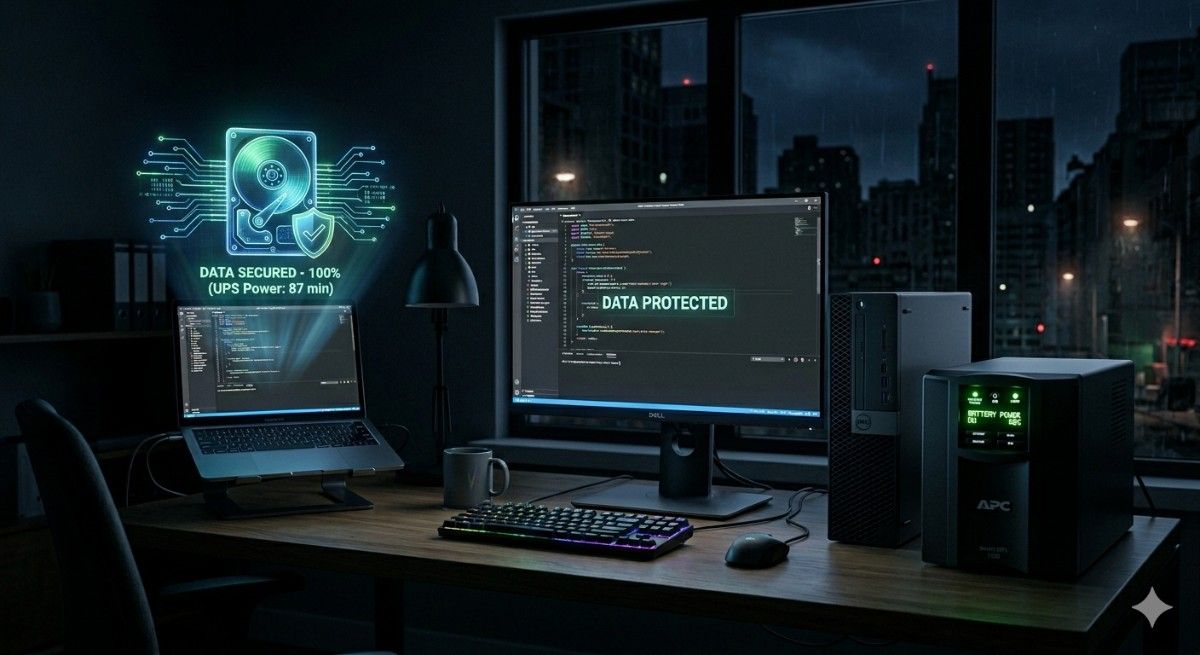
In today’s digital environment, uninterrupted power supply is no longer optional—it is a necessity. Whether we are managing business-critical systems, protecting valuable data stored on a laptop hard drive, or ensuring seamless workflow, selecting the right computer UPS (Uninterruptible Power Supply) becomes a strategic decision. A well-chosen UPS safeguards hardware, prevents data loss, and ensures operational continuity during unexpected outages.
This comprehensive guide explores every essential factor we must consider to choose the ideal computer UPS for reliable power backup.
Understanding What a Computer UPS Does
A computer UPS acts as a backup power source that instantly activates when the main power supply fails. It not only provides temporary electricity but also stabilizes voltage fluctuations and protects connected devices, including systems running critical applications and storing files on a laptop hard drive, from surges.
We rely on a UPS to:
Prevent sudden shutdowns
Protect sensitive components like a laptop hard drive
Avoid data corruption
Maintain productivity during outages
Types of Computer UPS Systems
Choosing the right UPS starts with understanding the available types.
1. Standby (Offline) UPS
This is the most basic and cost-effective option. It switches to battery power when an outage is detected.
Best for: Home users and small setups
Key advantage: Affordable and compact
Limitation: Slight delay in switching
2. Line-Interactive UPS
This type regulates voltage fluctuations without switching to battery frequently, helping protect systems and any connected laptop hard drive from inconsistent power.
Best for: Small offices and workstations
Key advantage: Voltage regulation
Limitation: Moderate cost
3. Online (Double Conversion) UPS
This is the most advanced type, providing continuous power through battery conversion, ideal for environments where data on a laptop hard drive must remain fully protected.
Best for: Servers, data centers, and critical systems
Key advantage: Zero transfer time
Limitation: Higher cost and power consumption
Power Capacity: The Most Critical Factor
One of the most important considerations is UPS capacity, measured in VA (Volt-Amps) or Watts.
We must:
Calculate total power consumption of all connected devices, including systems using a laptop hard drive
Add at least 20–30% extra capacity for safety
Avoid underpowered UPS units that can fail during peak load
For example:
Basic PC setup: 600–1000 VA
Gaming PC or workstation: 1000–1500 VA
Server systems: 2000 VA and above
Battery Runtime and Backup Duration
The purpose of a UPS is not to run devices indefinitely but to provide enough time to:
Save work stored on a laptop hard drive
Shut down systems safely
Switch to alternative power sources
We should evaluate:
Runtime at full load
Runtime at half load
Expandability with external batteries (for advanced models)
A longer runtime ensures greater operational flexibility during outages.
Number and Type of Outlets
Modern UPS systems offer different outlet configurations. We must check:
Number of battery-backed outlets
Availability of surge-only outlets
Compatibility with device plugs
For professional setups, choosing a UPS with multiple battery-supported outlets ensures that all critical devices, including those relying on a laptop hard drive, remain powered.
Voltage Regulation and Surge Protection
A high-quality computer UPS should include:
Automatic Voltage Regulation (AVR)
Surge protection
Noise filtering
These features protect against:
Voltage spikes
Power dips
Electrical noise
Without these protections, sensitive equipment like motherboards, SSDs, and a laptop hard drive may suffer long-term damage.
Form Factor and Design
UPS systems come in various designs:
Tower (Vertical)
Rack-mounted
Compact desktop units
We should select based on:
Available space
Installation requirements
Aesthetic and organizational preferences
For office environments, rack-mounted UPS systems provide better scalability and organization.
Battery Type and Replacement
Battery quality directly impacts UPS performance.
We must consider:
Sealed Lead-Acid (SLA) batteries (common and affordable)
Lithium-ion batteries (longer lifespan, higher cost)
Additionally:
Ensure easy battery replacement
Check battery lifespan (typically 3–5 years)
A UPS with user-replaceable batteries reduces long-term costs and ensures continued protection for devices storing data on a laptop hard drive.
Software and Monitoring Features
Modern UPS systems include advanced monitoring capabilities.
Important features:
USB or network connectivity
Shutdown management software
Real-time power monitoring
These tools allow us to:
Automate system shutdowns to protect a laptop hard drive
Monitor power usage
Receive alerts during outages
For businesses, this adds an extra layer of control and reliability.
Energy Efficiency and Eco Mode
Energy-efficient UPS models reduce electricity consumption.
Look for:
Eco mode operation
High efficiency ratings
Low heat generation
An efficient UPS not only lowers power bills but also extends battery life while safeguarding systems and a laptop hard drive.
Brand Reliability and Warranty
Choosing a reputable brand ensures:
Better build quality
Reliable performance
Strong after-sales support
We should always check:
Warranty duration
Customer support availability
Service network
A good warranty provides peace of mind and long-term security, especially when protecting valuable data stored on a laptop hard drive.
Use Case-Based Recommendations
For Home Users
600–1000 VA UPS
Basic surge protection
Compact design
Ideal for systems with a laptop hard drive
For Office Workstations
1000–1500 VA
Line-interactive UPS
Multiple outlets
Reliable protection for devices using a laptop hard drive
For Servers and Critical Systems
2000+ VA
Online UPS
Extended battery support
Maximum safety for enterprise storage and laptop hard drive data
Common Mistakes to Avoid
When selecting a computer UPS, we must avoid:
Ignoring power capacity requirements
Choosing the cheapest option without features
Overloading the UPS
Skipping voltage protection features
Neglecting battery maintenance that can risk a laptop hard drive
These mistakes can lead to equipment damage and data loss.
Installation and Maintenance Tips
To maximize UPS performance:
Place the UPS in a well-ventilated area
Avoid exposure to heat and moisture
Test the UPS regularly
Replace batteries when performance declines
Routine maintenance ensures consistent and reliable backup power, keeping systems and a laptop hard drive safe.
Why the Right Computer UPS Matters
A properly selected UPS system ensures:
Business continuity
Hardware protection
Data integrity on a laptop hard drive
Operational efficiency
Investing in the right UPS is not just about backup power—it is about protecting our entire digital ecosystem.
Final Thoughts
Selecting the right computer UPS requires careful evaluation of power needs, runtime expectations, system type, and budget. By focusing on capacity, battery performance, protection features, and reliability, we can ensure uninterrupted productivity and long-term system safety while securing every laptop hard drive in use.
A well-informed decision today guarantees consistent performance, reduced risks, and peace of mind for years to come.