Corporate Travel Budget Squeeze Analytics 2026
-

- Published Updated
- 617 views
Introduction
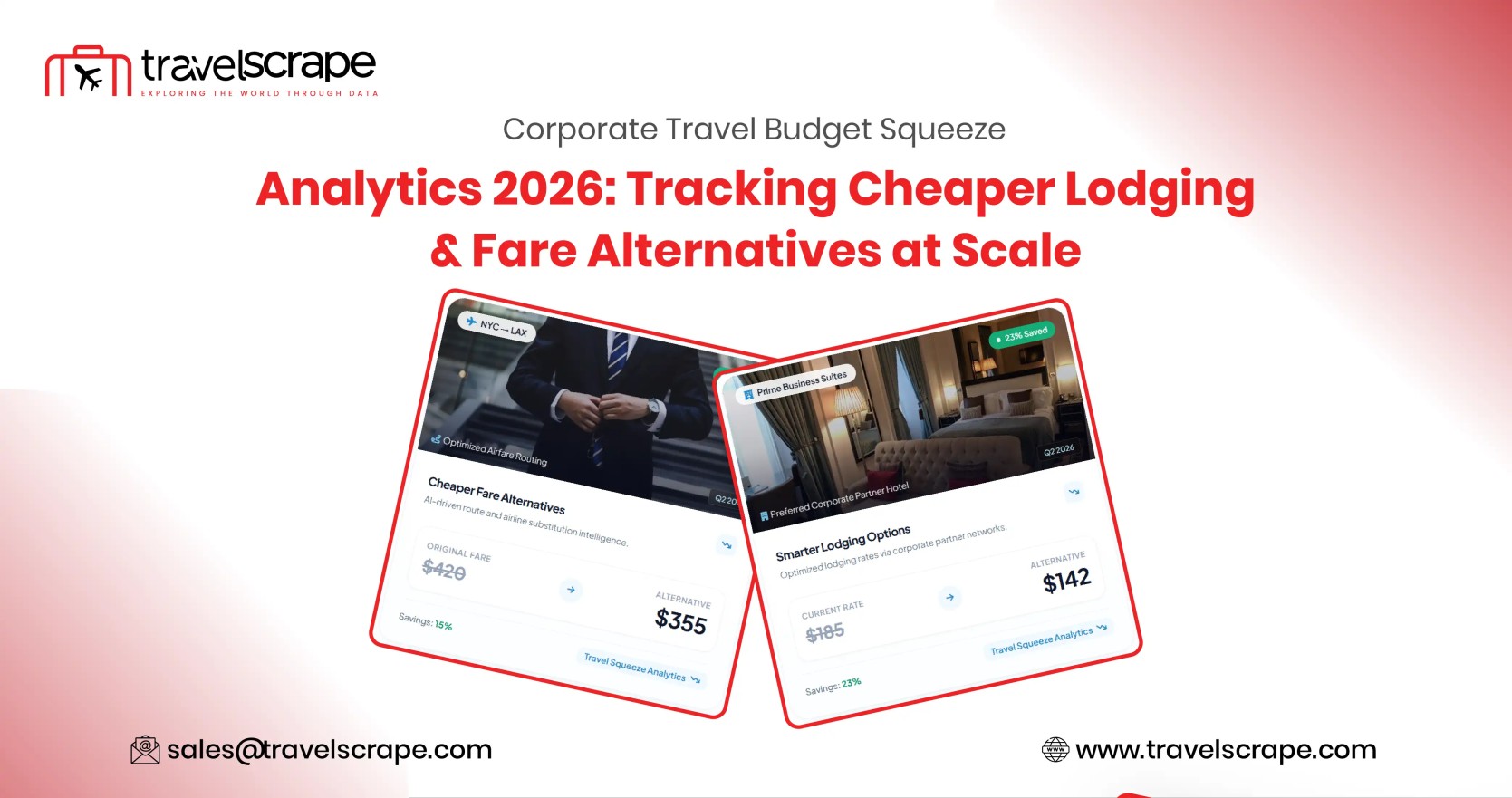
Corporate travel programs are under increasing pressure to control spending while maintaining employee mobility, booking flexibility, and operational efficiency. This case study demonstrates how a corporate travel intelligence solution helped a business identify fare movements, lodging price differences, booking patterns, and alternative travel options across multiple markets. The project was designed around Corporate Travel Budget Squeeze Analytics 2026, giving the client greater visibility into where travel budgets were being consumed and where savings opportunities existed. Using a scalable Travel Scraping API, the solution collected structured information from travel websites, booking platforms, accommodation sources, and other relevant channels. The client wanted to Scrape Corporate Travel Cost Optimization data covering fares, hotel rates, availability, discounts, booking windows, and alternative options. The resulting intelligence supported faster comparisons, improved procurement decisions, and more consistent monitoring of changing corporate travel costs across destinations and booking periods.
The Client
The client was a corporate travel management organization serving businesses with frequent domestic and international employee travel requirements. Its operations depended on timely information about airfare, accommodation, availability, pricing changes, and alternative booking options. However, fragmented travel sources made it difficult to maintain a consistent view of market movements. The organization established an internal Travel Data Intelligence initiative to consolidate travel information and improve visibility across frequently booked routes and destinations. It also wanted Corporate Travel Fare Alternatives Monitoring capabilities to compare different airlines, fare categories, routes, and booking combinations. The client was particularly interested in using Price Optimization strategies based on historical and real-time market information. By obtaining standardized travel records, the organization aimed to identify cost-saving opportunities, understand booking behavior, and provide corporate travel teams with more actionable intelligence for procurement and planning decisions.
Challenges in the Travel Industry
Corporate travel teams operate in a highly dynamic environment where prices, availability, policies, and traveler preferences can change rapidly. The following challenges affected the client's ability to manage travel expenditure effectively.
Fragmented Booking Trend Visibility
The client lacked consolidated Corporate Travel Booking Trends insights because relevant information was distributed across airline websites, hotel platforms, booking portals, and travel marketplaces. Comparing booking patterns manually consumed significant time and made it difficult to identify recurring changes across destinations.
Uncertain Future Travel Demand
Fluctuating employee travel schedules, seasonal movements, business events, and destination-specific changes created difficulties around Corporate Travel Demand Forecasting 2026. The client needed reliable historical and current data to identify potential demand movements and prepare procurement strategies before costs increased.
Limited Demand Forecasting Capabilities
Traditional spreadsheets provided only a partial view of travel activity, limiting effective Demand Forecasting. The client needed structured records covering fares, booking dates, availability, destinations, and accommodation prices to recognize recurring patterns and support more informed corporate travel planning.
Rising Accommodation Expenses
Accommodation represented a substantial component of corporate travel budgets, particularly in major business destinations. The absence of reliable Corporate Travel Cheaper Lodging Price Tracking made it difficult for procurement teams to identify lower-priced comparable properties and monitor changing hotel rates during booking periods.
Delayed Booking Trend Intelligence
Manual monitoring created delays in obtaining actionable Booking Trend Insights. By the time travel teams identified price movements or availability changes, favorable booking opportunities could disappear. The client required a continuously refreshed dataset capable of supporting faster comparisons and timely decision-making.
Our Approach
Multi-Source Travel Data Collection
We created automated extraction workflows covering relevant airline, hotel, booking, and travel platforms. The system captured destination, fare, hotel, availability, discount, booking-window, and travel-date information while maintaining standardized fields for downstream analysis and comparison.
Fare and Accommodation Normalization
Collected records were transformed into consistent formats so corporate travel teams could compare prices across different providers. Currency, fare categories, accommodation types, dates, destinations, and availability fields were standardized to minimize inconsistencies within the analytical dataset.
Historical and Current Data Processing
The solution combined historical observations with continuously collected records to create a broader view of travel market movements. This enabled the client to examine recurring pricing patterns, compare booking periods, identify seasonal changes, and understand destination-specific cost behavior.
Alternative Travel Monitoring
We introduced structured monitoring for alternative flight combinations, fare categories, hotel options, and travel arrangements. This allowed the client to compare multiple possibilities instead of relying on a single booking source when evaluating corporate travel expenditure and procurement opportunities.
Analytics-Ready Data Delivery
The processed information was delivered in structured, analytics-ready formats suitable for dashboards, internal reporting, and downstream business intelligence systems. Data validation routines helped identify duplicates, incomplete records, inconsistent values, and other quality issues before delivery.
Results Achieved
The implementation provided the client with a centralized view of corporate travel pricing and booking activity, improving visibility and supporting more consistent cost analysis.
Expanded Travel Market Coverage
The client gained access to a significantly broader set of travel records covering airlines, hotels, destinations, fare categories, availability, and booking periods. This expanded coverage enabled more comprehensive comparisons than the previous manual monitoring process.
Faster Price Comparisons
Automated collection reduced the time required to compare travel options across multiple sources. Corporate travel teams could evaluate airfare and lodging movements through standardized records rather than repeatedly visiting individual platforms and manually recording changing prices.
Improved Cost Visibility
The solution provided greater visibility into fare fluctuations, accommodation pricing, discounts, and alternative booking options. This helped the client identify cost differences across travel periods and destinations while supporting more informed procurement discussions.
Stronger Planning Intelligence
Historical and current datasets allowed the organization to examine recurring travel patterns and market movements. Teams could use these observations when preparing travel budgets, reviewing preferred suppliers, and evaluating potential changes in corporate booking strategies.
Scalable Data Infrastructure
The automated workflow created a scalable foundation for ongoing travel intelligence. New sources, destinations, travel categories, and data fields could be incorporated as requirements evolved, allowing the client to expand monitoring without rebuilding the entire data collection framework.
Results Snapshot
Performance Metrics
Travel Sources Monitored
Before Implementation: 18
After Implementation: 64
Improvement: 255.6%
Monthly Travel Records
Before Implementation: 42,500
After Implementation: 186,000
Improvement: 337.6%
Destinations Covered
Before Implementation: 96
After Implementation: 214
Improvement: 122.9%
Hotel Properties Tracked
Before Implementation: 3,800
After Implementation: 11,600
Improvement: 205.3%
Flight/Fare Combinations
Before Implementation: 12,400
After Implementation: 57,800
Improvement: 366.1%
Average Data Refresh Time
Before Implementation: 24 hrs
After Implementation: 4 hrs
Improvement: 83.3% faster
Manual Monitoring Effort
Before Implementation: 160 hrs/month
After Implementation: 48 hrs/month
Improvement: 70.0% reduction
Duplicate Records
Before Implementation: 8.6%
After Implementation: 1.9%
Improvement: 77.9% reduction
Data Validation Accuracy
Before Implementation: 91.4%
After Implementation: 97.6%
Improvement: +6.2 percentage points
Alternative Travel Options Identified
Before Implementation: 740/month
After Implementation: 3,260/month
Improvement: 340.5%
Monthly Pricing Observations
Before Implementation: 86,000
After Implementation: 412,000
Improvement: 379.1%
Corporate Travel Reports Generated
Before Implementation: 12/month
After Implementation: 48/month
Improvement: 300%
Client's Testimonial
"Before this project, our travel teams spent considerable time collecting pricing information manually from different sources. The lack of standardized information made it difficult to compare airfare, accommodation, and alternative travel options consistently. The new data solution gave us a much broader and more structured view of the market. We can now monitor pricing movements, review booking patterns, and evaluate alternatives through a centralized dataset. The automated workflow has also reduced repetitive research work and improved the speed at which our teams receive useful information. Most importantly, the solution has created a scalable foundation that can support additional destinations, sources, and travel categories as our requirements expand. The quality and consistency of the delivered data have made our internal travel analysis significantly easier."
— Director of Corporate Travel Intelligence, Global Business Travel Management Company
Conclusion
Corporate travel organizations require timely and structured information to navigate changing fares, accommodation costs, availability, and traveler demand. This case study demonstrates how automated travel data collection can transform fragmented market information into a centralized intelligence resource.
By combining fare monitoring, lodging analysis, alternative travel comparisons, and historical observations, the client developed a more comprehensive view of corporate travel expenditure. The solution also enabled teams to Scrape Aggregated Travel Deals from multiple relevant sources while creating standardized datasets for internal analysis.
Organizations can similarly Scrape Travel Website Data to monitor market movements, supplier pricing, destination availability, and booking patterns. Extending the workflow to Scrape Travel Mobile App sources can further expand coverage and support broader travel intelligence initiatives. Together, these capabilities provide a scalable foundation for travel procurement, budgeting, benchmarking, and ongoing market monitoring.
FAQs
What type of corporate travel data can be collected?
Corporate travel datasets can include airfare, hotel prices, availability, destinations, booking dates, discounts, fare categories, accommodation details, travel durations, and alternative travel options.
How can travel data scraping support cost optimization?
Automated data collection allows organizations to compare prices across multiple sources, identify price movements, monitor alternatives, and analyze historical patterns that can support corporate travel procurement decisions.
Can the solution monitor airline and hotel prices together?
Yes. A structured travel intelligence workflow can combine airfare and hotel information, allowing businesses to evaluate complete travel costs across destinations and booking periods.
How frequently can corporate travel data be refreshed?
Refresh frequency depends on business requirements and source availability. Data can be collected at scheduled intervals to support daily, hourly, or other recurring monitoring workflows.
Can the travel dataset be integrated with dashboards?
Yes. Structured travel data can be delivered in formats suitable for dashboards, analytics platforms, reporting systems, APIs, and internal business intelligence applications.
source : https://www.travelscrape.com/corporate-travel-budget-squeeze-analytics.php
original : https://www.travelscrape.com
#CorporateTravelBudgetSqueezeAnalytics2026
#ScrapeCorporateTravelCostOptimizationdata
#CorporateTravelFareAlternativesMonitoring
#CorporateTravelBookingTrendsinsights
#CorporateTravelDemandForecasting2026
#CorporateTravelCheaperLodgingPriceTracking