How AI Is Changing Crypto Arbitrage Trading
-

- April 29th, 2026
- 7,957 views

Crypto trading is becoming faster every year. Prices move quickly, exchanges update at different speeds, and small price gaps can appear for only a few seconds. For normal traders, it is almost impossible to check every exchange manually and act at the right time.
This is where artificial intelligence is becoming useful. AI can scan large amounts of market data, compare prices, and help traders find possible arbitrage opportunities faster. Instead of depending only on manual research, traders can now use smarter systems to watch the market all day.
Crypto arbitrage is not a new idea, but AI has made it more practical for many traders. It helps reduce manual work, improves speed, and supports better decision-making. Still, traders need to understand how it works before using any tool or software.
What Is Crypto Arbitrage?
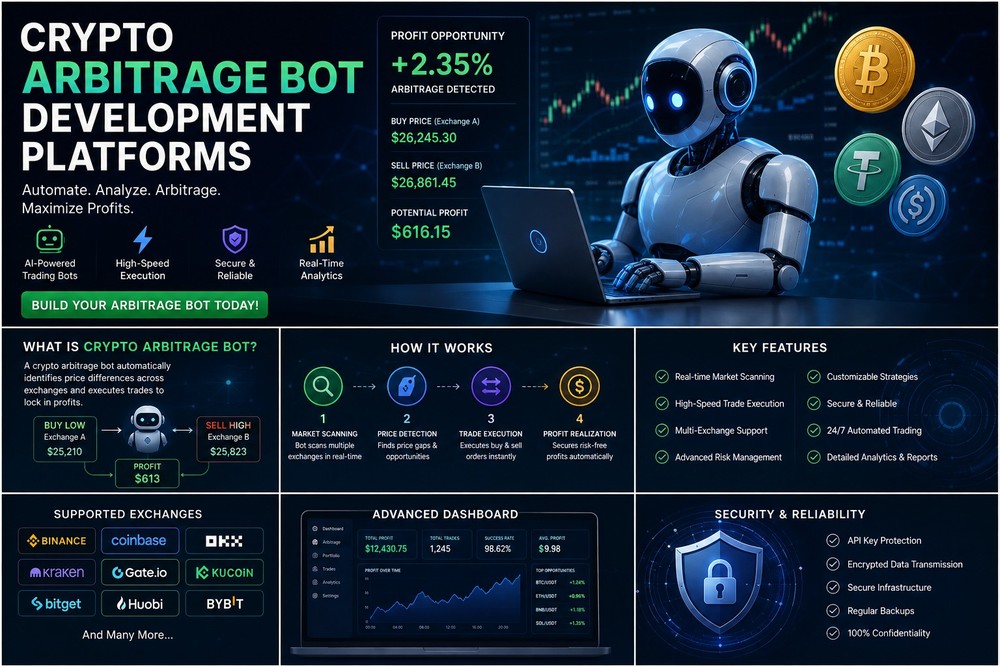
Crypto arbitrage is a trading strategy where traders try to earn from price differences between different crypto markets. For example, Bitcoin may have one price on one exchange and a slightly different price on another exchange. A trader may buy from the cheaper exchange and sell on the higher-priced exchange.
These price gaps happen because crypto markets are not fully connected. Every exchange has its own users, liquidity, trading volume, and order book. Sometimes, one exchange reacts faster to market changes, while another reacts slowly. This creates temporary opportunities.
The goal of arbitrage is not to predict the market direction. The main goal is to find a price difference and act before it disappears. This makes timing, speed, and cost calculation very important.
Why AI Matters in Crypto Arbitrage
Crypto arbitrage needs fast action. A price gap can close in seconds, so manual trading is often too slow. An AI-based arbitrage platform can help traders scan markets, compare price differences, and filter opportunities before a trader makes a decision.
AI can process live market data much faster than a human. It can check many exchanges, many coins, and many trading pairs at the same time. This gives traders a better chance to spot opportunities early.
Another benefit is consistency. Human traders can get tired, distracted, or emotional. AI tools can keep working 24/7 without breaks. They can follow rules, monitor the market, and send alerts whenever a possible opportunity appears.
How AI Arbitrage Platforms Work
AI arbitrage platforms usually connect with different exchanges through APIs or market data systems. They collect live prices and compare them across different markets. When the system finds a price difference, it checks whether the opportunity may be useful.
A simple scanner may only show price gaps. A more advanced AI system may also check trading fees, withdrawal fees, slippage, liquidity, and market depth. This helps traders understand the real profit, not just the visible price difference.
Some platforms also support automation. This means traders can set rules, and the system can act when those rules are met. For example, a trader may choose to receive alerts only when the estimated profit is above a certain percentage.
Main Types of AI Crypto Arbitrage
AI can support different types of arbitrage strategies. Each strategy works in a different way and needs a different level of experience.
Cross-Exchange Arbitrage
Cross-exchange arbitrage is one of the most common methods. It means buying a crypto asset from one exchange at a lower price and selling it on another exchange at a higher price.
For example, if Ethereum is cheaper on Exchange A and more expensive on Exchange B, a trader may try to use that price gap. The profit comes from the difference between the buying price and selling price.
AI can help by scanning many exchanges at the same time. It can also compare fees and liquidity before showing the opportunity. This is important because a price gap may look good, but after fees, the real profit may be very small.
Triangular Arbitrage
Triangular arbitrage usually happens inside one exchange. It uses three trading pairs to find a small price imbalance. For example, a trader may start with USDT, convert it into BTC, then convert BTC into ETH, and finally convert ETH back into USDT.
If the rates between these pairs are slightly different, the trader may end with more value than they started with. However, this process needs very fast calculation because these gaps can disappear quickly.
AI tools are useful here because they can calculate many trading paths in real time. They can check whether the full cycle is profitable after fees before the trader takes action.
Spot and Futures Arbitrage
Spot and futures arbitrage is based on the price difference between the spot market and the futures or perpetual market. Sometimes, the current price of a coin is different from the futures price.
A trader may buy in the spot market and take an opposite position in the futures market. This can help capture the difference between both prices or benefit from funding rates.
This strategy is more advanced because it may involve leverage, margin, liquidation risk, and funding fees. AI can help by tracking these details and showing whether the setup is still useful.
CEX and DEX Arbitrage
CEX and DEX arbitrage means finding price gaps between centralized exchanges and decentralized exchanges. Centralized exchanges include platforms like Binance, OKX, and Kraken. Decentralized exchanges work through blockchain liquidity pools.
Sometimes, a token may have a different price on a DEX because of low liquidity or sudden demand. AI tools can scan both centralized and decentralized markets to find these gaps.
However, this strategy also includes extra costs such as gas fees, bridge fees, and slippage. A good platform should calculate these costs before showing the final estimated profit.
Key Features of a Good AI Arbitrage Platform
Not every platform is useful for every trader. Some tools are made for beginners, while others are made for advanced users. Before choosing any platform, traders should check its features carefully.
Real-Time Market Scanning
Real-time scanning is one of the most important features. Arbitrage opportunities do not stay open for long. If the platform shows delayed data, the trader may enter too late.
A good system should scan multiple exchanges quickly and update prices without delay. It should also show price differences clearly so traders can understand the opportunity.
Real-time scanning helps traders avoid wasting time on old or weak signals.
Fee and Profit Calculation
A price difference is not always profit. Traders must calculate all costs before entering a trade. These costs may include trading fees, withdrawal fees, gas fees, bridge fees, and slippage.
A strong AI platform should calculate estimated profit after fees. This helps traders avoid opportunities that look attractive but are not actually profitable.
For example, a 1% price gap may look good, but if total costs are 0.8%, the remaining profit is very small.
Multi-Exchange Support
A platform with more exchange support can find more opportunities. If a tool scans only a few exchanges, it may miss many price gaps.
Multi-exchange support also helps traders compare liquidity and spreads across different markets. This gives a clearer picture of where real opportunities exist.
For serious arbitrage traders, this feature is very important because they often keep funds ready on different exchanges.
Automation and Alerts
Automation can save time and improve speed. Traders can set conditions, and the system can send alerts when those conditions are met. Some tools may also execute trades automatically.
However, automation should be used carefully. Traders should test the system first, use small amounts, and set clear limits. A bot can work fast, but wrong settings can create repeated mistakes.
Alerts are helpful for traders who do not want full automation but still want to stay updated.
Risk Management Tools
Risk management is important in every trading strategy. A good AI arbitrage platform should help traders control position size, set limits, and avoid high-risk trades.
Useful risk tools may include daily loss limits, trade size limits, exchange filters, and stop rules. These features can protect traders from sudden market changes.
AI can support risk control, but it should not replace human judgment completely. Traders still need to review performance and adjust settings when needed.
Common Risks in AI Crypto Arbitrage
AI can improve speed and accuracy, but it does not remove all risks. Traders should understand the common problems before using any platform.
Slippage
Slippage happens when the final trade price is different from the expected price. This usually happens when liquidity is low or the market moves quickly.
Even if AI finds a good opportunity, slippage can reduce or remove profit.
Latency
Latency means delay. In arbitrage trading, even a small delay can matter. If the system reacts too slowly, the price gap may close before the trade is completed.
This is why fast data, strong APIs, and stable infrastructure are important.
Exchange and API Risk
AI platforms often connect with exchanges through APIs. Traders should use API permissions carefully. It is better to avoid withdrawal permissions unless they are fully needed.
Security should always be checked before connecting any account.
Overdependence on Automation
Some traders trust bots too much. This can be risky. Market conditions can change, exchanges can face issues, and bots can make wrong decisions if settings are poor.
AI should help the trader, not replace the trader completely.
How Beginners Should Start
Beginners should start slowly. They should first learn how arbitrage works, how fees affect profit, and how fast opportunities disappear.
It is better to use demo tools, scanners, or small test trades before using larger capital. This helps beginners understand real market behavior without taking big risks.
They should also avoid chasing every price gap. Some gaps appear because withdrawals are disabled, liquidity is low, or the exchange has technical issues.
A careful and patient approach is better than rushing into every opportunity.
Final Thoughts
AI is making crypto arbitrage smarter, faster, and more organized. It helps traders scan markets, compare prices, calculate costs, and find opportunities more efficiently.
However, AI does not guarantee profit. Arbitrage still requires proper planning, fee calculation, risk control, and regular monitoring. Traders should use AI as a helpful tool, not as a complete replacement for knowledge and experience.
The best results come when traders combine smart technology with careful decision-making. With the right platform, proper testing, and clear risk rules, AI can make crypto arbitrage easier to manage and more practical for modern traders.
FAQs
What is AI crypto arbitrage?
AI crypto arbitrage is the use of artificial intelligence tools to find and manage price differences between crypto markets.
Is AI arbitrage profitable?
It can be profitable, but it is not guaranteed. Fees, slippage, latency, and market movement can affect results.
Do beginners need AI for arbitrage trading?
AI can help beginners understand opportunities faster, but beginners should start with small tests and learn the basics first.
Can AI bots trade automatically?
Yes, some AI bots can trade automatically based on rules set by the user. However, they should be tested carefully before using real capital.
What is the biggest risk in crypto arbitrage?
The biggest risks include fast price changes, low liquidity, high fees, slippage, and platform security issues.