Crypto Payment Gateways Trends to Follow
-

- Published Updated
- 75 views
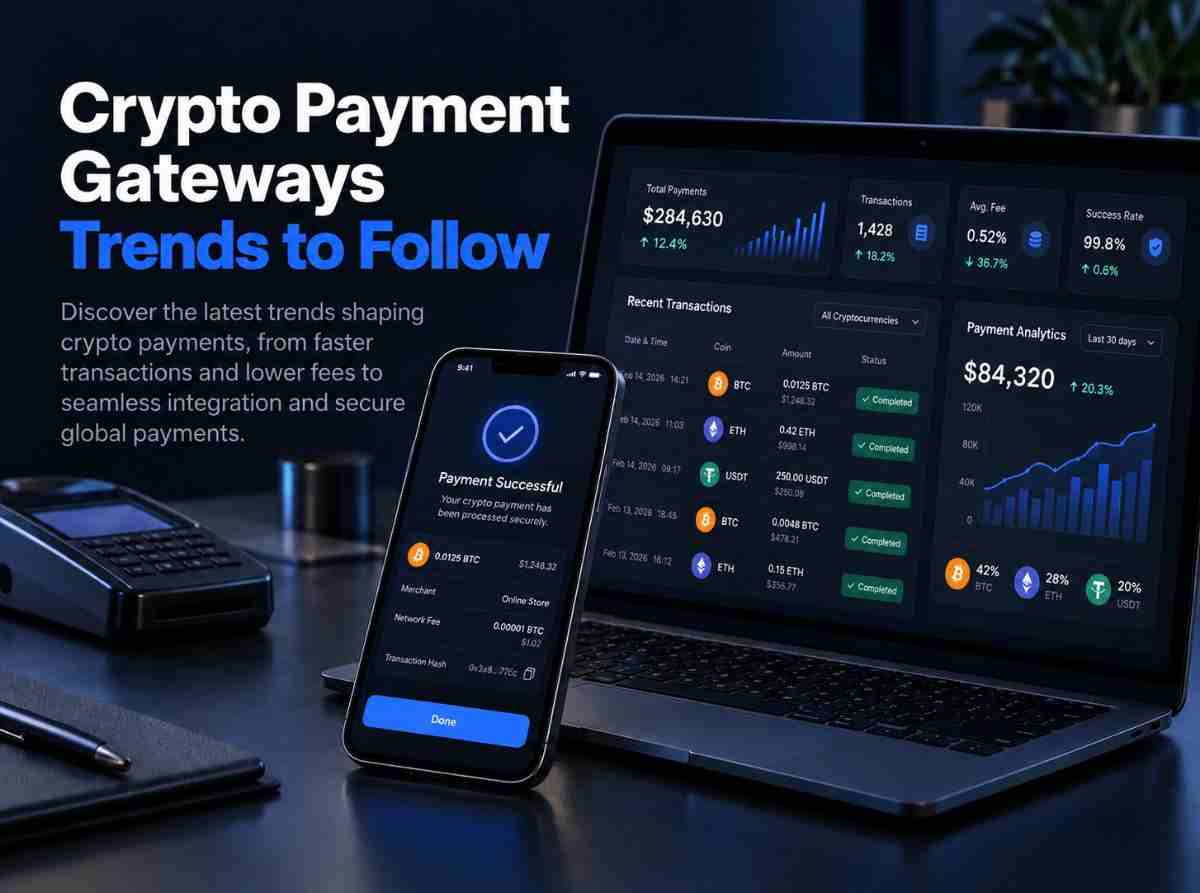
The crypto payment space looked completely different three years ago, dominated by volatile coin acceptance and manual conversion. What's actually shaping merchant adoption today looks quite different, and understanding where things are genuinely heading matters more than chasing whatever got attention last quarter. Crypto Payment Gateways Trends to Follow breaks down what's actually changing and what it means for a business deciding how to accept crypto going forward.
The short answer
Crypto Payment Gateways are trending toward stablecoin-first acceptance, deeper integration with mainstream e-commerce and no-code platforms, improved regulatory clarity in key markets, growing support for recurring and subscription billing, and increasing merchant demand for multi-network flexibility rather than single-coin, single-network setups. Crypto Payment Gateways Trends to Follow reflects a broader shift from crypto payments as a niche, experimental feature toward genuinely mainstream, operationally mature payment infrastructure.
Why stablecoin-first acceptance is the defining shift right now
The single clearest trend across the industry is the move away from Bitcoin-first checkout defaults toward stablecoins like USDT and USDC as the primary, promoted payment option. This shift is driven less by marketing and more by finance teams, who care about predictable revenue recognition and minimal exposure to a volatile asset, even briefly. Crypto Payment Gateways Trends to Follow starts here because this single change removes the biggest historical objection that kept cautious merchants away from crypto acceptance altogether.
Why deeper no-code and platform integration is accelerating
Crypto payment providers have invested heavily in native plugins for major e-commerce platforms, Shopify, WooCommerce, and similar builders, specifically to meet non-technical merchants where they already are rather than requiring custom development work. This mirrors a broader pattern across software generally, where no-code and low-code adoption keeps expanding, and crypto payment infrastructure is following that same trajectory rather than remaining a developer-only feature.
Why regulatory clarity is reshaping which markets providers prioritize
Several jurisdictions have made meaningful progress clarifying how crypto payment businesses should be licensed and regulated, which has a direct, practical effect on which markets payment providers are willing and able to confidently operate in. Crypto Payment Gateways Trends to Follow should include watching this regulatory landscape closely, since increased clarity in more markets tends to correlate directly with more providers willing to actively support merchants in those regions with full operational confidence.
Why recurring billing support is a genuinely active area of development
Subscription-based businesses have historically found crypto payments awkward, since blockchain transactions don't naturally support the kind of "card on file" automatic recurring charge that subscription billing traditionally relies on. Providers have been actively building solutions here, through pre-authorized wallet permissions and improved scheduled invoicing systems, specifically to make crypto acceptance viable for subscription and recurring revenue businesses that previously found this category genuinely difficult to serve well.
Why multi-network support is becoming a baseline expectation
Merchants and their customers increasingly expect a choice between multiple blockchain networks rather than being locked into whatever single network a provider happened to default to during initial setup. Crypto Payment Gateways Trends to Follow reflects this shift toward flexibility, since offering multiple networks reduces fee and congestion-related friction for customers while also providing merchants with genuine resilience if any single network experiences a temporary slowdown or upgrade-related disruption.
Why transparency around uptime and transaction success rate is improving
As the industry matures, providers face growing pressure to report meaningful reliability metrics beyond a simple uptime percentage, including actual transaction success rates and clearer documentation around how failures are handled. This trend reflects a broader shift toward treating crypto payment infrastructure with the same operational rigor expected of any critical business system, rather than accepting vaguer reassurances that were more common earlier in the industry's development.
Why AI-assisted fraud detection is entering the conversation
As crypto payment volume grows, providers are increasingly incorporating automated pattern detection to flag unusual transaction behavior, potential fraud, or account takeover attempts, similar to fraud detection systems long standard in traditional card payment processing. Crypto Payment Gateways Trends to Follow should include watching this development closely, since it represents crypto payment infrastructure catching up to a maturity level traditional payments reached considerably earlier.
Why merchant-facing analytics and reporting are becoming more sophisticated
Early crypto payment dashboards tended to be fairly basic, a simple transaction list with limited breakdown. Providers are increasingly building out more sophisticated reporting, trends over time, network-level breakdowns, failure analysis, reflecting growing merchant expectations shaped by the kind of analytics depth they're already used to from other business software.
Why self-custody and non-custodial options are gaining merchant interest
A growing number of merchants are specifically seeking non-custodial settlement options, where funds move directly to a wallet they control rather than sitting with a provider as an internal balance, driven largely by increased awareness of counterparty risk following high-profile failures elsewhere in the crypto industry. Crypto Payment Gateways Trends to Follow should include this shift toward merchants wanting more direct control over their own funds rather than trusting a provider's custodial balance by default.
What these trends mean practically for a business choosing a provider today
Taken together, these trends suggest evaluating a provider today should weigh stablecoin-first design, no-code integration options if relevant to your platform, multi-network flexibility, recurring billing support if applicable to your business model, and genuine transparency around reliability metrics, rather than evaluating purely on headline transaction fees the way merchants might have a few years ago.
A practical checklist for evaluating a provider against current trends
- Confirm stablecoin-first defaults rather than a volatile coin as the primary promoted option.
- Check for native integration with your specific e-commerce or no-code platform if relevant.
- Ask about multi-network support rather than a single default network.
- Evaluate recurring billing capabilities if your business model depends on subscription revenue.
- Look for genuine transparency around uptime and transaction success rate reporting.
- Consider whether non-custodial settlement options matter for your own risk tolerance.
Where FaradPay fits
FaradPay is a crypto payment provider, so ask it directly about its stablecoin support, multi-network flexibility, recurring billing capabilities, and settlement model. Those specific answers are the real test behind Crypto Payment Gateways Trends to Follow for any business choosing a provider built for where the industry is actually heading, not where it was a few years ago.
FAQ on Crypto Payment Gateways Trends to Follow
Why is stablecoin-first acceptance such a significant trend? Because it removes the price volatility concern that historically kept many cautious merchants and finance teams away from crypto payments altogether.
Is recurring billing support actually improving for crypto payments? Yes, providers are actively developing pre-authorized wallet permissions and better scheduled invoicing specifically to serve subscription-based businesses more effectively.
Why does multi-network support matter more now than before? Because merchants increasingly want resilience and flexibility, avoiding being tied to a single network that might experience congestion or disruption.
Are crypto payment providers becoming more transparent about reliability? Generally yes, with growing pressure to report meaningful metrics like transaction success rate, not just a simple uptime percentage.
Why are merchants increasingly interested in non-custodial settlement? Largely due to heightened awareness of counterparty risk, prompting more businesses to want direct control over their own funds rather than a provider-held balance.
Should fee comparison still be the main factor in choosing a provider today? Not alone. Current trends suggest also weighing stablecoin defaults, network flexibility, recurring billing support, and reliability transparency.
Final thoughts
Crypto Payment Gateways Trends to Follow points toward an industry maturing quickly, stablecoin-first design, deeper platform integration, better recurring billing support, and growing transparency around reliability. Evaluating a provider against these current trends, rather than outdated assumptions from crypto payments' earlier years, gives you a far more accurate picture of what genuinely good infrastructure looks like today.