Decode Data, Discover New Possibilities
-

- Published Updated
- 1,627 views
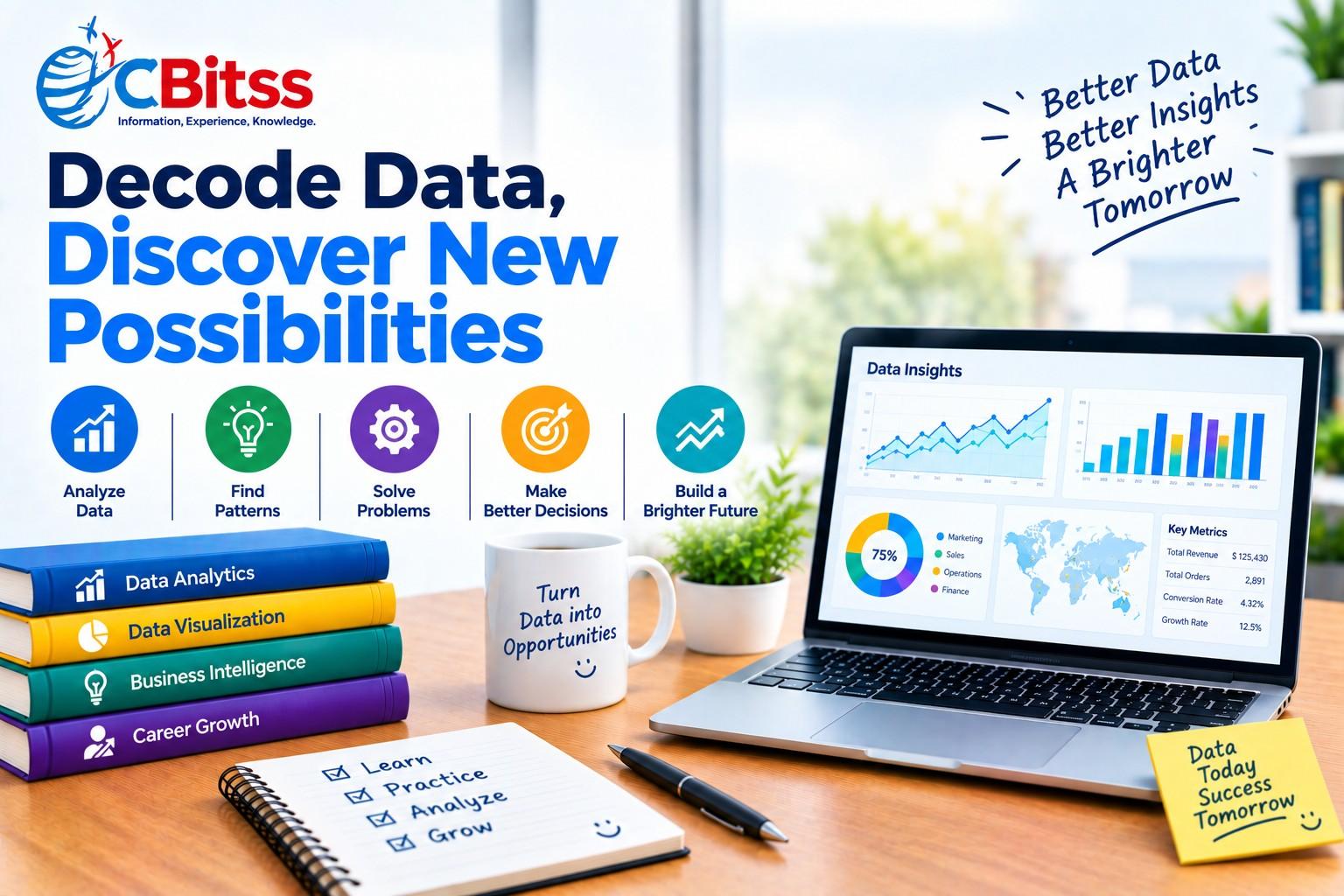
Modern businesses increasingly rely on data to understand performance, anticipate trends, and make informed decisions. Every digital interaction, transaction, customer response, and operational activity can generate information that helps businesses understand what is happening and why. Yet raw data alone cannot create meaningful value. It must be cleaned, interpreted, visualized, and transformed into insights that can support practical decisions. This is why a Data Analytics Course in Chandigarh can be a valuable learning pathway for individuals seeking to develop modern analytical and technology-oriented skills.
Why Is Data Analytics Transforming Modern Business?
Organizations increasingly depend on measurable evidence to evaluate performance, understand customers, optimize processes, and identify emerging trends. Data analytics provides the techniques required to examine information systematically rather than relying entirely on assumptions.
From retail and finance to healthcare, marketing, education, and technology, analytical methods are being applied to solve business problems and improve operational visibility. This growing relevance has made analytical thinking an important professional capability.
What Expertise Can You Build Through Data Analytics Training?
A well-designed analytics program should combine technical knowledge with logical reasoning and practical application. Learners can gradually develop capabilities across the complete data analysis lifecycle.
Data Collection and Preparation
Before meaningful analysis can begin, datasets often require considerable preparation. Real-world information may contain missing values, duplicate entries, inconsistent formats, or irrelevant records.
Learners can explore techniques for cleaning, transforming, organizing, and validating data so that subsequent analysis is more reliable. Understanding data quality is an essential part of becoming an effective analyst.
Excel for Analytical Work
Excel continues to be widely used for everyday data analysis and reporting. Training can introduce advanced formulas, lookup functions, pivot tables, conditional logic, charts, filtering, and structured data management.
Strong spreadsheet skills can help learners examine datasets efficiently while building a foundation for more advanced analytical tools.
SQL and Database Analysis
A significant amount of organizational data is stored within relational databases. SQL enables analysts to retrieve, filter, combine, aggregate, and examine information from these systems.
Learning SQL can help aspiring analysts understand how business data is structured and how relevant information can be extracted to answer specific questions.
Python for Data Analytics
Python adds another dimension to analytical work through its extensive ecosystem of libraries. Tools such as Pandas and NumPy can support data manipulation, numerical analysis, and automation.
With Python, learners can work with larger datasets, automate repetitive processes, perform exploratory analysis, and prepare data for more advanced applications such as machine learning.
Transforming Numbers into Visual Insights
Effective analysis goes beyond identifying patterns; it also requires communicating insights with clarity and precision. Visualization tools allow complex information to be represented through charts, dashboards, interactive reports, and key performance indicators.
Platforms such as Power BI and Tableau can help learners present trends, comparisons, patterns, and business metrics in a format that decision-makers can understand quickly. Effective visualization is not simply about making attractive dashboards; it is about presenting the right information with clarity and context.
Why Practical Projects Matter
Practical experience can bridge the gap between theoretical concepts and professional expectations. Learners can work with realistic datasets involving sales, customers, marketing campaigns, finance, operations, or other business scenarios.
A complete project may involve defining a problem, importing data, cleaning records, conducting exploratory analysis, creating visualizations, identifying patterns, and presenting conclusions. Such projects can also contribute to a portfolio that demonstrates practical capabilities.
Who Should Explore a Career in Data Analytics?
Data analytics can be relevant to graduates, students, working professionals, business learners, and individuals interested in technology-driven careers. Beginners can start with fundamental concepts before progressing toward SQL, Python, statistics, visualization, and advanced analytical techniques.
Curiosity, attention to detail, logical reasoning, and a willingness to investigate problems can be valuable qualities for aspiring analysts.
How Can Analytical Expertise Create New Professional Opportunities?
Data analytics knowledge can complement roles such as data analyst, reporting analyst, business analyst, marketing analyst, and other data-focused positions. However, professional development requires more than completing a training program.
Practical projects, communication skills, domain knowledge, problem-solving ability, and continuous learning can strengthen an individual's readiness for real-world analytical work.
Conclusion
Data analytics has become an important bridge between raw information and informed decision-making. A Data Analytics Course in Chandigarh can help learners build knowledge of Excel, SQL, Python, data preparation, visualization, and analytical thinking through a structured learning journey.
The real strength of analytics lies in asking meaningful questions and using evidence to uncover useful answers. By combining technical expertise with practical experience and critical thinking, learners can develop capabilities suited to an increasingly data-driven professional environment.