Dehydrated Vegetables Market Size, Growth, Industry Trends & Forecast 2034
-

- Published Updated
- 41 views
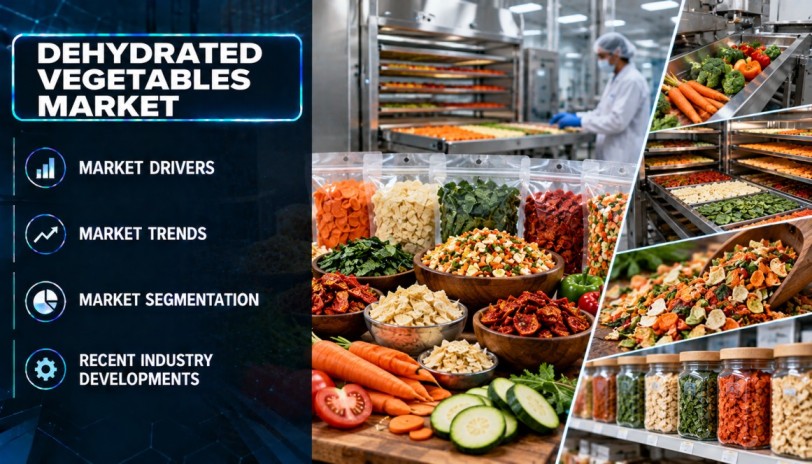
IMARC Group, a leading global market research and management consulting firm, has published its latest market intelligence report on the dehydrated vegetables market. The global dehydrated vegetables market size reached USD 82.1 Billion in 2025. Looking forward, IMARC Group expects the market to reach USD 118.9 Billion by 2034, exhibiting a growth rate (CAGR) of 4.07% during 2026-2034. driven by the increasing inclination toward dehydrated vegetable-based ready-to-eat food products, rising health consciousness among consumers, growing sales of baby food and convenience meal formats, expanding adoption of plant-based and vegan diets, and continuous advancements in drying technologies that improve nutrient retention, flavor preservation, and shelf-life extension across diverse end use applications worldwide.
The market is experiencing consistent growth momentum driven by the convergence of shifting consumer lifestyles, accelerating demand for convenient and shelf-stable food ingredients, and the growing integration of dehydrated vegetables across food manufacturing, foodservice, and retail sectors as a cost-effective, nutritionally sound, and logistically efficient alternative to fresh produce. Busy urban households and dual-income families are increasingly seeking meal solutions that combine nutritional quality with minimal preparation demands, a need that dehydrated vegetables spanning onions, tomatoes, potatoes, and carrots are uniquely positioned to address across soups, ready-to-cook meals, snacks, and seasoning blends. The rapid expansion of the ready-to-eat and processed food industry is reinforcing this demand, with packaged food producers relying on dehydrated vegetables to reduce spoilage risk, standardize ingredient quality, simplify cold chain requirements, and extend product shelf life across regional and global distribution networks. Simultaneously, technological advancements in drying methods including freeze-drying, vacuum drying, and self-drying are enabling manufacturers to deliver products that preserve a higher proportion of original nutrients, flavor compounds, and textural characteristics, elevating dehydrated vegetables from a commodity ingredient into a premium, functionality-driven food input.
How AI is Reshaping the Future of the Dehydrated Vegetables Market
- AI-Powered Quality Control and Automated Sorting in Dehydration Processing Lines: Computer vision and machine learning systems integrated into dehydrated vegetable processing facilities are automating real-time quality inspection for moisture content consistency, color accuracy, particle size uniformity, and contamination detection at speeds and precision levels that manual sorting processes cannot replicate, reducing product defect rates, minimizing recall risk, and ensuring compliance with food safety standards across regulated export markets in Europe, North America, and Asia Pacific where retailer and regulatory quality thresholds are highest.
- Predictive Demand Forecasting and Inventory Optimization for Food Manufacturers: AI-driven demand analytics platforms are enabling dehydrated vegetable producers and ingredient distributors to analyze real-time consumption patterns, seasonal raw material availability cycles, and purchase trend data across food manufacturer, foodservice, and retail buyer segments, optimizing production scheduling, reducing raw material waste from seasonal vegetable surplus, and improving inventory management efficiency across global supply chains that serve packaged food producers, soup and sauce manufacturers, and ready-to-cook meal kit providers.
- AI-Enhanced Sustainable Dehydration Technology Development: Artificial intelligence platforms are accelerating the optimization of energy-efficient drying processes by modeling the relationships between drying temperature, airflow, moisture reduction rates, and nutrient retention outcomes, enabling equipment manufacturers and food processors to design solar-assisted, vacuum microwave, and low-energy dehydration systems that reduce greenhouse gas emissions, lower production costs, and align product sustainability credentials with the environmental standards required by European and North American retailer procurement programs and ESG-focused food company supply chain policies.
Grab a sample PDF of this report: https://www.imarcgroup.com/dehydrated-vegetables-market/requestsample
Dehydrated Vegetables Market Trends and Drivers:
The global dehydrated vegetables market is witnessing steady expansion, fueled by the convergence of rising demand for convenient and shelf-stable food ingredients, structural growth in the global processed food industry, and accelerating product innovation that is broadening the application scope of dehydrated vegetables across food manufacturing, foodservice, and consumer retail channels. Rising urbanization and evolving household dynamics, including the proliferation of single-person households and dual-income families seeking efficient meal preparation solutions, are the foundational demand drivers, with dehydrated vegetables providing a versatile, nutritious, and waste-minimizing ingredient solution that bridges the gap between fresh produce quality and the practical constraints of modern food consumption. Ready-to-eat and ready-to-cook meal formats, soups, instant noodles, and snack products collectively represent the largest and most structurally embedded end use applications for dehydrated vegetables, with food manufacturers relying on standardized dehydrated inputs to maintain ingredient consistency, manage procurement costs, and simplify global supply chains.
The growing global vegan population is emerging as a powerful structural demand driver that is directly expanding the addressable consumer and manufacturer market for dehydrated vegetables. With approximately 88 million vegans worldwide and vegan diets commanding adoption rates of approximately 11% in India and serving over 13.4 million consumers in the United States, the sustained expansion of plant-based eating is generating consistent incremental demand for dehydrated vegetables as primary flavor, nutrition, and texture contributors in meat-free ready meals, plant-based seasoning blends, and functional snack products. The global baby food sector represents an equally significant and high-value demand channel, with manufacturers relying on dehydrated vegetable ingredients for their nutritional integrity, microbiological safety, and precise moisture control characteristics that are essential for meeting the stringent regulatory and quality standards governing infant nutrition products across developed and emerging markets alike.
Sustainability and food waste reduction are simultaneously reshaping procurement priorities and product development strategies across the dehydrated vegetables market. Dehydrating surplus or cosmetically imperfect vegetables that would otherwise be discarded addresses the food waste challenge while generating commercially viable ingredients, a model that aligns with both environmental regulatory frameworks and the circular economy commitments of major food manufacturers. According to the Food and Agriculture Organization of the United Nations, approximately one-third of all food produced globally is lost or wasted annually, a statistic that is compelling both retailers and food processors to prioritize shelf-stable ingredient formats with extended usability and reduced spoilage exposure. Strategic partnerships such as the collaboration between Blendhub and Upfood, which applies solar-powered dehydration technology to convert food surpluses into plant-based ingredients, demonstrate how sustainability-driven innovation is simultaneously creating new commercial opportunities and reinforcing the environmental credentials of the dehydrated vegetables category among environmentally aware consumer and business buyer segments.
Dehydrated Vegetables Industry Segmentation:
The report has segmented the market into the following categories:
Breakup By Type:
- Potato
- Tomato
- Onion
- Others
Onion accounts for the largest type segment, driven by its foundational role as a flavoring ingredient across virtually every global cuisine, with dehydrated onion in powder, granule, flake, and minced forms representing an indispensable input for soup mixes, seasoning blends, sauces, ready meals, and processed meat products manufactured and consumed across North America, Europe, and Asia Pacific. India's dominance as the world's primary exporter of dried onions, with export values exceeding USD 160 Million, underscores the scale and centrality of the onion segment within the global dehydrated vegetables supply chain. Tomato commands significant share driven by its widespread application in pizza toppings, pasta sauces, ketchup manufacturing, and ready meal formulations, while potato dehydrates serve critical roles in instant mashed potato products, snack manufacturing, and food service applications where consistent texture and rapid rehydration performance are operational priorities.
Breakup By Form:
- Powder and Granules
- Slices and Cubes
- Minced and Chopped
- Flakes
Powder and granules account for the largest form segment, valued for their versatility across food manufacturing applications including seasoning blend production, soup and sauce manufacturing, and bakery ingredient formulation, where their uniform particle size, consistent dissolution behavior, and precise flavor delivery make them the preferred ingredient format for large-scale food processors requiring standardized input specifications. Powder and granule forms also offer superior packaging density, reduced transportation costs, and extended shelf stability compared to other form types, reinforcing their commercial prominence across both business-to-business ingredient supply chains and retail consumer products. Slices and cubes serve prominent roles in visible-ingredient applications including premium soups, stews, and ready meals where texture retention and visual authenticity are important quality differentiators, while flakes offer a practical mid-point between powder and whole-cut formats that serves a broad range of culinary applications across both professional foodservice and household cooking occasions.
Breakup By Nature:
- Organic
- Conventional
Organic dehydrated vegetables account for the largest nature segment, driven by the accelerating consumer preference for clean-label, pesticide-free, and sustainably sourced food ingredients across European and North American retail environments where organic certification carries significant purchase influence among health-conscious buyers. The organic segment benefits from sustained demand growth across baby food manufacturing, premium ready meal production, and health-oriented retail channels where certification-backed ingredient transparency is a non-negotiable procurement criterion. The expansion of organic dehydrated vegetable offerings by major ingredient suppliers including Olam Group, which extended its product portfolio to include organically certified dehydrated carrots, peas, and onions in response to growing foodservice and retail demand, exemplifies the strategic investment that established players are directing toward this premium and higher-margin category segment.
Breakup By Technology:
- Vacuum Drying
- Air Drying
- Spray Drying
- Freeze Drying
- Drum Drying
Vacuum drying accounts for the largest technology segment, offering superior preservation of heat-sensitive nutrients, flavor compounds, and pigments by removing moisture under reduced pressure and low temperature conditions that minimize thermal degradation, enabling manufacturers to deliver products that retain a higher proportion of original vegetable quality characteristics than conventional hot-air drying methods can achieve. Vacuum drying's efficiency in processing high-value vegetables where nutrient retention and premium quality positioning are central to commercial value makes it the preferred industrial technology across segments targeting health-conscious consumers, baby food manufacturers, and premium foodservice buyers. Freeze drying is the fastest-growing technology segment, commanding premium positioning through its unmatched capacity to preserve original vegetable structure, color, flavor, and nutritional profile by sublimating ice directly to vapor under vacuum conditions, with BranchOut Food's investment in GentleDry technology achieving 95% nutrition preservation representing a benchmark that is elevating consumer and manufacturer expectations for premium dehydrated ingredient quality standards.
Breakup By End User:
- Food Manufacturer
- Food Service
- Retail
Food manufacturers account for the largest end user segment, driven by the scale of ingredient demand from producers of soups, sauces, ready meals, seasoning blends, instant noodles, snack products, and baby foods that collectively represent the most structurally significant and volume-intensive applications for dehydrated vegetables globally. Food manufacturers value dehydrated vegetables for their standardized quality, precise moisture specifications, year-round availability independent of harvest seasonality, and compatibility with automated production line formulation processes that require consistent and precisely defined ingredient inputs. The foodservice sector represents the second-largest end user segment, with restaurants, hotels, catering companies, and institutional meal providers relying on dehydrated vegetables to reduce kitchen labor requirements, extend ingredient storage periods, manage food waste, and ensure consistent flavor delivery across high-volume service environments. Retail channels are growing through the expanding availability of dehydrated vegetable products in convenient home cooking formats including rehydratable pouches, cooking kits, and organic certified consumer packs that address rising household demand for nutritious, waste-reducing, and easy-to-store pantry staples.
Breakup By Region:
- North America (United States, Canada)
- Asia Pacific (China, Japan, India, South Korea, Australia, Indonesia, Others)
- Europe (Germany, France, United Kingdom, Italy, Spain, Russia, Others)
- Latin America (Brazil, Mexico, Others)
- Middle East and Africa
North America dominates the global dehydrated vegetables market, driven by increasing consumer preferences for ready-to-eat food products, rapid innovation in drying technologies, sophisticated food manufacturing infrastructure, and the region's well-established processed food industry that generates sustained bulk ingredient demand across soup, sauce, snack, and ready meal manufacturing operations in the United States and Canada. The region benefits from the presence of leading ingredient suppliers, food processors, and retail grocery chains that actively develop and promote dehydrated vegetable products across both mainstream and health-oriented consumer segments. Asia Pacific is the fastest-growing regional market, supported by rapid expansion of food processing infrastructure in China, India, and Indonesia, rising disposable incomes among growing urban middle-class populations, increasing government investment in agricultural value-addition programs, and the region's dominant role as both a leading global producer and exporter of key dehydrated vegetable types including onions, garlic, and tomatoes. Europe demonstrates strong and consistent demand through consumer emphasis on organic certification, clean-label transparency, and sustainably sourced ingredients, with advanced cold chain logistics and stringent food safety regulatory frameworks reinforcing product quality standards and consumer purchase confidence across Germany, France, the United Kingdom, Italy, and Spain.
Competitive Landscape:
The report provides a comprehensive analysis of the competitive landscape in the dehydrated vegetables market with detailed profiles of all major companies, including:
- BCFoods Europe B.V.
- Catz International B.V. (ACOMO Group)
- Green Rootz
- Harmony House Foods Inc.
- Mevive International Food Ingredients
- Natural Dehydrated Vegetables Pvt. Ltd.
- Real Dehydrated Pvt. Ltd
- Seawind Foods
Recent News and Developments in the Dehydrated Vegetables Market
- March 2025: BranchOut Food Inc. partnered with MicroDried to incorporate BranchOut's proprietary GentleDry dehydration technology into MicroDried's ingredient portfolio, combining BranchOut's advanced processing methods with MicroDried's established market presence to enhance the quality and variety of dried vegetable and fruit ingredient offerings available to food manufacturers worldwide.
- June 2024: BCFoods expanded its Mahuva, Gujarat processing facility, integrating advanced production equipment to strengthen its dehydrated vegetable supply chain capacity and improve its ability to meet growing global demand for high-quality food ingredients across export and domestic markets.
- June 2024: BranchOut Food Inc. made a strategic investment in GentleDry Technology, an innovative processing method that achieves 95% nutrition preservation in dehydrated fruit and vegetable products, directly addressing growing consumer and manufacturer demand for minimally processed, nutrient-dense dried ingredients.
Note: If you require specific details, data, or insights that are not currently included in the scope of this report, we are happy to accommodate your request. As part of our customization service, we will gather and provide the additional information you need, tailored to your specific requirements. Please let us know your exact needs, and we will ensure the report is updated accordingly to meet your expectations.
About Us:
IMARC Group is a global management consulting firm that helps the world's most ambitious changemakers to create a lasting impact. The company provides a comprehensive suite of market entry and expansion services. IMARC offerings include thorough market assessment, feasibility studies, company incorporation assistance, factory setup support, regulatory approvals and licensing navigation, branding, marketing and sales strategies, competitive landscape and benchmarking analyses, pricing and cost research, and procurement research.
Media and Sales Contact
IMARC Group
Email: [email protected]
United States: +1-201-971-6302
India: +91-120-433-0800
United Kingdom: +44-753-714-6104