Extract Destination Demand Data for Tourism Boards
-
- Published Updated
- 1,727 views
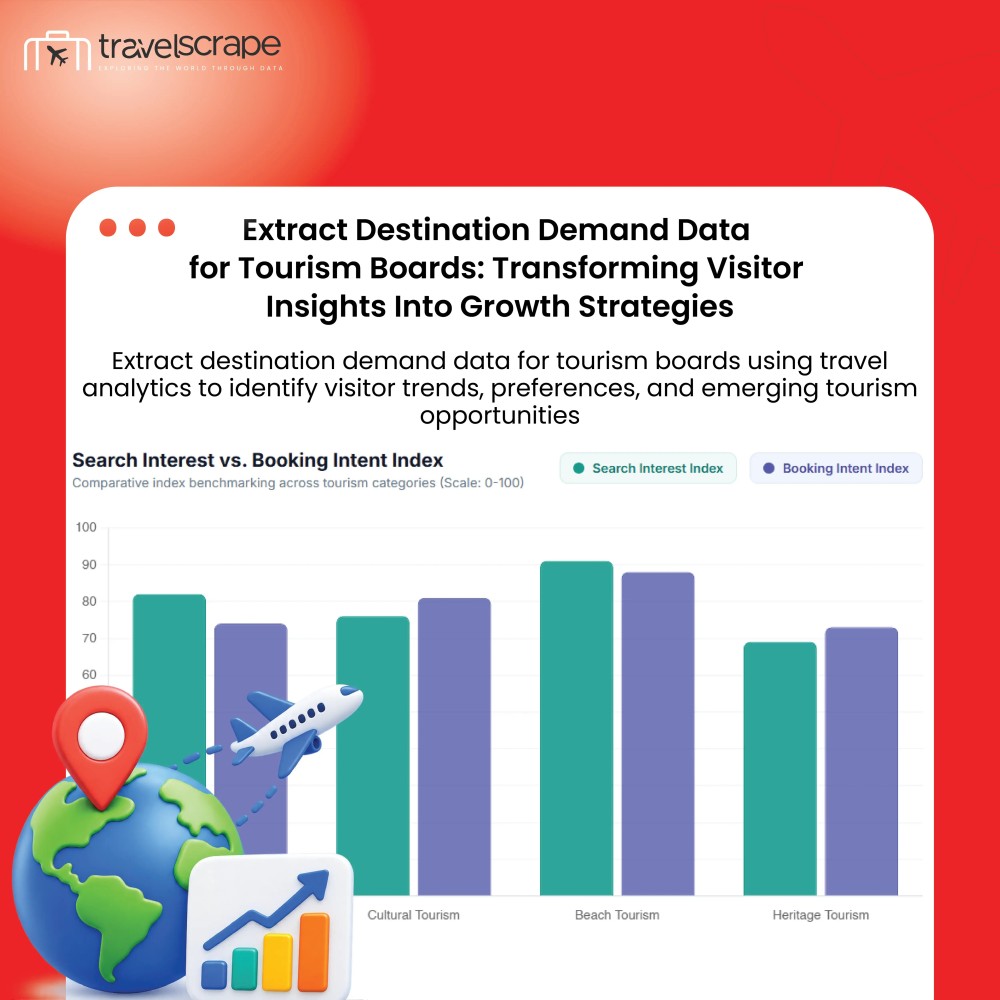
Extract Destination Demand Data for Tourism Boards: Transforming Visitor Insights Into Growth Strategies
Extract destination demand data for tourism boards using travel analytics to identify visitor trends, preferences, and emerging tourism opportunities
TSTravelScrape ResearchJuly, 20267 min read2,350 subscribers
On August 5, Travel Scrape analyzed millions of travel searches, booking patterns, accommodation preferences, visitor interests, and destination engagement signals collected from global travel platforms, tourism websites, and hospitality marketplaces. The analysis revealed how tourism boards are increasingly using data-driven insights to understand traveler behavior, identify emerging destinations, and improve destination marketing strategies.
Extract destination demand data for tourism boards to understand where travelers are planning trips, what experiences they are searching for, and how destination preferences change across different markets. By analyzing travel demand signals, tourism organizations can make informed decisions about campaigns, infrastructure planning, visitor engagement, and market expansion.
The Growing Importance of Destination Demand Intelligence
Tourism demand is influenced by multiple factors, including seasonal trends, traveler demographics, search behavior, accommodation availability, attractions, pricing patterns, and global travel movements. Traditional tourism reports often provide historical information but may not capture real-time changes in visitor interest.
Modern data extraction solutions help tourism boards monitor evolving traveler preferences and identify opportunities before market trends become visible through traditional research methods. Analyzing millions of digital travel interactions provides deeper insights into destination popularity, visitor intent, and emerging travel patterns.
destination tourism market intelligence enables tourism authorities to transform scattered travel data into structured insights that support strategic planning. These insights help identify high-growth markets, understand international visitor behavior, and optimize promotional activities for specific traveler segments.
Understanding Traveler Behavior Through Data
Travelers leave behind valuable digital signals through searches, reviews, bookings, itinerary planning activities, and online interactions. These signals reveal important information about destination awareness, seasonal demand, preferred activities, and traveler expectations.
By analyzing this data, tourism boards can understand why visitors choose specific destinations and what factors influence their travel decisions. For example, increasing searches for adventure tourism may indicate rising demand for outdoor experiences, while growing interest in cultural attractions may highlight opportunities for heritage tourism promotion.
Real-time demand monitoring allows destinations to respond quickly to changing traveler interests and develop campaigns that align with current market conditions.
Building Competitive Destination Strategies
The global tourism industry has become highly competitive, with destinations competing for international visitors, business travelers, and experience-focused tourists. Data-driven intelligence helps tourism boards compare destination performance, evaluate market positioning, and identify opportunities to attract new audiences.
Demand insights can reveal which destinations are gaining popularity, which attractions generate the highest interest, and which travel segments offer future growth potential. Tourism organizations can use these findings to improve advertising strategies, allocate marketing budgets effectively, and create personalized visitor experiences.
Destination demand analytics for tourism boards provides a comprehensive view of traveler interest by analyzing booking trends, search volumes, review patterns, seasonal movements, and competitive destination performance. These insights allow tourism stakeholders to make smarter decisions based on actual market behavior.
The Role of Travel Scrape
Travel Scrape converts complex travel data into actionable intelligence for tourism boards, destination management organizations, travel companies, and hospitality stakeholders.
The platform collects and processes destination-related information from multiple sources, including travel marketplaces, booking platforms, review websites, and online travel communities. These datasets help organizations monitor destination popularity, identify visitor preferences, analyze market trends, and improve tourism strategies.
Through advanced data processing and analytics, Travel Scrape enables tourism teams to move beyond traditional visitor reports and gain continuous visibility into global travel demand. Instead of relying only on delayed surveys and historical statistics, destinations can access timely insights to improve planning and decision-making.
Strategic Benefits for Tourism Organizations
Destination demand intelligence helps tourism boards improve multiple areas, including campaign targeting, visitor acquisition, infrastructure planning, and experience development. Marketing teams can identify promising traveler segments, while destination planners can understand where investment and resources are most needed.
Continuous monitoring of travel demand also helps destinations manage seasonal fluctuations, discover emerging opportunities, and strengthen their position in competitive tourism markets. By understanding visitor interests and expectations, tourism organizations can create more relevant experiences and attract higher-value travelers.
Conclusion
Travel demand data has become a powerful resource for modern tourism management. As travelers increasingly rely on digital platforms for inspiration and planning, tourism boards need advanced analytics to understand market movements and visitor expectations.
Travel Scrape helps destinations transform travel signals into meaningful intelligence through scalable data extraction, demand analysis, and market monitoring. By understanding traveler behavior, tourism organizations can design smarter campaigns, improve visitor experiences, and build stronger destination strategies for long-term growth.