Managing Every DM and Comment From One Inbox
-

- Published Updated
- 6,038 views
The engagement problem scales differently from the publishing problem. Publishing overhead grows linearly more accounts means more content to schedule, but the scheduling infrastructure handles most of the volume increase without a proportional increase in team effort. Engagement overhead grows in every direction at once. More accounts means more DMs, more comments, more mentions, more replies — arriving on different platforms, in different notification systems, at unpredictable times, each one requiring a response that is on-brand, timely, and contextually appropriate.
For three accounts, platform-native notification management is workable. You check Instagram, check LinkedIn, check X, respond to what's there, close the tabs. Thirty minutes, done.
For eight accounts across four platforms, the same approach doesn't scale. By the time you've worked through the LinkedIn notifications, the Instagram DMs that arrived during that pass are already twenty minutes old. By the time you've responded to those, there are new X mentions that weren't there when you started. The inbox is never actually empty. The platforms are never actually checked. The notification tabs are always showing a number, and the number is always bigger than zero.
I moved engagement management to ContentStudio after a client raised a response time concern that I couldn't argue with. An Instagram DM from a prospective customer had sat unanswered for nineteen hours because it had arrived during a period when I was working through a different platform's notification stack and hadn't cycled back in time. The content was going out on schedule. The engagement was falling through the gap.
Five months of unified inbox management later, the gap is closed. Here is what changed and what it delivered.
What platform-native engagement management was actually costing
The time audit before the switch produced numbers I'd been avoiding looking at directly.
Active time spent checking platform-native notification systems per week across eight accounts: six to seven hours. That figure included logging into each platform per account, triaging notifications across DMs, comments, and mentions, identifying which required responses and which were informational, drafting and sending responses, and returning for follow-up passes when the response cycle required more than one exchange.
Average response time across all platforms and accounts: four hours and twenty minutes from message received to response sent. For DMs on Instagram and LinkedIn where the audience expectation for brand response time has compressed significantly that average included outliers long enough to affect client perception.
Missed engagements per month comments or DMs that fell through the gap between notification passes and received no response: estimated eight to twelve. Not tracked precisely because the platform-native systems didn't make it easy to identify what had been missed, which was itself part of the problem.
Six to seven hours per week on engagement management that was producing a four-hour average response time and missing a double-digit number of interactions every month. The operational cost and the output quality were both problems, and they had the same root cause: the engagement workflow was fragmented across platforms with no unified view of what was waiting for a response.
What a unified inbox actually changes
The structural shift is straightforward to describe and significant in practice.
Every DM, comment, mention, and reply across all connected platforms and all managed accounts arrives in one inbox. Not eight inboxes checked in sequence. One inbox, updated in real time, showing every unresponded engagement regardless of which platform it originated on.
The triage logic changes completely. On the fragmented model, triage was a platform-by-platform exercise work through Instagram, then LinkedIn, then X, then Facebook, then cycle back to Instagram because new things had arrived since the first pass. On the unified model, triage is a single pass through a single queue, sorted by recency or by account depending on the priority framework, with nothing falling through the gap between platform passes.
The response time improvement follows directly from the structural change rather than from any increase in team effort. Faster triage means faster response. A single queue means nothing sits unnoticed in a platform that wasn't in the current pass. The four-hour average response time dropped to under forty minutes across all platforms and accounts in the first month after the switch — not because the team was working harder or faster, but because the time lost to platform switching and re-orientation had been eliminated.
How comment and DM management works differently at scale
The volume management dimension is where the unified inbox delivers beyond the response time improvement.
At eight accounts across four platforms, the incoming engagement volume on a busy week a campaign launch, a viral post, a piece of content that performs significantly above baseline can reach several hundred interactions in a short window. Platform-native management at that volume isn't triage. It's triage of triage deciding which platforms to prioritise, accepting that some interactions won't receive responses, and hoping the ones that fall through aren't from people who matter.
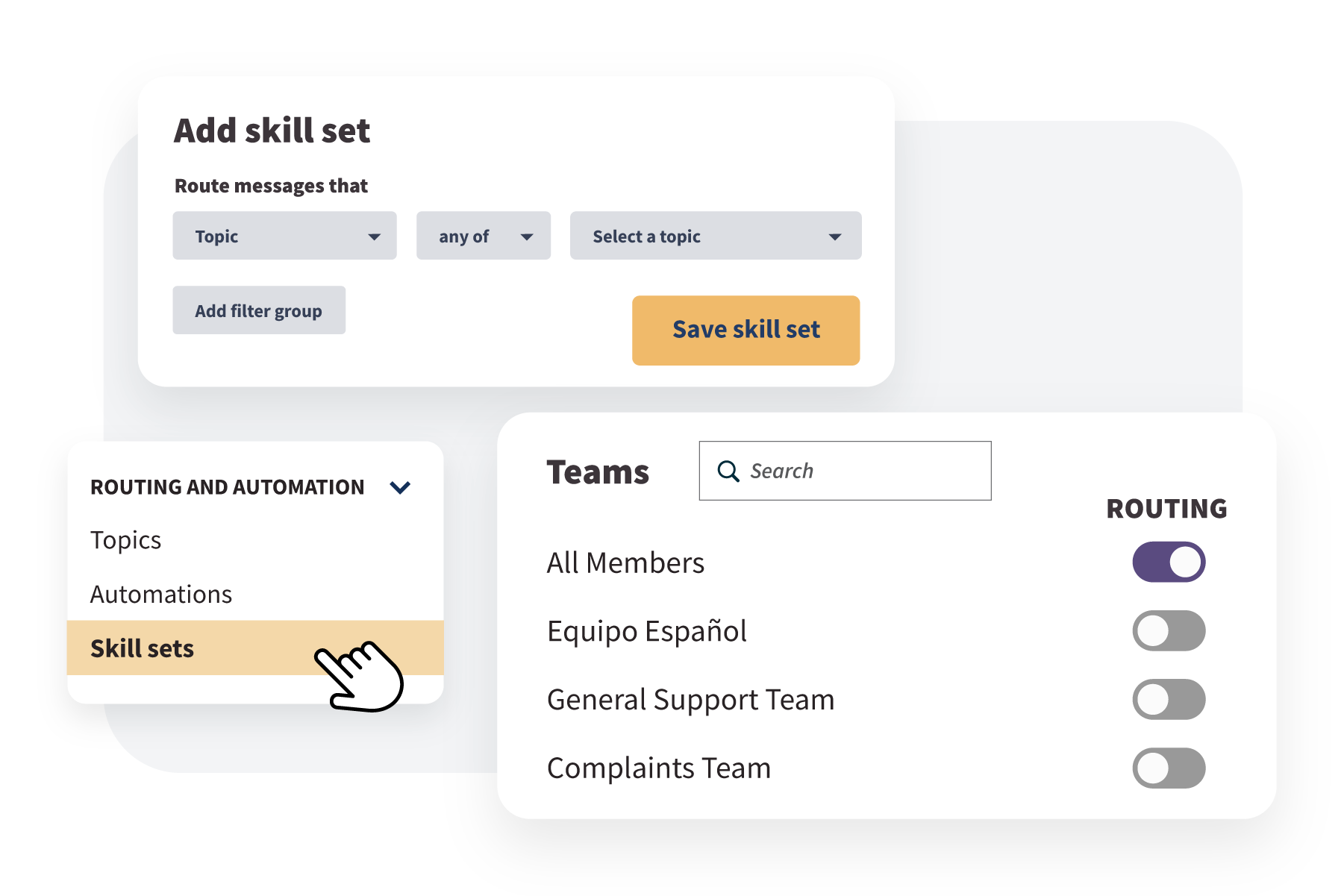
The unified inbox with filtering and assignment capability changed the volume management model. Incoming engagements filtered by platform, by account, by engagement type DMs separated from comments separated from mentions meant that high-volume periods could be managed systematically rather than triaged on instinct. Assignments meant that a DM requiring a specific response from the account manager went to the account manager directly rather than sitting in a general queue waiting to be noticed.
For one client whose product launch generated three hundred and forty Instagram comments in forty-eight hours, the unified inbox was the difference between a managed response operation and an overwhelming manual task. Every comment received a response. The response time averaged under two hours across the entire volume. On platform-native management, the same volume would have required a dedicated manual effort that wasn't available.
What assigned responses changed for team-based engagement
The assignment functionality deserves its own section because it changed the team workflow in a way that went beyond individual response time.
On the fragmented platform model, engagement management was either a shared task with unclear ownership everyone checks, duplicates happen, things get missed — or an assigned task that required someone to be logged into multiple platforms for the duration of their shift. Neither model worked cleanly at scale.
Unified inbox with assignments meant engagement could be managed with clear ownership without requiring the assigned person to navigate multiple platform interfaces. The community manager handling Instagram DMs doesn't need to be logged into Instagram. They work from the inbox, respond from the inbox, and the response publishes to Instagram natively. The account manager handling LinkedIn comments for a specific client works from the same inbox, filtered to that client's LinkedIn activity.
The clarity of ownership eliminated the duplicate response problem two team members responding to the same comment because both had seen it in their respective platform passes which had been a quiet but recurring source of client embarrassment on accounts where the audience noticed.
What five months of unified inbox management delivered
Response time across all platforms and accounts: under forty minutes average, down from four hours and twenty minutes. Missed engagements per month: zero tracked in the last four months, compared to an estimated eight to twelve on the fragmented model. Time spent on engagement management per week: two and a half hours, down from six to seven.
The three and a half hours per week recovered from engagement management overhead has been redistributed to strategic community building proactive engagement, relationship development with high-value followers, comment responses that go beyond acknowledgement into genuine conversation. The engagement that had been falling through the gap is now captured. The engagement that had been handled reactively is now handled with enough capacity to be handled well.
One client whose audience response rate had been a standing concern they regularly asked why some comments didn't receive replies raised it for the last time three weeks after the switch. They haven't raised it since.
If your engagement workflow is still running through platform-native notification systems across multiple accounts checking Instagram, then LinkedIn, then X, then cycling back because the first pass is already stale a Social Media Inbox Management tool that consolidates every DM and comment into a single real-time queue removes the fragmentation that is driving both the response time lag and the missed engagement count.
Who this matters most to
Solo operators managing one or two personal accounts with low engagement volume will find platform-native notification management adequate. The unified inbox value scales directly with account count, platform count, and incoming engagement volume.
The missed engagement problem is most acute for brand accounts where audience response expectations are high, for accounts that run regular campaigns generating engagement spikes, and for team-based operations where engagement ownership needs to be clearly assigned. For those accounts, the unified inbox is not a convenience feature. It is the infrastructure that makes systematic engagement management possible at scale.
https://contentstudio.io/