Dwarf Yaupon Holly Care Guide: Compact Evergreen for Small Landscapes
-

- Published Updated
- 1,471 views
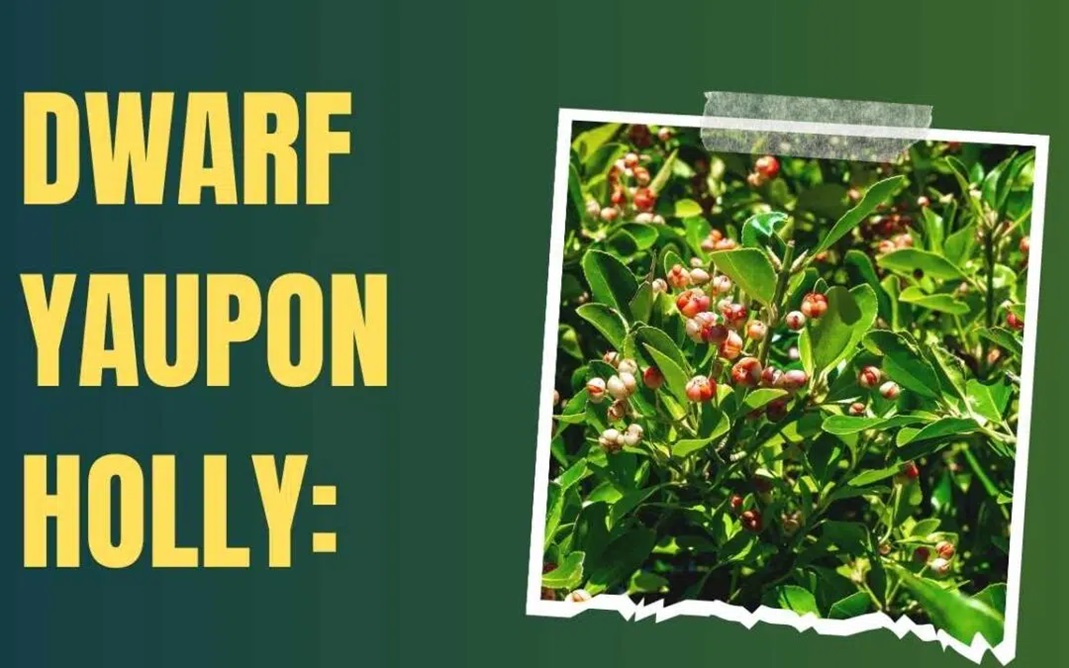
Dwarf Yaupon Holly is a compact form of Ilex vomitoria prized for its glossy evergreen foliage, tolerance of pruning, and versatility in small landscapes and foundation plantings. This guide summarizes identification, site selection, care, propagation, and common problems so gardeners and landscapers can use the plant effectively.
- Botanical name: Ilex vomitoria; dwarf selections are slow-growing, upright to rounded shrubs.
- Light: Full sun to partial shade.
- USDA zones: Generally best in zones 7–9; check local extension for site-specific advice.
- Uses: Hedges, foundation plantings, containers, formal shapes, wildlife cover and winter berries on female plants.
Dwarf Yaupon Holly: Description and Identification
Dwarf Yaupon Holly refers to small cultivars of Ilex vomitoria that retain the species' evergreen leaves and fine texture but reach a reduced mature height, typically 2–6 feet depending on the selection and pruning regime. Leaves are small, glossy, and oblong to elliptic without sharp spines, distinguishing yaupon from many other hollies. Male and female flowers are produced in spring; only female plants set the small red berries that persist into winter and provide food for birds.
For taxonomic and distribution details, authoritative plant databases such as the USDA Plants Database provide species-level information and mapping for Ilex vomitoria (source: USDA Plants).
Growing Conditions and Site Selection
Light and Exposure
Dwarf Yaupon Holly performs well in full sun to partial shade. In hotter climates, some afternoon shade can reduce leaf scorch. Bright light encourages dense growth and more berry set on female plants.
Soil and Drainage
Plant in well-draining soil. Yaupon holly tolerates a range of soil textures from sandy to loamy and adapts to a range of soil pH levels, though slightly acidic to neutral soils are typical in its native range. Avoid planting in permanently wet sites; good drainage reduces root rot risk.
Temperature and Hardiness
Many dwarf cultivars are reliably hardy in USDA Plant Hardiness Zones roughly between 7 and 9, though some selections may tolerate a broader range. Local conditions, microclimates, and winter protection affect survivability. Extension services from state land-grant universities and the U.S. Department of Agriculture provide regional hardiness guidance.
Planting, Watering, and Maintenance
Planting
Dig a hole twice as wide and slightly shallower than the root ball. Backfill with native soil amended sparingly with organic matter if drainage or fertility is poor. Set the crown at or slightly above the surrounding grade to encourage healthy root development.
Watering and Mulch
Establish plants with regular watering for the first year, then reduce frequency as roots develop; yaupon is relatively drought-tolerant once established. Apply 2–3 inches of organic mulch, keeping it away from direct contact with the trunk, to conserve moisture and moderate soil temperature.
Pruning and Shaping
Dwarf Yaupon Holly responds well to pruning and can be sheared into hedges or trained into formal shapes. Light pruning in late winter or early spring before new growth begins will maintain form. Avoid heavy pruning during late summer or fall when new growth may be damaged by early cold snaps.
Propagation and Cultivars
Propagation Methods
Propagation is commonly by semi-ripe cuttings taken in late summer or by nursery grafting for named cultivars. Seeds are possible from female plants with berries, but seedlings may not be true to the parent and take longer to reach maturity.
Popular Dwarf Selections
Several named dwarf varieties exist with slightly different habits and growth rates; selections are often chosen for size control, fruiting habit (male or female), and suitability for formal hedges or containers. Plant labels or nursery catalogs typically indicate expected mature size and sex, which informs placement when berries are desired.
Landscape Uses and Wildlife Value
Dwarf Yaupon Holly is well-suited to foundation plantings, low hedges, specimen use in small gardens, and container culture. Female plants with berries provide winter food for songbirds; the dense evergreen foliage offers nesting and cover. The species is native to the southeastern United States and can be incorporated into native plant landscapes to support local ecosystems.
Pests, Diseases, and Troubleshooting
Common issues include scale insects, spider mites in hot dry conditions, and occasional leaf spot diseases. Good cultural practices—right plant in the right place, proper watering, mulching, and periodic inspection—help minimize problems. For region-specific pest management recommendations, consult cooperative extension publications from state universities or the U.S. Department of Agriculture.
Care Checklist
- Select site with full sun to part shade and good drainage.
- Plant at appropriate spacing for intended use (hedge vs. specimen).
- Mulch to conserve moisture, water to establish, then reduce frequency.
- Prune lightly in late winter to maintain shape; avoid heavy late-season pruning.
- Monitor for scale and mites; use integrated pest management and consult extension resources for treatments.
Resources and References
For regional planting recommendations and pest management, refer to state Cooperative Extension services and plant databases maintained by botanical institutions and the U.S. Department of Agriculture.
Frequently Asked Questions
Is Dwarf Yaupon Holly evergreen?
Yes. Dwarf Yaupon Holly is an evergreen shrub that retains glossy leaves year-round, providing winter structure and color in the landscape.
How often should Dwarf Yaupon Holly be pruned?
Light pruning once or twice a year is sufficient for most uses. Major shaping is best performed in late winter or early spring before new growth begins; avoid heavy pruning in late summer or fall.
Do Dwarf Yaupon Holly plants produce berries?
Female plants produce small red berries after flowering if pollinated by a nearby male plant. Berries feed birds but are considered mildly toxic to humans; caution is advised around children and pets.
Can Dwarf Yaupon Holly tolerate urban conditions?
Yes. Dwarf Yaupon Holly tolerates heat, some drought, and urban soils, making it suitable for city plantings, provided reasonable soil and drainage conditions are met.
How to propagate Dwarf Yaupon Holly?
Propagation is commonly by semi-ripe cuttings taken in late summer or by purchasing named nursery selections. Seed-grown plants may vary from parent characteristics and require more time to establish.