ERP Ecommerce: A Complete Guide to Streamlining Online Business Operations
-
- April 21st, 2026
- 4,207 views

FREE SEO Topical Map Generator: Find Your Next Content Ideas
In today’s fast-paced digital marketplace, running a successful online store requires more than just a website and products. Businesses must manage inventory, orders, customer data, finances, and logistics efficiently. This is where ERP Ecommerce integration becomes a game-changer.
ERP (Enterprise Resource Planning) systems help ecommerce businesses centralize operations, automate workflows, and improve decision-making. By combining ecommerce platforms with ERP software, companies can achieve seamless data flow and better control over their entire business.
What is ERP Ecommerce?
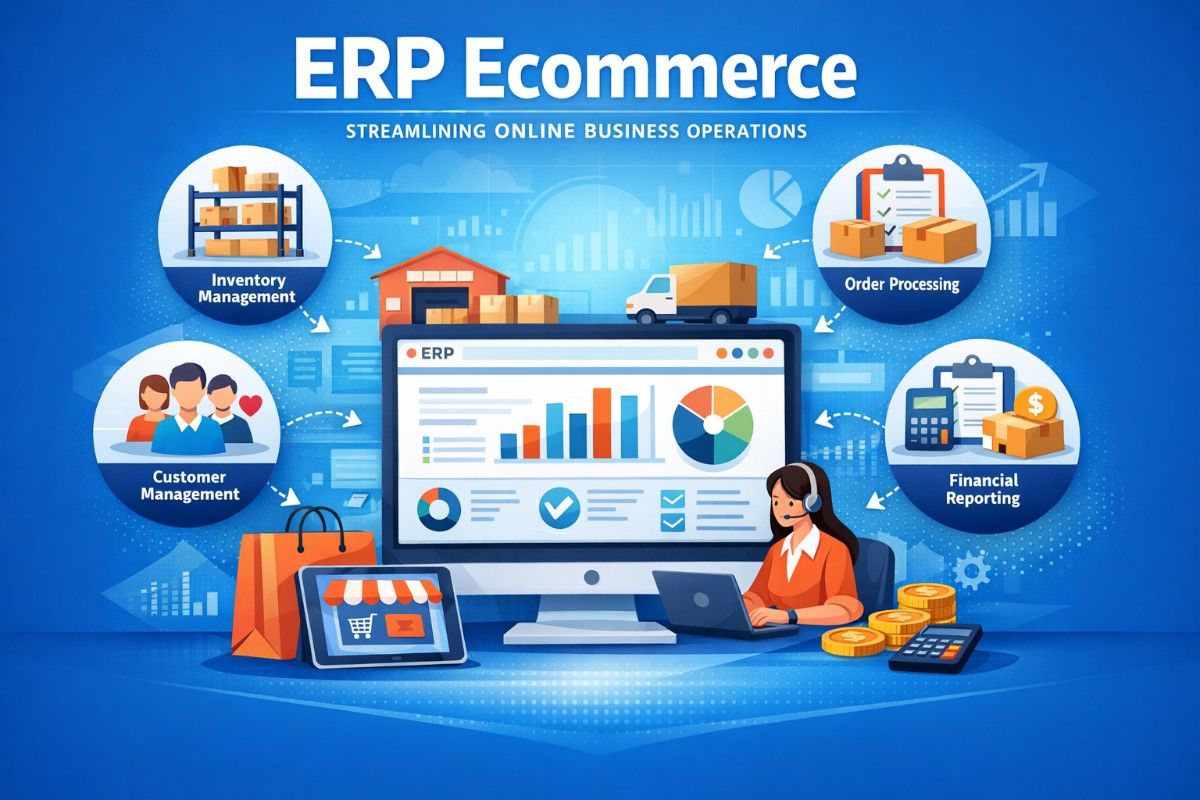
ERP Ecommerce refers to the seamless integration between an online store and an ERP system. This integration allows businesses to unify front-end sales processes with back-end operations such as inventory management, accounting, supply chain, and customer relationship management. Instead of relying on multiple disconnected tools, ERP provides a centralized system where all data is synchronized in real time, reducing errors and saving time.
Why ERP is Important for Ecommerce Businesses
As ecommerce businesses grow, managing operations manually becomes inefficient and error-prone. ERP systems solve this problem by automating workflows and providing real-time visibility into business processes.
Centralized Data Management
All business information, including orders, customers, inventory, and financial data, is stored in a single platform. This eliminates duplication and ensures consistency across departments.
Real-Time Inventory Tracking
Businesses can monitor stock levels accurately, preventing overselling or stock shortages. This helps maintain customer trust and improves operational efficiency.
Automated Order Management
ERP systems process orders automatically, reducing manual work and ensuring faster order fulfillment.
Enhanced Customer Experience
Faster delivery, accurate tracking, and personalized services lead to improved customer satisfaction and loyalty.
Financial Accuracy
ERP systems automate accounting processes, generate invoices, and provide real-time financial insights for better decision-making.
Key Features of ERP Ecommerce Integration
ERP Ecommerce systems offer a range of features designed to support business growth and efficiency.
Inventory Management
Track stock levels across multiple warehouses and sales channels in real time, ensuring better control over inventory.
Order Processing Automation
Automatically handle order placement, invoicing, and shipping updates without manual intervention.
Multi-Channel Integration
Manage sales from ecommerce websites, online marketplaces, and social media platforms within a single system.
Customer Data Management
Store and analyze customer data to improve marketing strategies and increase sales.
Reporting and Analytics
Generate detailed reports on sales performance, customer behavior, and operational efficiency to identify growth opportunities.
How ERP Ecommerce Works
The integration between an ecommerce platform and an ERP system creates a seamless workflow. When a customer places an order, the data is automatically transferred to the ERP system. Inventory levels are updated instantly, invoices are generated, and financial transactions are recorded.
Shipping details and tracking information are also updated in real time, ensuring transparency and efficiency. This automation reduces manual data entry and minimizes the chances of errors.
Challenges Without ERP in Ecommerce
Ecommerce businesses that do not use ERP systems often face several operational challenges. Inventory mismatches can lead to canceled orders and dissatisfied customers. Manual processes increase the risk of errors and delays, while lack of real-time data makes decision-making difficult.
Managing multiple systems separately can also slow down operations and reduce overall productivity. These challenges can negatively impact business growth and profitability.
Choosing the Right ERP for Ecommerce
Selecting the right ERP solution is crucial for maximizing efficiency and achieving long-term success. Businesses should consider scalability, integration capabilities, customization options, and ease of use when choosing an ERP system.
It is also important to evaluate the cost and potential return on investment. A well-implemented ERP system can adapt to business needs and support growth as the company expands.
Future of ERP in Ecommerce
The future of ERP Ecommerce is shaped by emerging technologies such as artificial intelligence, automation, and cloud computing. Modern ERP systems are becoming more advanced, offering predictive analytics and smarter decision-making tools.
Cloud-based ERP solutions provide flexibility, allowing businesses to access data from anywhere and manage operations efficiently. As ecommerce continues to grow, adopting advanced ERP systems will be essential for staying competitive in the digital landscape.
Conclusion
ERP Ecommerce integration is no longer optional—it is essential for businesses that want to scale and stay competitive. By streamlining operations, improving accuracy, and enhancing customer experience, ERP systems empower ecommerce businesses to grow efficiently and sustainably.
Investing in the right ERP solution can transform your ecommerce operations and set your business up for long-term success.
Call to Action (CTA)
Ready to take your ecommerce business to the next level?
Start integrating an ERP system today and unlock the full potential of automation, efficiency, and growth.