10 Essential Electronics Trends You Should Know in 2026
-

- Published Updated
- 3,387 views
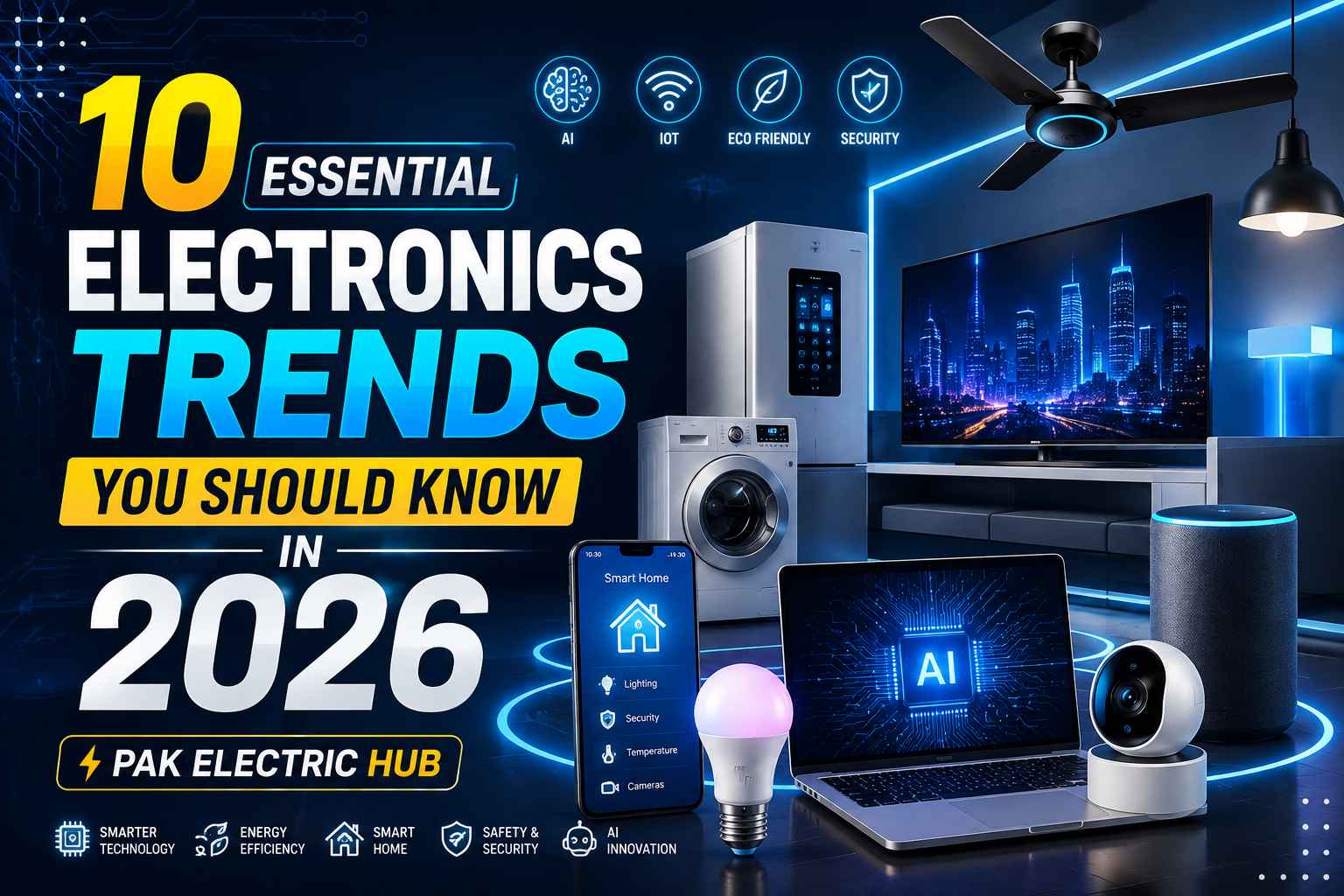
Electronics are changing the world faster than ever. What once seemed like futuristic technology is now becoming part of our everyday lives. From smart homes and artificial intelligence to energy-efficient appliances and connected devices, modern electronics are making our homes, workplaces, and businesses more convenient and efficient.
For electronics enthusiasts, technicians, homeowners, and everyday technology users, understanding these trends is becoming increasingly important. Knowing what is changing can help you choose better products, reduce electricity consumption, maintain your devices, and avoid spending money on technology you don't actually need.
At Pak Electric Hub, we believe that electronics should be easy to understand. Whether you're interested in electrical appliances, smart devices, repairs, maintenance, or energy-saving technology, staying informed can help you make smarter decisions.
Here are 10 important electronics trends worth watching in 2026.
1. Artificial Intelligence Is Entering Everyday Electronics
Artificial intelligence is no longer limited to advanced computers and software. AI is increasingly becoming part of everyday electronic products.
Smartphones, televisions, cameras, computers, security systems, and even some home appliances are using AI-powered features to improve performance and convenience.
For example, AI can help cameras recognize objects, smartphones improve photographs, televisions optimize content, and smart systems automate repetitive tasks.
However, consumers should not buy a product simply because it has an "AI" label.
The important question is: Does the AI feature actually provide useful value?
A technology that saves time or improves performance can be extremely useful. A feature that sounds impressive but rarely gets used may not justify a higher price.
2. Smart Homes Are Becoming More Popular
Smart-home technology is one of the most exciting areas of modern electronics.
Smart lights, plugs, switches, cameras, doorbells, speakers, televisions, and appliances can connect to smartphones and home networks.
Instead of manually controlling every device, users can automate many everyday tasks.
Imagine turning your lights on from your phone, checking your security camera while you're away, or controlling an appliance remotely.
This is creating homes that are more connected and convenient.
But smart-home technology should be selected carefully. Compatibility, security, privacy, internet requirements, and long-term product support are all important considerations.
3. Energy Efficiency Is a Major Priority
Electricity consumption has become an important consideration when purchasing electronics.
Consumers increasingly want products that provide strong performance without wasting unnecessary energy.
LED lights are a simple example. Modern LED technology can provide bright illumination while generally consuming less electricity than older lighting technologies.
Energy efficiency is also important for fans, refrigerators, air conditioners, washing machines, televisions, water pumps, and other appliances.
Before buying a product, don't look only at the purchase price.
Consider its electricity consumption, maintenance requirements, expected lifespan, and repair costs.
A slightly more expensive product can sometimes provide better long-term value if it is durable and energy-efficient.
At Pak Electric Hub, we encourage consumers to look beyond the price tag and consider the complete cost of owning an electronic product.
4. Electronics Are Becoming More Connected
Connectivity is transforming how electronic devices communicate.
Wi-Fi, Bluetooth, mobile applications, and other wireless technologies allow different devices to interact with each other.
Your smartphone can control your television. Your smartwatch can communicate with your phone. Your security camera can send notifications directly to your device.
This connected ecosystem can make technology much more convenient.
However, more connectivity also means users need to pay greater attention to security.
Strong passwords, software updates, trusted applications, and secure networks are important for protecting connected devices.
5. Repair and Maintenance Are Becoming More Important
New electronics are released constantly, but replacing a device every time something goes wrong is not always the smartest decision.
Many electronic products can continue working for years with proper maintenance and professional repair.
A faulty switch, damaged wire, loose connection, worn component, overheating issue, or power-supply problem may be repairable.
Regular maintenance can also prevent small problems from becoming expensive failures.
For example, keeping ventilation areas clean can help prevent overheating. Checking electrical connections can help identify potential problems early. Proper cleaning can improve the performance of many devices.
Repairing suitable products can also reduce electronic waste.
Pak Electric Hub supports the idea of maintaining and repairing electronics whenever it is practical and economical to do so.
6. Better Displays and Visual Technology
Displays are another area where electronics continue to improve.
Modern televisions, monitors, smartphones, and other devices are offering better resolution, brighter images, improved contrast, and more advanced display technologies.
For consumers, this means better experiences when watching movies, playing games, editing photographs, working, or browsing content.
But again, the most expensive display isn't necessarily the best choice for everyone.
Think about how you will use the device.
A professional content creator may need advanced display quality, while someone who mainly watches occasional videos may not need the highest specifications.
Understanding your needs can help you avoid paying for features you won't use.
7. Portable and Wireless Electronics
Consumers increasingly prefer technology that is portable and convenient.
Wireless headphones, portable speakers, power banks, smartwatches, wireless chargers, and compact accessories have become common parts of modern life.
The advantage is obvious: fewer cables and greater mobility.
However, wireless products also depend on batteries and charging systems.
Battery health becomes important when purchasing portable electronics. Consumers should consider battery capacity, charging speed, expected battery life, and replacement options.
Proper charging habits and avoiding excessive heat can also help protect rechargeable batteries.
8. Sustainable Electronics Are Gaining Attention
Electronic waste is a growing concern around the world.
Every year, huge numbers of electronic devices reach the end of their useful lives. Some are discarded because they are genuinely damaged, while others are replaced simply because newer models are available.
Consumers can help reduce waste by making thoughtful purchasing decisions.
Choose durable products. Maintain your devices. Repair them when practical. Reuse products where possible. And dispose of electronic waste responsibly.
Longer product lifespans can reduce unnecessary replacement and make better use of the resources required to manufacture electronics.
Sustainability doesn't mean avoiding technology.
It means using technology more responsibly.
9. Better Home Appliances
Home appliances are becoming increasingly intelligent and efficient.
Modern refrigerators, washing machines, air conditioners, fans, ovens, and other appliances can include sensors, digital controls, energy-saving modes, and connected features.
These improvements can provide better performance and convenience.
However, consumers should still evaluate the fundamentals.
A washing machine should clean clothes effectively. A refrigerator should maintain the right temperature. A fan should provide reliable airflow. An air conditioner should cool efficiently.
Technology should enhance the basic function—not replace it.
10. Consumers Are Becoming Smarter Buyers
Perhaps the most important trend is not a technological feature at all.
Consumers are becoming more informed.
People are comparing specifications, reading reviews, checking energy consumption, researching warranties, and considering repairability before purchasing products.
This is a positive development.
Instead of buying something simply because it is new or heavily advertised, consumers can make decisions based on actual needs and long-term value.
Before purchasing electronics, ask yourself:
Do I really need this device?
Will I use its important features?
Is it energy-efficient?
Is the build quality reliable?
Is there a warranty?
Can it be repaired?
Are spare parts available?
What will it cost to operate over time?
These questions can help you make a much smarter purchase.
Final Thoughts
The electronics industry is entering an exciting period of innovation. Artificial intelligence, smart homes, wireless connectivity, energy efficiency, advanced displays, portable technology, and sustainable products are changing the way we interact with electronic devices.
But technology is only valuable when it solves a real problem.
The best electronic product isn't necessarily the newest or most expensive one. It is the product that provides the right combination of quality, performance, safety, efficiency, convenience, and durability.
At Pak Electric Hub, our goal is to help people understand electronics and make better decisions about the technology they use every day.
Whether you're a homeowner, student, technician, business owner, or electronics enthusiast, learning about new technology can help you get more value from your devices.
Follow Pak Electric Hub for practical electronics tips, electrical information, maintenance ideas, repair-related content, and useful technology updates.
The future of electronics is already here. The question is not whether technology will become smarter—the question is how intelligently we choose and use it.