How Employee Monitoring Software Impacts on Employee Trust
-

- May 28th, 2026
- 4,392 views

FREE SEO Topical Map Generator: Find Your Next Content Ideas
What are the main employee monitoring software impacts on employee trust?
The employee monitoring software impacts on employee trust are heavily influenced by how management rolls the tools out. When used secretly or for micromanagement, it destroys trust, lowers morale, and increases worker stress. However, when companies are open about it, the impacts can be neutral or even positive. To protect trust, companies must:
- Tell workers exactly what is being tracked.
- Explain the business reasons behind the tracking.
- Focus on actual work results, not just keyboard clicks.
- Use the data to fix problems, not to punish staff.
In my 15 years working as a business and human resources content writer, I have watched the office environment change drastically. We went from working in cubicles to working from our kitchen tables. With that change came a massive surge in companies buying tracking tools to keep an eye on their remote teams.
But this sudden shift created a big problem that managers are still trying to solve today. The main conversation I have with business owners always comes back to one specific topic: the employee monitoring software impacts on employee trust.
If you own a business, manage a team, or work remotely, you need to understand this topic. Tracking tools are not going anywhere. But if a company uses them the wrong way, their best workers will simply quit and find jobs elsewhere. Let’s look at how these tools change the relationship between a boss and a worker, and what you can do to keep your team happy and productive.
Why Are Companies Tracking Workers?
Before we look at the bad side of things, we have to understand why companies buy these programs in the first place. When everyone started working from home, managers panicked. They could no longer walk down the hallway to see who was typing and who was taking a long coffee break.
To solve this, businesses turned to productivity tracking. They wanted a simple way to know that people were actually working during the day. At its core, productivity tracking is just a way to make sure the business is getting what it pays for.
Companies also started using application usage tracking. This means the software looks at which programs a worker opens and how long they spend using them. A smart business uses application usage tracking to save money. For example, if a company pays thousands of dollars a year for a special design program, but the tracking data shows no one is opening it, the company can cancel that subscription and save money.
The problem is that many managers do not use these tools just to save money on software. They use them to watch their workers' every move.
The Negative Employee Monitoring Software Impacts on Employee Trust
When a company installs tracking tools without talking to their team first, the results are almost always bad. Here are the most common negative employee monitoring software impacts on employee trust:
- A Feeling of Guilt and Anxiety
Imagine knowing that your computer is taking a picture of your screen every ten minutes. Even if you are working hard, you will feel stressed. You might worry that the camera will take a picture right when you switch tabs to check a message from your family. This constant fear makes it hard to do good work. Workers start focusing on "looking busy" instead of actually doing high-quality work.
- The End of Creative Thinking
Good ideas do not happen when someone is typing non-stop. Sometimes, a worker needs to stare at a wall for ten minutes to solve a hard problem. But if a tracking program reports that their mouse has not moved in ten minutes, the worker gets flagged as "idle" or lazy. Because of this, workers stop taking the time to think creatively. They just click their mouse to keep the software happy.
- High Turnover Rates
Trust is a two-way street. If a company tells its workers, "We do not trust you to do your job without us watching," the workers will reply, "Then we do not trust you either." In my experience writing about workplace culture, the worst employee monitoring software impacts on employee trust is that it pushes top talent out the door. Your best workers do not need to be babysat. If you treat them like children, they will leave and work for your competitors.
How to Track Work Without Breaking Trust
So, is it possible to use these tools without ruining your company culture? Yes. But it takes effort, honesty, and clear rules. If you want to use these systems, you must follow these steps to protect your team's trust.
Be 100% Open and Honest
Never install tracking software in secret. That is the fastest way to destroy your company. Call a meeting and tell your team exactly what the new software is and what it does. Tell them if it tracks their location, their internet history, or their screen time. When you hide things, people assume the worst.
Focus on the "Why"
Explain to your team why the business needs this data. If you are using application usage tracking to find out which software licenses you can cancel, tell them that! If you are using productivity tracking to make sure client billing is accurate, explain the math to them. When workers understand that the software is solving a business problem—and not just spying on them—they are much more likely to accept it.
Track Results, Not Mouse Clicks
This is the most important advice I can give you. The number of times a person clicks their keyboard does not equal good work. A good manager looks at the final result. Did the worker finish the project on time? Is the client happy? Is the work correct? If the answer to those questions is yes, it should not matter if the worker took a 20-minute walk in the middle of the afternoon.
Share the Data with the Workers
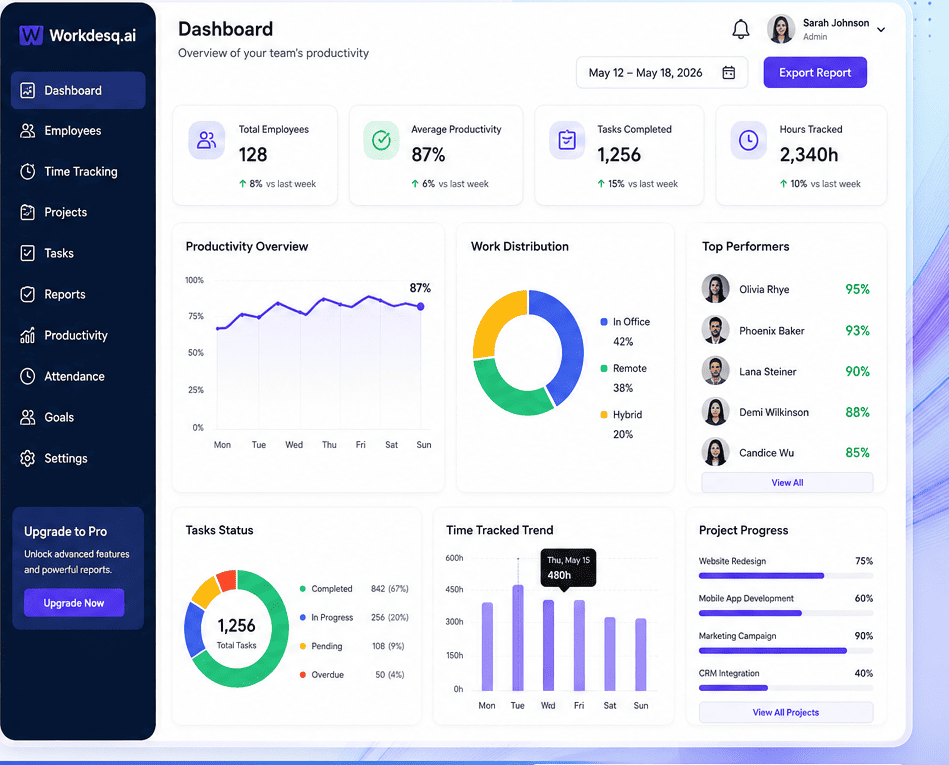
If you want to lessen the negative employee monitoring software impacts on employee trust, give your workers access to their own data. Let them look at their own productivity dashboards. Many people actually like seeing their own work habits because it helps them manage their time better. When the software becomes a tool for the worker, rather than a weapon for the boss, everything changes.
Final Thoughts on Tracking and Trust
The work world has changed, and tracking tools are a normal part of business today. However, technology cannot replace good management. If you have lazy workers, a tracking program will not make them hard workers. It will only make them better at faking it.
To run a successful business, you must treat adults like adults. The true employee monitoring software impacts on employee trust depend entirely on the person sitting in the boss's chair. Use the data to support your team, find areas where they need help, and reward them for good work. If you focus on honest communication and actual work results, you can use these tools to build a stronger, more trusting team.