Pedestrian Entry Control Systems for Metro & Public Transport Stations
-

- May 28th, 2026
- 6,343 views
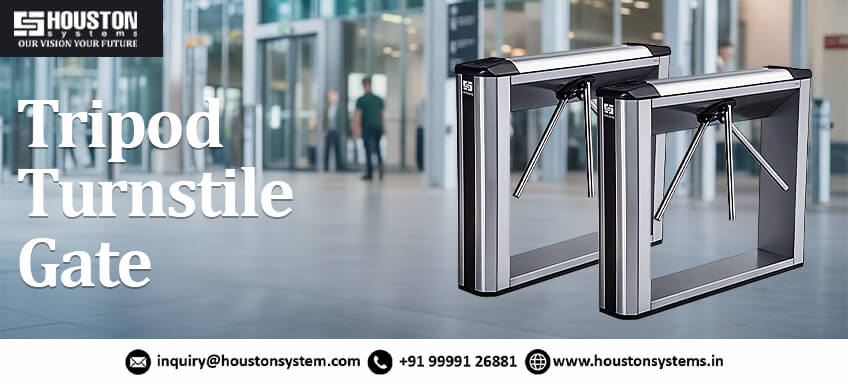
A metro station can appear operationally stable one moment and become heavily congested the next. In large urban transit networks, passenger movement changes rapidly within short time windows, especially during office commute hours, train arrival overlaps, route transfers, and unexpected service delays.
In many interchange stations, crowd pressure rarely begins on platforms first. It often starts near fare validation lanes, ticket barriers, and station entry corridors where commuter accumulation builds faster than passenger circulation can clear downstream movement areas.
For transport operators, this creates a difficult operational balance. Stations must move thousands of passengers quickly without creating uncontrolled access flow, fare validation delays, or circulation bottlenecks that spread across the transit environment.
This is one reason pedestrian entry control systems are becoming increasingly important in metro and public transport infrastructure planning.
Why Passenger Flow Problems Escalate Quickly in Busy Transit Stations
Unlike commercial buildings or industrial facilities, metro environments experience highly compressed movement cycles. Passenger density can increase dramatically within minutes depending on train frequency, route connectivity, weather conditions, or urban traffic disruptions.
A single overloaded entry lane during peak periods can begin affecting:
ticket validation speed
escalator circulation
interchange movement
platform access timing
commuter queue behavior
station security visibility
In high-density transport hubs, crowd buildup near entry barriers often spreads outward faster than station personnel can manually redirect passenger movement.
This is especially common in stations where multiple transit lines intersect and passengers simultaneously move between different travel corridors.
Why Transit Authorities Are Rethinking Station Entry Design
Many transport systems originally focused heavily on ticketing infrastructure, platform expansion, and train frequency improvements. But as commuter density continues increasing across urban networks, station entry management itself is becoming a larger operational concern.
Transport planners are now evaluating how pedestrian access infrastructure affects:
commuter throughput stability
queue formation behavior
fare gate utilization
platform crowd balancing
passenger circulation efficiency
emergency movement coordination
This has shifted station modernization discussions beyond simple access restriction toward broader passenger-flow engineering.
In some metro systems, station entry lanes are now analyzed similarly to traffic intersections — where movement consistency matters more than maximum speed alone.
Where Traditional Passenger Access Methods Lose Efficiency
In lower-density environments, partially manual commuter validation may still remain manageable. But in metro stations handling continuous rush-hour traffic, operational strain increases quickly.
Transport operators frequently encounter situations where:
passengers cluster unevenly across access lanes
fare validation slows during train arrival periods
queue spillover blocks circulation pathways
station staff manually intervene to redirect movement
commuter buildup affects adjacent transit zones
These disruptions may last only minutes individually, but across daily transit operations they create recurring pressure on station coordination.
Large interchange stations often experience these conditions repeatedly throughout the day rather than only during traditional morning and evening peak hours.
Why Throughput Consistency Matters More Than Entry Volume
One important shift in modern transit infrastructure planning is the growing focus on movement consistency instead of simply processing higher passenger numbers.
Stations capable of handling large commuter volume can still experience operational inefficiencies if passenger movement becomes uneven across:
entry corridors
validation lanes
transfer pathways
escalator zones
platform access points
This is why many transport authorities now prioritize a scalable pedestrian transit access system designed to improve commuter distribution and lane stability during fluctuating passenger density periods.
Maintaining balanced movement across station infrastructure often reduces operational pressure more effectively than simply increasing gate quantity.
Operational Factors That Influence Metro Entry Infrastructure Planning
Transit environments require different deployment planning considerations compared to commercial or industrial access systems.
Infrastructure decisions are commonly influenced by factors such as:
Interchange Complexity
Stations connecting multiple transit routes usually experience less predictable commuter movement patterns than single-line stations.
Train Interval Frequency
Short train intervals can create recurring passenger surges near fare validation and platform access zones.
Passenger Redistribution Behavior
Commuters naturally gravitate toward familiar access lanes, often creating uneven utilization across available station infrastructure.
Service Disruption Scenarios
Temporary delays or route interruptions can instantly increase commuter density at station entry and interchange areas.
Infrastructure Maintenance Windows
Metro environments require maintenance planning that minimizes disruption across active commuter schedules and operating hours.
Long-Term Ridership Expansion
Transport authorities increasingly prioritize infrastructure capable of adapting to future passenger growth without repeated station redesign.
How Smart City Mobility Projects Are Influencing Entry Infrastructure
Urban mobility planning is gradually becoming more integrated across public transport systems, digital ticketing platforms, commuter analytics, and station management infrastructure.
As a result, pedestrian entry control systems are increasingly expected to support:
centralized transit visibility
integrated fare validation
scalable station coordination
commuter movement analytics
long-term ridership planning
multi-station operational consistency
This is particularly relevant in expanding metro networks where passenger movement efficiency directly influences broader urban transit performance.
Several transit authorities are now approaching station entry infrastructure as part of larger city-wide mobility coordination strategies rather than isolated station-level upgrades.
Transport operators evaluating station modernization projects often prioritize pedestrian access infrastructure capable of maintaining commuter throughput consistency, supporting maintenance accessibility, and adapting to long-term ridership expansion across complex transit environments.
Conclusion
In modern metro systems, pedestrian entry infrastructure is no longer only about controlling access into stations. It has become closely connected with how efficiently passengers circulate through increasingly dense urban transit networks.
As commuter volumes continue rising across interconnected transport corridors, many transit authorities are placing greater focus on movement stability, lane coordination, and long-term infrastructure adaptability rather than relying solely on expanding physical station capacity.
For growing public transport systems, maintaining predictable passenger movement during continuous high-density operation is becoming just as important as increasing ridership itself.