ERP Software for Retail Stores in India: Features, Benefits and Buying Guide
-

- September 25th, 2026
- 88 views
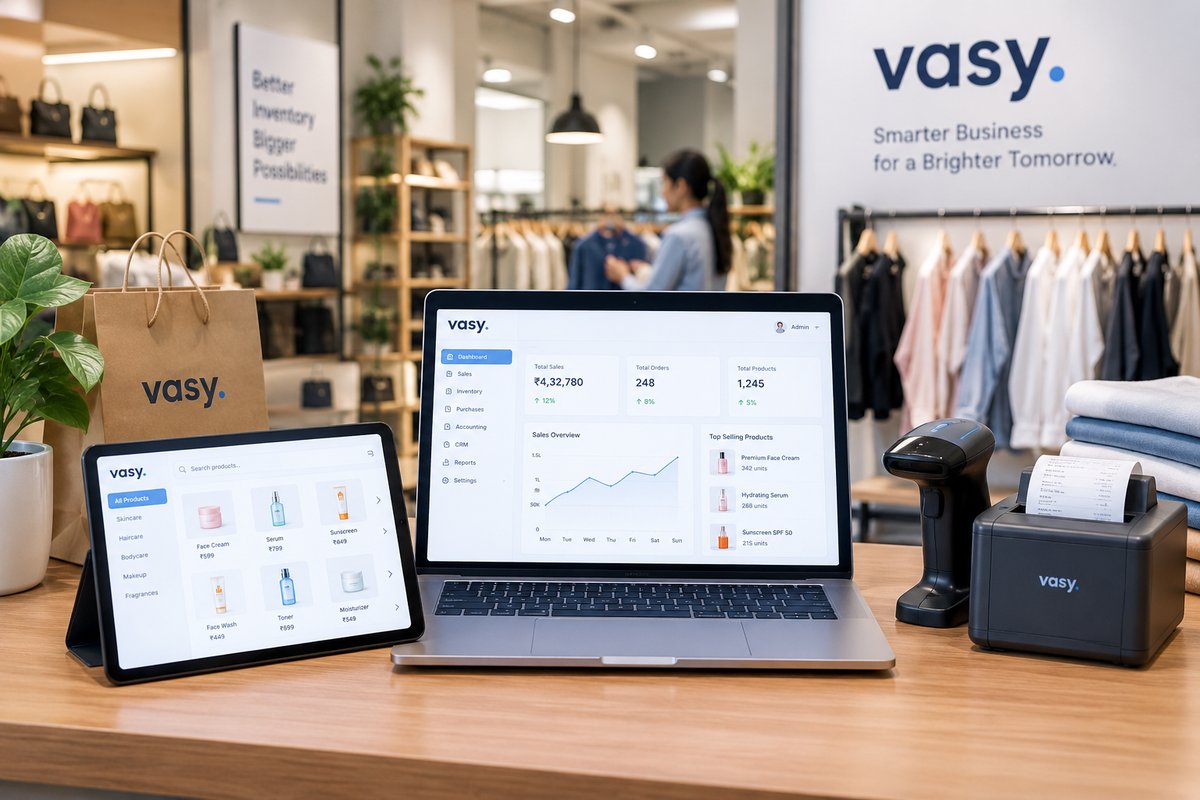
Running a retail business involves much more than selling products. Retailers need to manage inventory, purchase orders, sales, billing, customer information, suppliers, payments, accounting, and business reports at the same time. When these activities are handled through separate systems or spreadsheets, it can become difficult to maintain accurate information and make timely decisions.
This is where ERP software for retail stores in India can help. A retail ERP brings different business operations together in one system, allowing businesses to manage their daily activities from a centralized platform.
What Is ERP Software for Retail Stores?
ERP, or Enterprise Resource Planning, software is designed to connect different business functions through a unified system. For a retail business, this can include inventory management, billing, purchasing, sales, accounting, customer management, and reporting.
Instead of maintaining separate records for every department, retailers can use an integrated system to keep business information organized. When a sale takes place, for example, inventory information can be updated along with sales records, helping the business maintain more consistent data.
For Indian retailers, an ERP solution can also be useful for managing local business requirements such as GST-related transactions, invoicing, and multiple payment methods.
Why Do Retail Stores Need an ERP System?
Retail operations can become complicated as the number of products, customers, suppliers, and transactions increases. Manual processes may work for a small operation, but they can become time-consuming as the business grows.
A centralized ERP system can help retailers:
- Maintain organized product and inventory records
- Track sales and purchases
- Manage billing and invoices
- Monitor stock levels
- Maintain customer and supplier information
- Access business reports
- Reduce repetitive data entry
- Coordinate different business operations
Having these functions available through one platform can make routine management easier and provide a clearer view of business activities.
Important Features to Look For
When selecting ERP software, retailers should consider the features that match their operational requirements.
1. Inventory Management
Inventory is one of the most important areas for a retail business. An ERP system should make it easier to monitor available stock, incoming products, outgoing products, and inventory movement.
Better inventory visibility can help retailers identify products that are selling quickly and those that may require attention. This can also support more informed purchasing decisions.
2. Billing and Invoicing
A retail ERP should simplify the billing process. Retailers may need to generate invoices, record transactions, apply applicable taxes, and maintain sales information.
An integrated billing system can reduce the need to maintain separate sales records and make transaction information easier to access.
3. Purchase Management
Retailers regularly purchase products from different suppliers. ERP software can help organize purchase orders, supplier information, received products, and purchase records.
Having purchasing and inventory information connected can make it easier to understand how stock enters and moves through the business.
4. Sales Management
Sales data provides important information about retail performance. A centralized system can help businesses track sales transactions and review information based on products, customers, locations, or other relevant factors.
This information can support better planning and day-to-day decision-making.
5. Accounting and GST Management
Financial records are an important part of retail operations. Retail businesses may need to manage invoices, payments, expenses, taxes, and other accounting information.
When financial information is connected with sales and purchasing data, businesses can reduce the need for repetitive record maintenance.
6. Customer Management
Understanding customers can help retailers build better relationships and provide more consistent service. An ERP system with customer management capabilities can organize customer information and transaction history in one place.
This can be particularly useful for businesses that have repeat customers or operate across multiple sales channels.
Benefits of Using Retail ERP Software
The main benefit of an ERP system is the integration of business information. Instead of relying on disconnected tools, retailers can manage multiple activities through a centralized platform.
This can provide several practical benefits.
Better visibility: Retailers can access information about sales, stock, purchases, and other operations more easily.
Reduced manual work: Automating repetitive processes can save time and reduce unnecessary data entry.
Improved inventory control: Updated inventory information can help businesses monitor stock more effectively.
Faster reporting: Centralized information can make it easier to generate business reports and understand operational trends.
Scalability: A suitable ERP system can support businesses as their product range, customers, transactions, or locations increase.
How to Choose ERP Software for a Retail Business
Every retail business has different requirements, so retailers should evaluate software based on their actual workflows rather than selecting a system only because it has many features.
Before choosing an ERP, consider factors such as ease of use, inventory capabilities, billing functionality, accounting requirements, reporting, integrations, scalability, data security, and customer support.
It is also useful to consider whether the system can support the business as it grows. A solution that works for a small store may need additional capabilities when the business expands to multiple locations or sales channels.
Vasy.ai for Retail Business Management
Retail businesses looking for an integrated approach to managing their operations can explore ERP software for retail stores in India. Vasy.ai brings business management capabilities together to help businesses manage areas such as sales, inventory, billing, accounting, and other operational activities through a connected platform.
The right solution ultimately depends on the retailer's size, processes, industry requirements, and growth plans. Businesses should review their current challenges and compare available features before making a decision.
Conclusion
Retail management involves many connected activities, from purchasing and inventory to billing, sales, customer management, and accounting. Managing these processes separately can make it harder to maintain consistent information as the business grows.
ERP software for retail stores in India can provide a centralized way to organize these operations and improve visibility across the business. By evaluating features such as inventory management, billing, purchasing, accounting, reporting, and scalability, retailers can identify a solution that fits their operational needs and future plans.