6 Simple Food Swaps for a Healthier Indian Diet
-

- Published Updated
- 7,394 views
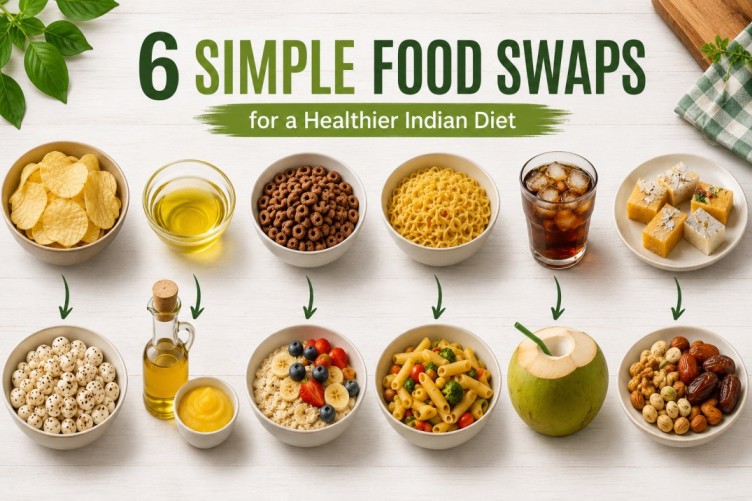
Healthy eating doesn't have to mean following strict diets or giving up your favorite foods. In fact, some of the most effective dietary improvements come from making small, sustainable changes to your everyday meals. Modern lifestyles have made processed foods more accessible than ever, but traditional Indian eating habits still offer many healthier alternatives.
If you're looking to improve your diet without making drastic changes, these six simple food swaps can help you eat better while still enjoying delicious meals.
1. Swap Potato Chips for Roasted Snacks
Potato chips are a common snack in many households. While they are convenient and tasty, they are often deep-fried and contain high amounts of salt and unhealthy fats. Regular consumption can lead to excess calorie intake without providing much nutritional value.
A healthier alternative is roasted snacks such as makhana (fox nuts), roasted chana, khakhra, or baked vegetable chips. These options are generally less processed and can help satisfy cravings for something crunchy.
Roasted makhana, for example, is light, versatile, and can be seasoned with spices to create a flavorful snack. Roasted chana provides protein and fiber, making it a filling option between meals.
If you're looking for wholesome snack options, explore the collection available at Refresh Your Life
2. Swap Refined Cooking Oils for Traditional Oils and Ghee
Cooking oils are a daily part of Indian meals, yet many people pay little attention to the type of oil they use. Highly refined oils undergo extensive processing before reaching consumers. While they are widely available, many households are returning to traditional cooking fats that have been used for generations.
Cold-pressed oils and pure ghee have long been part of Indian culinary traditions. Whether it's mustard oil, sesame oil, groundnut oil, or quality ghee, these ingredients not only add flavor but also help preserve traditional cooking methods.
The key is moderation and choosing quality ingredients. Using the right oil for the right cooking method can enhance both taste and overall meal quality.
You can explore a range of cooking essentials here:
3. Swap Sugary Breakfast Cereals for Oats
Breakfast is often called the most important meal of the day, yet many people start their mornings with highly processed cereals that contain added sugars and artificial ingredients.
While these cereals may appear healthy because of marketing claims, they can sometimes provide only short-lived energy. This may leave you feeling hungry again shortly after breakfast.
Oats offer a simple and nutritious alternative. Rich in fiber, oats can help keep you full for longer and provide a more balanced start to the day. They are also incredibly versatile.
You can prepare oats with milk and fruits, make overnight oats, blend them into smoothies, or even use them in savory Indian recipes such as vegetable oats upma.
Adding nuts, seeds, and fresh fruits can further improve both the nutritional value and taste of your breakfast.
4. Swap Instant Noodles for Better Pasta Alternatives
Instant noodles have become a popular convenience food because they are quick and easy to prepare. However, many varieties contain high levels of sodium and heavily processed ingredients.
When you're short on time, choosing quality pasta or noodles can be a better option. By combining them with vegetables, herbs, and homemade sauces, you can create satisfying meals that are both flavorful and balanced.
For example, whole wheat pasta with mixed vegetables, garlic, and herbs can be prepared in less than 20 minutes and provides a much more wholesome meal than many packaged alternatives.
Healthy eating doesn't mean giving up convenience—it means making smarter choices when convenience is needed.
Discover better pasta and noodle options here:
5. Swap Soft Drinks for Natural Beverages
Sugary soft drinks have become a regular part of many people's diets. Unfortunately, they are also one of the largest sources of added sugar in modern eating habits.
Regular consumption of sweetened beverages can contribute to excessive calorie intake while offering little nutritional benefit. Many people also underestimate how much sugar is contained in a single serving.
A healthier choice is to switch to natural beverages such as coconut water, lemon water, buttermilk, herbal teas, or fruit-infused water. These drinks help maintain hydration and often contain fewer added ingredients.
Traditional Indian beverages such as chaas (buttermilk) and nimbu pani have been enjoyed for generations and continue to be excellent alternatives to packaged drinks.
Even replacing just one soft drink per day with a natural beverage can be a positive step toward healthier eating habits.
6. Swap Processed Sweets for Nuts and Dry Fruits
Most of us experience sweet cravings from time to time. The problem arises when we regularly satisfy those cravings with packaged desserts, candies, cookies, and sugary snacks.
Many processed sweets contain refined sugar, artificial flavors, preservatives, and unhealthy fats. While they can be enjoyable occasionally, relying on them as a daily snack is not ideal.
Instead, consider keeping dates, raisins, figs, almonds, walnuts, pistachios, and other dry fruits readily available. These foods provide natural sweetness along with vitamins, minerals, healthy fats, and fiber.
Dates, in particular, can be an excellent substitute when you're craving something sweet. A handful of mixed nuts can also help keep you full and energized throughout the day.
Having healthier snack options within reach makes it easier to make better choices when cravings strike.
Final Thoughts
Healthy eating isn't about completely transforming your diet overnight. The most successful changes are often the simplest ones—small improvements that can be maintained over the long term.
By swapping potato chips for roasted snacks, refined oils for traditional cooking fats, sugary cereals for oats, instant noodles for better pasta alternatives, soft drinks for natural beverages, and processed sweets for nuts and dry fruits, you can gradually improve the quality of your diet without sacrificing enjoyment.
Remember, consistency matters more than perfection. Start with one or two swaps this week, build them into your routine, and continue adding healthier choices over time. Small changes made consistently can lead to significant benefits for your overall health and well-being.