Ganesh Rudraksha: Understanding Its Natural Trunk Formation, Traditional Benefits and Use
-
- Published Updated
- 45 views
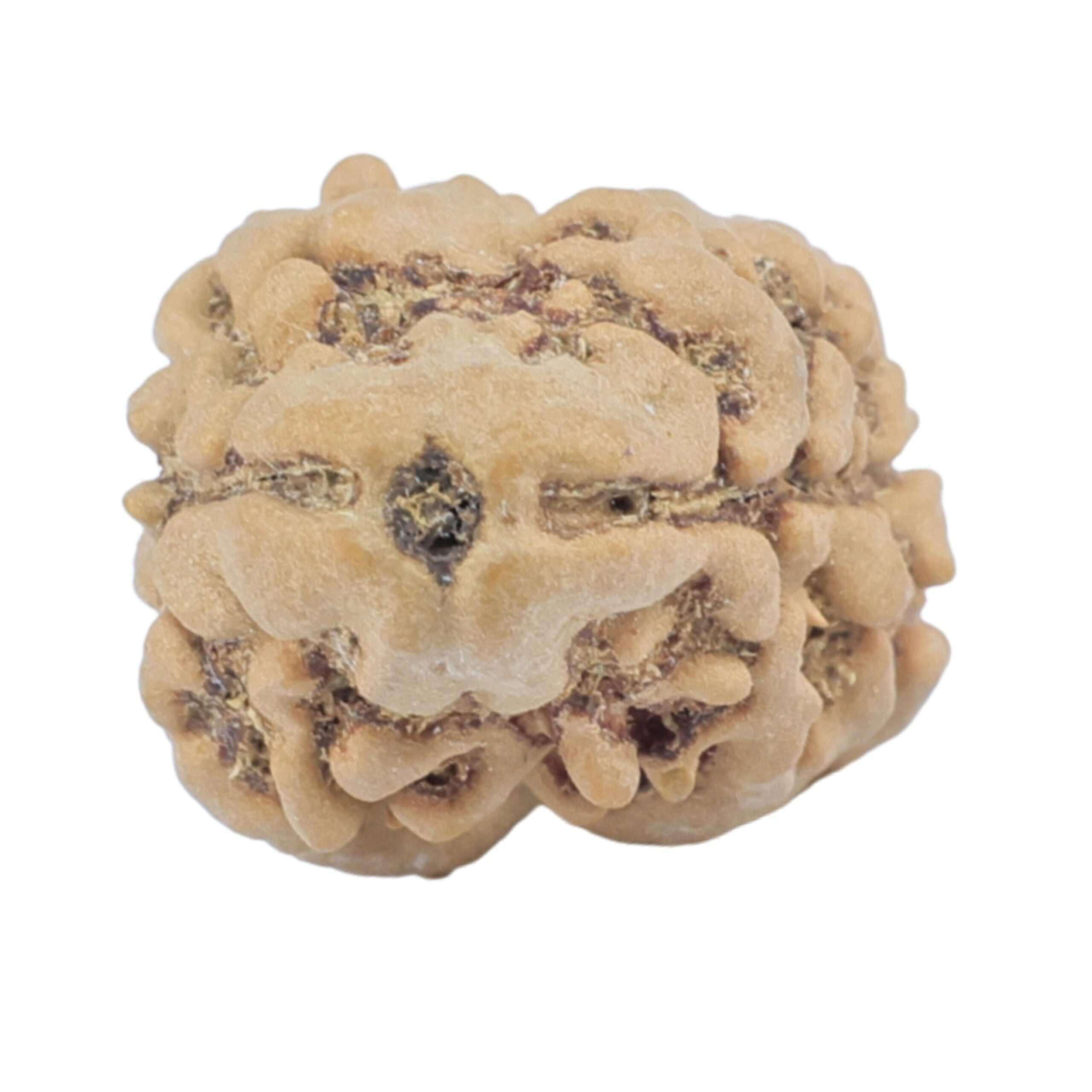
Not all Rudraksha varieties are identified solely by their Mukhi number. Some are recognized because of a distinctive natural feature that gives them a special traditional identity. Ganesh Rudraksha is one such form, identified by a natural protrusion that resembles the trunk of Lord Ganesha.
The Ganesh Rudraksha is traditionally associated with Lord Ganesha and is commonly connected with wisdom, learning, auspicious beginnings, clarity, perseverance, and overcoming challenges.
These are traditional religious and cultural interpretations. They should not be treated as scientifically proven effects or guarantees of wealth, health, academic success, protection, or specific personal outcomes.
The Feature That Defines Ganesh Rudraksha
The most recognizable characteristic of Ganesh Rudraksha is its trunk-like protrusion.
This feature develops naturally on the Rudraksha seed.
It is what gives the bead its traditional connection with Lord Ganesha.
When purchasing one, the natural formation of this feature deserves particular attention.
Why Ganesha Symbolism Matters
Lord Ganesha is traditionally associated with:
Wisdom
Knowledge
New beginnings
Discernment
Obstacles
Auspiciousness
These associations provide the spiritual context for understanding Ganesh Rudraksha.
The bead can therefore be used as a symbolic reminder of these qualities.
Wisdom Before Action
Ganesha's association with wisdom gives this Rudraksha a natural connection with thoughtful decision-making.
Wisdom can involve:
Looking at the complete situation
Considering consequences
Learning from experience
Asking appropriate questions
Avoiding impulsive decisions
The traditional symbolism encourages thoughtfulness rather than simply acting quickly.
Learning and Knowledge
Ganesha is traditionally associated with learning and knowledge.
This makes Ganesh Rudraksha relevant to people who are:
Studying
Learning a new skill
Conducting research
Building professional knowledge
Developing a new area of expertise
The bead should not be represented as guaranteeing better grades or intellectual ability.
Its traditional meaning can instead serve as a reminder of consistent learning.
New Beginnings
Starting something new can involve both opportunity and uncertainty.
Ganesha is traditionally invoked at the beginning of auspicious activities.
Ganesh Rudraksha can therefore carry symbolic relevance for:
New businesses
New projects
Education
Career changes
Spiritual routines
Major personal transitions
The traditional message is better understood as beginning with preparation and awareness.
Overcoming Obstacles
The traditional concept of Ganesha as Vighnaharta is closely associated with obstacles.
This is one of the key ideas connected with Ganesh Rudraksha.
A practical interpretation involves asking:
What is the actual obstacle?
Can I prepare differently?
Do I need more information?
Should I change my approach?
What can I learn from the difficulty?
The bead does not guarantee that an obstacle will disappear.
Perseverance
Some challenges require repeated effort.
Perseverance can involve:
Continuing after setbacks
Learning from mistakes
Adjusting a strategy
Remaining patient
Maintaining discipline
The traditional Ganesha symbolism can serve as a reminder of these qualities.
Discernment
Discernment is especially useful when several choices seem possible.
A practitioner can use the traditional symbolism of Ganesh Rudraksha as a prompt to consider:
Facts
Assumptions
Risks
Alternatives
Consequences
This can be incorporated into personal reflection and meditation.
Who May Traditionally Consider Ganesh Rudraksha?
There is no universal rule about who should wear it.
Its symbolism may appeal to:
Ganesha devotees
Students
Entrepreneurs
Professionals
Business owners
People starting new ventures
Meditation practitioners
Spiritual seekers
Rudraksha collectors
Those choosing it for a specific spiritual or astrological purpose may prefer guidance from a knowledgeable practitioner.
Traditional Ways to Use It
Ganesh Rudraksha may be used during:
Meditation
Prayer
Mantra chanting
Ganesha worship
Devotional practice
It may also be worn as a pendant or kept in a prayer area.
Some practitioners follow traditional cleansing and preparation practices before wearing Rudraksha.
Ganesh Rudraksha and Mukhi Count
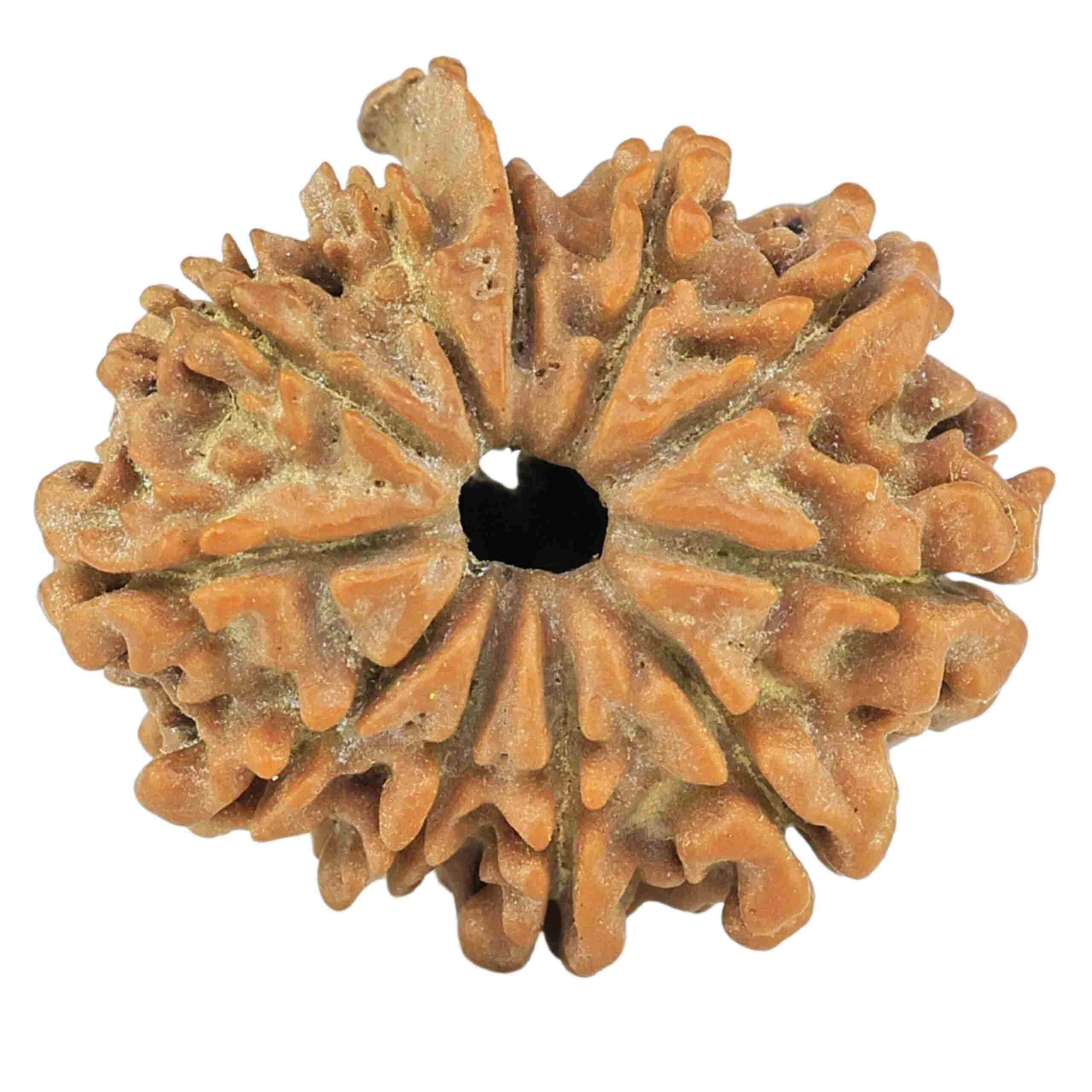
One important point is that Ganesh Rudraksha and Mukhi classification are not necessarily the same thing.
The term Ganesh Rudraksha describes the distinctive natural protrusion.
Mukhi describes the natural faces or grooves on the seed.
A product can therefore have both a Mukhi classification and a special natural form.
How to Identify the Natural Trunk
When evaluating the bead, examine whether the protrusion appears to be part of the seed itself.
Look for:
Natural surface continuity
Organic texture
Integrated structure
Clearly visible protrusion
Natural Mukhi lines
Artificial modification can create a similar appearance, so supporting information can be useful.
Individual Product Photographs
When buying online, photographs of the actual bead are valuable.
For a Ganesh Rudraksha, useful views include:
Front
Back
Side
Trunk-like protrusion
Mukhi formation
Multiple views make it easier to understand the natural structure.
Natural Variation
No two natural Rudraksha seeds need to look exactly alike.
Ganesh Rudraksha can vary in:
Size
Shape
Colour
Weight
Texture
Protrusion size
These differences can occur naturally.
The defining feature should be evaluated in the context of the complete seed.
Certification
Certification can provide supporting information about an individual Rudraksha.
Depending on the product, it may include:
Product identification
Mukhi count
Dimensions
Weight
Origin
Certification details
Laboratory information
For a special or higher-value bead, buyers may also ask about laboratory or X-ray verification.
Origin
Rudraksha can originate from different geographical regions.
Natural differences can occur depending on origin and individual growth.
These may affect:
Size
Shape
Texture
Surface appearance
Origin should be treated as useful product information rather than complete proof of authenticity.
Ganesh Rudraksha vs 8 Mukhi
These varieties can be confused because both are associated with Lord Ganesha.
8 Mukhi Rudraksha is classified according to eight natural Mukhi faces.
Ganesh Rudraksha is identified by its natural trunk-like protrusion.
The physical basis for their classification is therefore different.
Ganesh Rudraksha vs Sawar Rudraksha
Sawar Rudraksha is generally described as a special naturally joined form involving a smaller Rudraksha and a larger seed.
Ganesh Rudraksha has a distinctive trunk-like protrusion on a seed.
Understanding the physical difference can help buyers avoid confusing the two.
Rudraksha Sanskar and Ganesh Rudraksha
Rudraksha Sanskar provides different Rudraksha varieties and special forms through its online platform.
Its Ganesh Rudraksha collection provides product-related information for individuals evaluating this Ganesha-associated form.
For someone considering a Ganesh Rudraksha, reviewing the individual product photographs, natural protrusion, Mukhi information, dimensions, weight, origin, certification, and authenticity details can provide a clearer basis for selection.
What Should You Ask Before Buying?
Before purchasing, ask:
Is the protrusion naturally formed?
Are the photographs of the actual bead?
Is the feature visible from multiple angles?
What is the Mukhi count?
What are the dimensions?
What is the weight?
What is the stated origin?
Is certification available?
Does the documentation correspond to the individual bead?
What are the authenticity and return policies?
Don't Choose Only by Appearance
A distinctive appearance can attract attention, but appearance alone isn't enough to establish authenticity.
Consider the complete product:
Natural structure
Photographs
Physical measurements
Origin
Certification
Seller information
This is particularly important for uncommon Rudraksha forms.
Traditional Benefits Need Context
The Ganesha association can be meaningful without turning the bead into a promise.
Be cautious about claims that Ganesh Rudraksha will automatically:
Remove all obstacles
Guarantee success
Bring instant wealth
Improve academic results
Solve relationship difficulties
Provide complete protection
Traditional symbolism and real-world outcomes should remain separate.
Caring for Ganesh Rudraksha
The natural protrusion should be handled carefully.
Avoid:
Harsh chemicals
Direct perfume
Strong cleaning agents
Rough handling
Excessive polishing
Gentle cleaning and appropriate storage can help preserve the seed.
A Simple Way to Understand the Symbolism
The traditional meaning can be viewed through four ideas:
Wisdom: Understand before acting.
Learning: Keep developing knowledge.
Beginnings: Start with preparation.
Obstacles: Respond with patience and persistence.
This makes the symbolism useful as a framework for spiritual reflection.
Conclusion
Ganesh Rudraksha is a distinctive natural Rudraksha form traditionally recognized by a trunk-like protrusion and associated with Lord Ganesha. Its traditional symbolism centres on wisdom, learning, discernment, auspicious beginnings, perseverance, and navigating obstacles.
For practitioners, these qualities can become part of meditation, prayer, and devotional practice.
For buyers, the natural formation is the most distinctive physical consideration. Individual product photographs, Mukhi information, dimensions, weight, origin, certification, and authenticity details can help provide a more informed basis for evaluating a Ganesh Rudraksha before purchase.