Shaligram Stone: Meaning, Significance and Spiritual Importance
-

- Published Updated
- 1,702 views
Shaligram Stone: Meaning, Significance, Types and Spiritual Importance
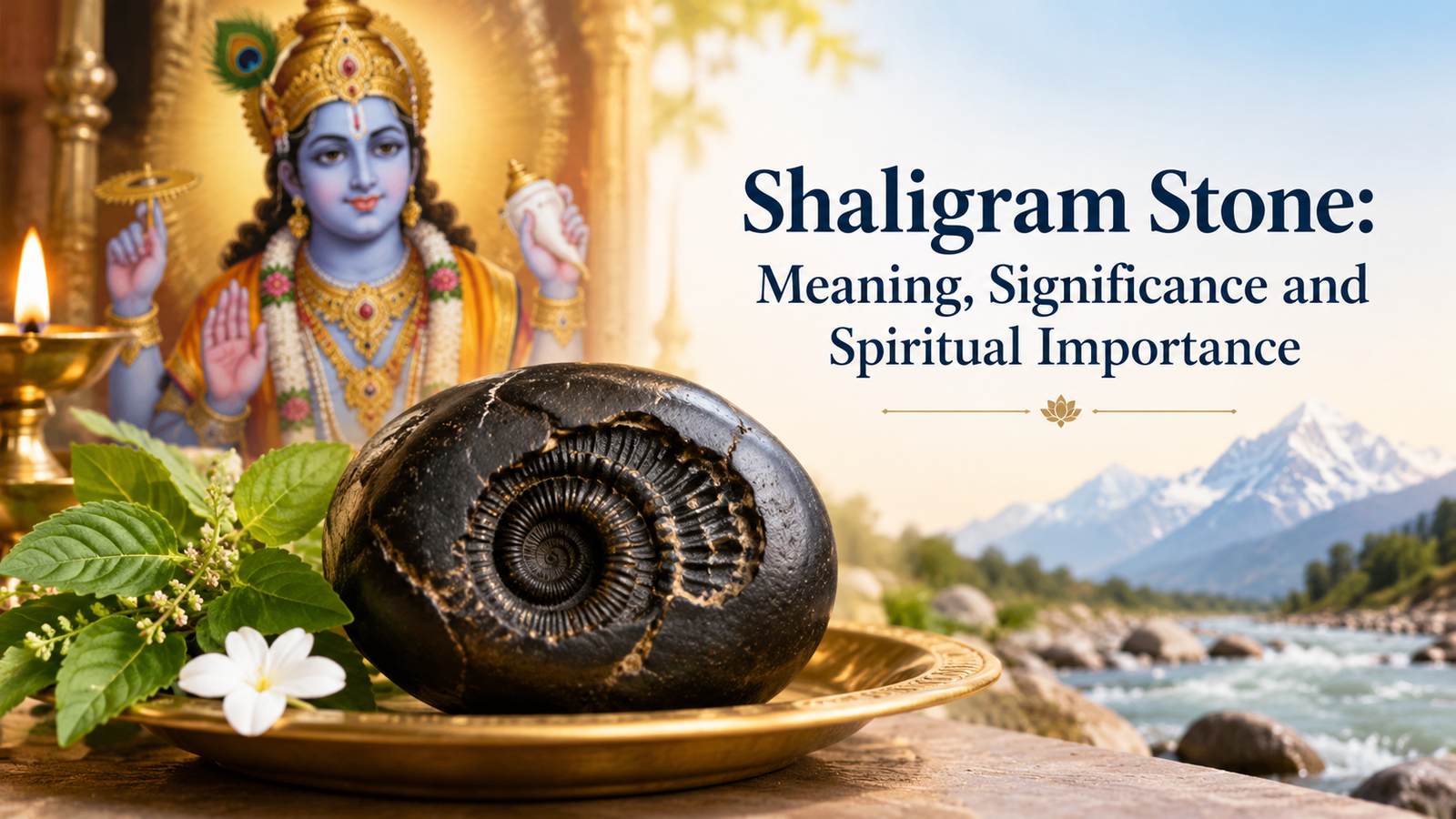
The Shaligram stone holds a special place in Hindu religious traditions and is particularly associated with the worship of Lord Vishnu. Recognized by its dark color, naturally occurring markings, and distinctive formations, a Shaligram is traditionally regarded as a sacred representation of Vishnu and is worshipped in homes and temples.
For centuries, devotees have shown great respect toward Shaligrams because they are naturally formed and are not created by human hands. Their unique appearance, spiritual symbolism, and connection with ancient traditions make them an important part of Hindu devotional practices.
What Is a Shaligram Stone?
A Shaligram stone is a naturally occurring fossil-bearing stone traditionally collected from the Kali Gandaki River region of Nepal, particularly in the Himalayan region. Many Shaligrams contain naturally formed spiral or wheel-like patterns associated with ammonite fossils.
In Hindu tradition, these natural markings are often interpreted as sacred symbols, particularly the Chakra or Sudarshan Chakra of Lord Vishnu. Because of these features, Shaligrams are treated differently from ordinary stones.
The appearance of a Shaligram can vary significantly. Some are round or oval, while others may have openings, grooves, spirals, or other natural characteristics. Traditional identification often considers these natural features when distinguishing between different forms of Shaligram.
Shaligram Stone Meaning in Hindu Tradition
The traditional meaning of a Shaligram is closely connected with Lord Vishnu, the preserver in the Hindu Trimurti. Devotees consider the Shaligram to be a naturally manifested form associated with Vishnu worship.
Rather than being a sculpted idol, the Shaligram is valued because of its natural formation. This characteristic has contributed to its special position in Vaishnava traditions.
Different markings and formations are traditionally associated with different manifestations of Vishnu. For this reason, people interested in Shaligrams often study their traditional characteristics before choosing one for worship.
Where Are Shaligram Stones Found?
The traditional source of Shaligram stones is the Kali Gandaki River, which flows through Nepal. The river is considered sacred and has long been associated with pilgrimage and Vishnu worship.
The Himalayan landscape surrounding the Kali Gandaki region is also an important part of the traditional story of Shaligrams. Natural geological processes over long periods contribute to the formation and exposure of fossil-bearing stones in the river environment.
Because authentic Shaligrams are naturally formed, their shapes and markings can vary considerably. This is also why identifying a particular Shaligram should not be based only on color or size.
Different Types of Shaligram Stones
Traditional texts and devotional practices describe several types of Shaligrams. Their classification can depend on natural markings, openings, shape, and other characteristics.
Some commonly discussed varieties include:
1. Lakshmi Narayan Shaligram
The Lakshmi Narayan Shaligram is traditionally associated with Lord Vishnu along with Goddess Lakshmi. It is often connected with ideas of prosperity, harmony, and household well-being within devotional traditions.
2. Sudarshan Shaligram
The Sudarshan Shaligram is associated with the Sudarshan Chakra, the divine discus traditionally carried by Lord Vishnu. Natural circular or wheel-like formations are particularly important when discussing this variety.
3. Narasimha Shaligram
The Narasimha form represents Lord Vishnu's incarnation as Narasimha. Shaligrams traditionally identified with this form are associated with protection and the removal of negative influences in devotional belief.
4. Varaha Shaligram
The Varaha Shaligram is traditionally connected with Lord Vishnu's Varaha incarnation. The Varaha avatar is associated with the divine boar form through which Vishnu is said to have restored the Earth.
5. Damodara Shaligram
Damodara is another name associated with Lord Krishna, a form of Vishnu. A Damodara Shaligram is traditionally identified through particular natural characteristics and is included among the varieties discussed in Shaligram traditions.
It is important to remember that traditional classifications can vary between texts, regions, and practitioners. Therefore, identification should be approached with care.
Spiritual Significance of Shaligram
The spiritual significance of a Shaligram stone comes primarily from its connection with Vishnu worship. Devotees may use Shaligrams as a focus for prayer, meditation, and daily rituals.
Shaligram worship can also provide a meaningful spiritual routine. Lighting a diya, offering Tulsi leaves, chanting Vishnu mantras, and maintaining a clean worship space are practices followed by many devotees.
For believers, the importance of Shaligram is not simply related to its physical appearance. It represents devotion, faith, and a connection with an ancient religious tradition.
How Is a Shaligram Worshipped?
Traditional Shaligram worship generally involves keeping the stone in a clean and respectful place. Devotees may bathe the Shaligram with clean water and offer Tulsi leaves, flowers, and other traditional offerings.
A simple worship routine may include:
- Cleaning the worship area
- Bathing the Shaligram with clean water
- Offering Tulsi leaves
- Lighting a diya
- Chanting Vishnu or Krishna mantras
- Offering flowers and traditional prasad
- Performing a short prayer or meditation
Specific rituals can differ according to family customs, regional traditions, and religious lineages. People who wish to follow a particular ritual method may consult a knowledgeable priest or traditional teacher.
Benefits Traditionally Associated With Shaligram Worship
Many devotees associate Shaligram worship with spiritual peace, devotion, and a disciplined prayer routine. Traditional beliefs may also connect Vishnu worship with prosperity, protection, harmony, and well-being.
These should be understood as religious and traditional beliefs, rather than scientifically established effects.
For many households, the value of a Shaligram lies in the opportunity it provides to create a regular spiritual practice. Daily worship can encourage mindfulness, gratitude, and a sense of connection with one's religious heritage.
How to Choose a Shaligram Stone?
Choosing a Shaligram requires attention to its natural characteristics and traditional identification. Buyers should avoid selecting one solely because of claims about guaranteed financial, health, or personal outcomes.
When purchasing a Shaligram, consider:
- Its natural appearance and markings
- The traditional type it is being identified as
- Its source and provenance
- Whether the seller provides clear information
- The seller's reputation and transparency
- Whether photographs accurately represent the actual stone
Because Shaligrams are naturally formed, no two stones necessarily look exactly alike. A knowledgeable seller or traditional expert can help explain the characteristics attributed to a particular specimen.
How to Care for a Shaligram Stone
A Shaligram is generally treated as a sacred object rather than ordinary decorative material. Devotees commonly keep it in a clean worship area and handle it respectfully.
Clean water is traditionally used during worship. Tulsi leaves are also commonly offered because of their strong association with Vishnu worship.
It is advisable to avoid harsh cleaning chemicals or unnecessary polishing, especially if preserving the stone's natural surface is important. The purpose of caring for a Shaligram is primarily devotional rather than cosmetic.
Shaligram Stone and Modern Spiritual Interest
Interest in Shaligram stones has expanded beyond traditional temple worship. Today, people researching Hindu spirituality, Indian culture, sacred objects, and ancient traditions often encounter Shaligrams.
The stone also has an interesting connection between natural history and religious tradition. Its fossil characteristics provide a geological dimension, while its traditional interpretation gives it religious significance.
This combination makes the Shaligram particularly interesting for people who want to understand how natural objects can become part of cultural and spiritual practices.
Final Thoughts
The Shaligram stone represents an important intersection of nature, religious tradition, and devotional practice. Traditionally associated with Lord Vishnu, Shaligrams are valued for their natural formation, distinctive markings, and spiritual symbolism.
Whether someone encounters a Shaligram through family worship, a temple tradition, religious study, or an interest in Indian heritage, understanding its traditional meaning can provide useful context.
A Shaligram is more than simply a naturally formed stone for devotees who worship it. It can serve as a focal point for prayer and a reminder of faith and spiritual discipline. Anyone considering purchasing or worshipping one should take time to learn about its origin, traditional identification, and proper care rather than relying solely on commercial claims.