Golden Triangle with Amritsar: Best North India Journey
-

- Published Updated
- 8,304 views
There's a particular kind of trip that doesn't just show you places — it shows you something about yourself. My Golden Triangle Tour with Amritsar was exactly that. What started as a bucket-list checkbox turned into one of the most emotionally layered, visually overwhelming, and quietly profound journeys of my life.
If you're planning a North India tour and wondering whether to add Amritsar to the classic Delhi–Agra–Jaipur circuit, let me tell you: don't wonder. Just go.
What Is the Golden Triangle
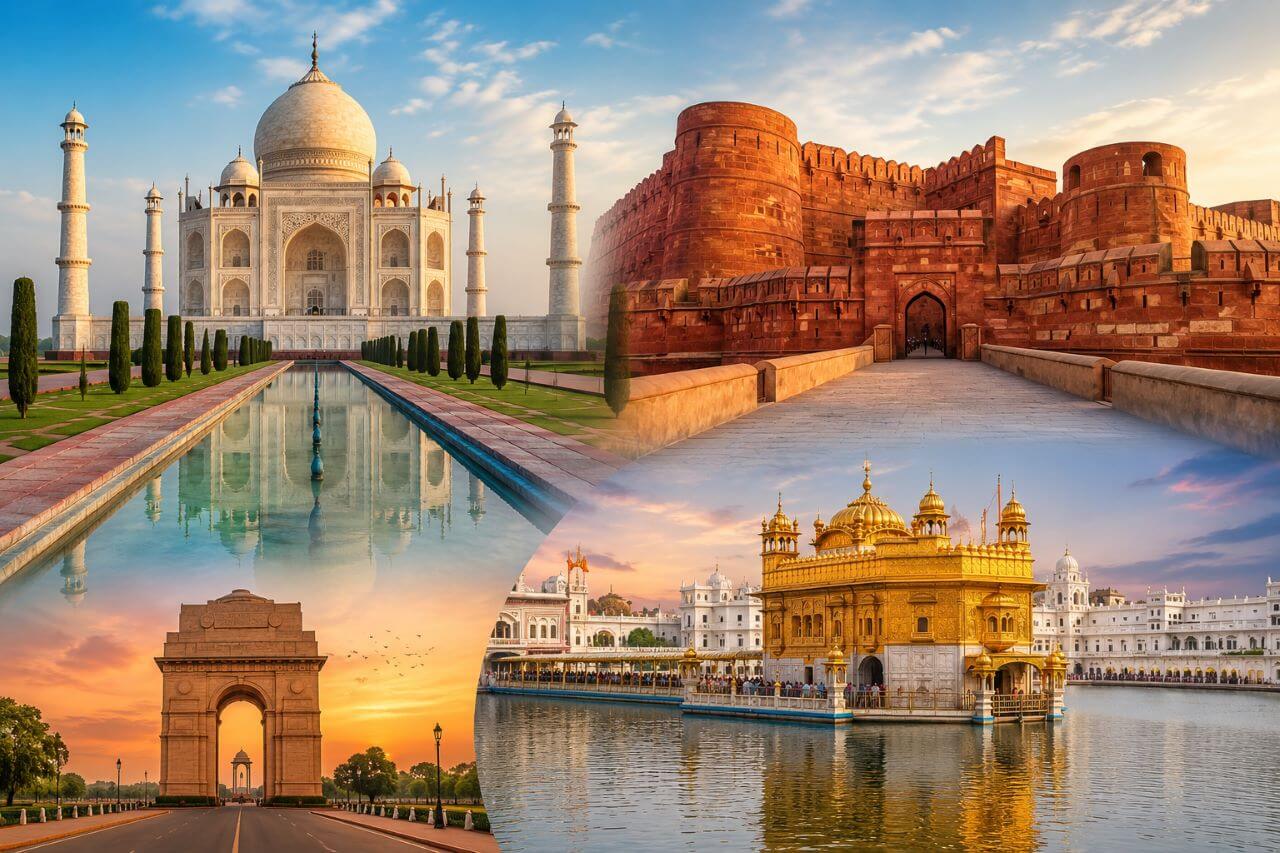
The "Golden Triangle" is the name given to India's most iconic three-city circuit: Delhi, Agra, and Jaipur. Together, they form a rough triangle on the map, and together, they hold some of the country's most extraordinary history, architecture, and food.
Delhi is chaos and grandeur all at once — Mughal tombs beside colonial boulevards, street food stalls under ancient minarets. Agra is, of course, the Taj Mahal, and no matter how many photographs you've seen, the real thing still makes you go quiet. Jaipur, the Pink City, is layered storytelling: every fort, every bazaar, every tuk-tuk driver has a story to tell.
Most tourists stop here. And they leave satisfied.
But those who extend their North India tour to include Amritsar? They leave transformed.
Adding Amritsar: The Decision That Changes Everything
Amritsar sits in the Punjab, roughly six to seven hours from Delhi by road or a comfortable overnight train. It is not a typical tourist destination in the polished, manicured sense. It is raw, real, and deeply spiritual.
The city is home to the Harmandir Sahib — the Golden Temple — the holiest shrine in Sikhism. And while you may have seen photos, nothing prepares you for the actual experience.
I arrived in the early morning, as many pilgrims do. The air was cool, carrying the scent of incense and the low, resonant hum of the Gurbani — sacred hymns — being broadcast across the complex. The golden sanctum shimmers in the middle of a vast sacred lake called the Amrit Sarovar (the Pool of Nectar), and its reflection on the water looks almost too beautiful to be real.
I sat there for nearly two hours. I hadn't planned to.
The Golden Temple: A Place That Belongs to Everyone
What struck me most wasn't the architecture — though it is extraordinary. It was the feeling of the place. The Golden Temple is radically inclusive. People of every faith, nationality, and background are welcomed with equal warmth.
Every day, the temple's langar — a community kitchen — serves free meals to tens of thousands of visitors and pilgrims, regardless of who they are. Volunteers chop vegetables, wash dishes, and knead dough in a seamless, joyful rotation. I joined in for a few minutes, awkwardly cutting carrots, and one of the volunteers laughed and adjusted my grip with the patience of someone who had done this a thousand times before.
This is what no travel brochure tells you: that the Golden Temple will make you feel, for a moment, like the world is capable of extraordinary generosity.
Wagah Border: Pageantry, Patriotism, and Something Deeper
About 30 kilometers from Amritsar lies the Wagah Border — the only road crossing between India and Pakistan. Every evening at sunset, both countries conduct a highly choreographed flag-lowering ceremony known as the Beating Retreat.
Soldiers in elaborate uniforms march with precision that borders on theatrical. Crowds on both sides of the border cheer, chant, and wave flags. The energy is electric, almost festive.
But sitting there, watching this performance unfold at one of the most politically charged borders in the world, I felt something quieter underneath the noise — a kind of melancholy. Two nations, once one, now separated by a line in the sand, each shouting its identity across the divide.
It is a must-do on any Golden Triangle Tour with Amritsar. Not because it's fun (though it is), but because it makes you think.
Jallianwala Bagh: History That Doesn't Let You Go
A short walk from the Golden Temple is Jallianwala Bagh — a public garden that was the site of one of British colonial India's darkest episodes. In 1919, British troops opened fire on a peaceful gathering of unarmed civilians, killing hundreds and wounding thousands.
The garden is quiet now, softened by flowers and trees. But the bullet marks are still there, preserved in the old brick walls. And there is a well — now covered — into which people jumped to escape the gunfire.
Standing there, reading the names and accounts, is not easy. But it is important. Every North India tour that includes this site becomes richer for it — not just as a lesson in history, but as a reminder of why peace, dignity, and justice still matter.
The Food: Punjab on a Plate
Punjabi food is legendary in India, and Amritsar is its epicenter. The Amritsari kulcha — a stuffed, crispy flatbread baked in a tandoor and served with spiced chickpeas — is something I still dream about. A place called the Brothers Dhaba near the Golden Temple has been serving these for generations, and the queue at 8 a.m. tells you everything you need to know.
Then there's the lassi — thick, creamy, served in clay cups so large they're almost comically oversized. And in the evenings, the makki di roti and sarson da saag (a mustard greens dish with cornbread) taste like the Punjab itself: hearty, honest, and generous.
After the sometimes tourist-heavy restaurants of Delhi and Jaipur, eating in Amritsar feels like being fed by someone's grandmother. In the best possible way.
Planning Your Golden Triangle Tour with Amritsar: A Practical Overview
Here's a rough itinerary that works well for most travelers:
Day 1–2: Delhi Arrive, settle in. Visit Qutub Minar, Humayun's Tomb, the chaotic lanes of Chandni Chowk, and India Gate. Let the city overwhelm you a little — that's part of it.
Day 3–4: Agra Drive or take the express train to Agra. The Taj Mahal at sunrise is worth every early alarm. Also visit Agra Fort and, if time allows, Fatehpur Sikri, the ghost city built by Emperor Akbar.
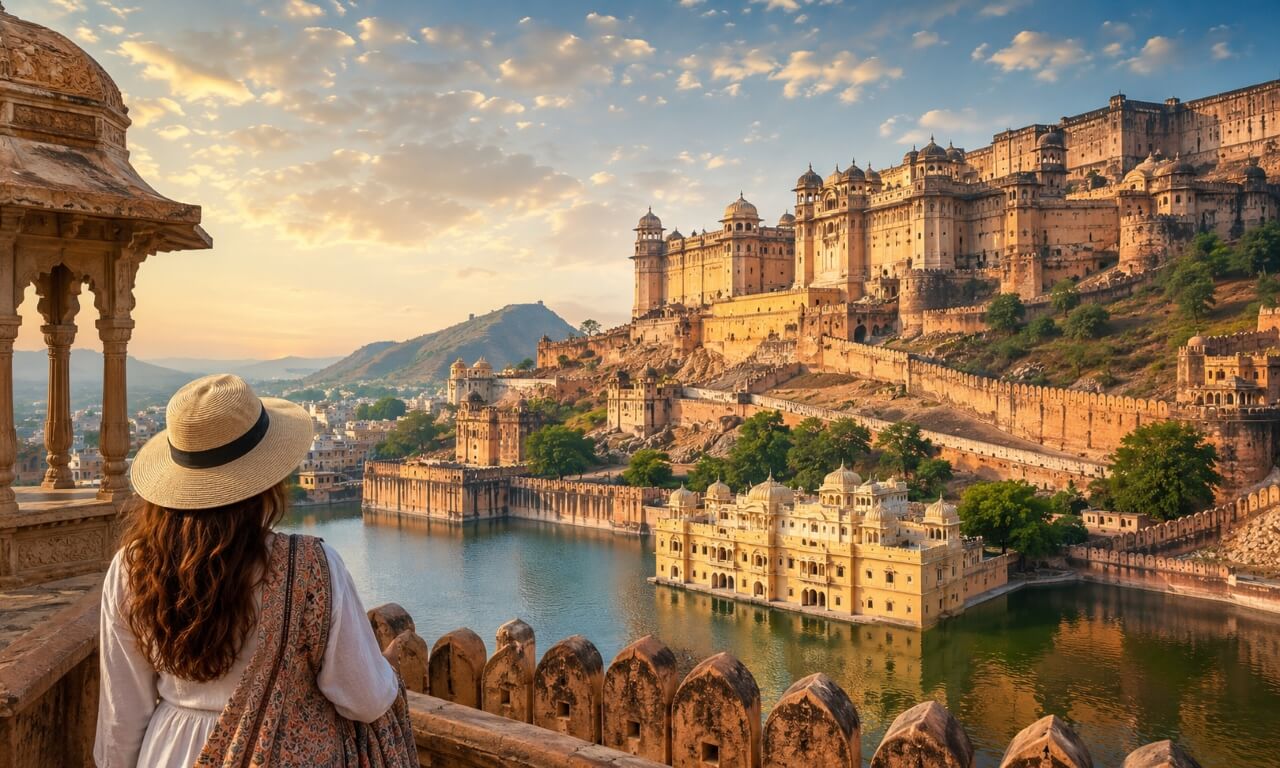
Day 5–7: Jaipur The Pink City deserves at least two full days. Amber Fort, Hawa Mahal, City Palace, Jantar Mantar — each one is a world unto itself. Shop for textiles, blue pottery, and hand-block prints in the bazaars.
Day 8–9: Amritsar Take an overnight train from Jaipur (or fly via Delhi). Spend one full day at the Golden Temple and Jallianwala Bagh. On the second day, catch the Wagah Border ceremony in the late afternoon, and spend the rest eating your way through the city.
Day 10: Return to Delhi Fly or take the Shatabdi Express back to Delhi for your onward journey.
Best Time to Visit for a North India Tour
The ideal window for a North India tour is October through March, when the weather is cool and pleasant. Winters in Punjab can be misty and atmospheric, which adds a certain romance to the Golden Temple in particular.
Avoid the peak summer months (April to June), when temperatures can soar above 40°C. The monsoon season (July to September) brings relief from the heat but can disrupt travel plans.
Why This Trip Stays With You
I've traveled to many places. Some leave a pleasant aftertaste — a good meal remembered, a sunset photographed. But a few get under your skin.
The Golden Triangle Tour with Amritsar is one of those. Delhi teaches you about power and layered civilizations. Agra teaches you about love — or at least what love looked like to a 17th-century emperor. Jaipur teaches you about grandeur and the art of living beautifully.
And Amritsar? Amritsar teaches you about devotion, resilience, and the strange, stubborn generosity of the human spirit.
Go for the history. Go for the food. Go for the architecture and the selfies and the Instagram moments. But stay open to the quieter things this journey offers — the stranger who shares their meal with you, the hymn that floats across the water at dawn, the bullet holes in an old garden wall that remind you how far we've come and how far we still have to go.
That's what a real North India tour feels like. And it's worth every kilometer.