How to Use a GPA Calculator: Accurate GPA Calculation and Why It Matters
-

- Published Updated
- 1,936 views
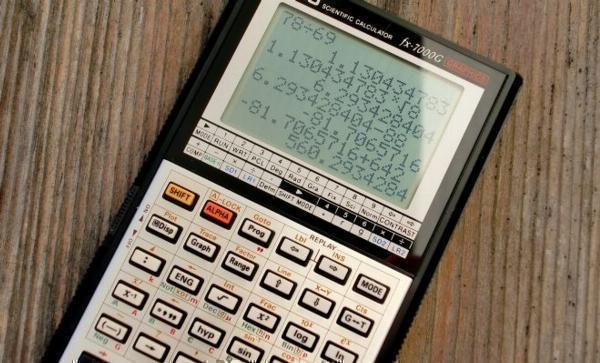
The GPA calculator is a tool used to convert grades and course credits into a single numeric measure of academic performance. Understanding how GPA calculation works helps students, advisors, and institutions compare academic records, track progress, and assess eligibility for programs and scholarships.
- A GPA converts letter grades or percentages into grade points, typically on a 4.0 scale.
- Weighted GPAs account for course difficulty; unweighted GPAs do not.
- Calculation requires grade-point values, course credits (or units), and a simple weighted average formula.
- Policies for repeated courses, pass/fail, and grade conversion vary by institution; consult the registrar or official guidance.
GPA calculator: what it is and why accurate GPA calculation matters
Definition and basic purpose
A grade point average (GPA) summarizes academic performance by averaging grade points assigned to course grades. A GPA calculator automates this conversion and averaging process to produce a cumulative or term GPA. Common uses include academic advising, college admissions evaluation, scholarship determination, and monitoring progress toward graduation.
Why precision matters
Accurate GPA calculation affects academic standing, eligibility for honors or financial aid, and admissions decisions. Small differences in GPA can influence scholarship awards or competitive admissions decisions, so correct credit weighting, scale interpretation, and institutional policy must be applied.
How to calculate GPA manually
Basic formula
GPA = (sum of (grade point × course credits)) ÷ (sum of course credits). First convert each course grade to its grade-point equivalent (for example, A = 4.0, B = 3.0), multiply by the course credit or unit value, add those products, then divide by total credits attempted that count toward GPA.
Step-by-step example
Example: Three courses — Course A: A (4.0) for 3 credits; Course B: B+ (3.3) for 4 credits; Course C: B (3.0) for 2 credits. Multiply: (4.0×3) + (3.3×4) + (3.0×2) = 12 + 13.2 + 6 = 31.2. Total credits = 9. GPA = 31.2 ÷ 9 = 3.467 (rounded).
Weighted vs. unweighted scales
An unweighted GPA typically uses a 4.0 scale regardless of course difficulty. A weighted GPA adds extra points for advanced courses (for example, adding 0.5 or 1.0 for honors, Advanced Placement, or international baccalaureate classes). Institutions define how weights are assigned and whether weighted GPAs are capped.
Conversion and scale considerations
Percentage-to-GPA conversions
Different schools convert percentages or letter grades to GPA using distinct mappings. A common conversion maps 90–100% to 4.0, 80–89% to 3.0–3.9, and so forth, but many institutions use finer divisions (e.g., A- = 3.7). Confirm the specific conversion table used by the school or admissions office.
Alternative scales and international transcripts
Some institutions use a 5.0 or 12.0 scale, or different grade point assignments. International transcripts may require credential evaluation or conversion tables to align with the domestic GPA scale. Official transcript evaluation services or institutional admissions offices usually provide guidance for conversions.
Uses of GPA and implications for students
Admissions and scholarships
Colleges and scholarship committees use GPA as one indicator among others (test scores, essays, recommendations). Different programs may emphasize weighted or unweighted GPA, and some professional or graduate programs calculate a separate GPA for prerequisite or major-specific coursework.
Academic standing and honors
Institutions use cumulative GPA to determine probation, dismissal, dean's list eligibility, and Latin honors at graduation. Policies on repeats, grade forgiveness, and grade averaging vary; review the registrar’s published rules for clear interpretation.
Tips for accurate GPA calculation and common pitfalls
Check institutional policies
Registrar offices and academic catalogs define which courses count toward GPA, how repeated courses are treated, and how pass/fail grades are handled. Relying on institution-specific rules avoids miscalculations that affect official standing.
Watch for rounding and credit differences
Rounding rules and course credit values can change the reported GPA. Maintain consistent rounding practices and confirm credit units (semester hours vs. quarter hours) when combining records from different systems.
Use official resources for complex cases
For international transcripts, transfer credit, or unusual grading schemes, consult the registrar or an official credential evaluator. Official resources and data from educational authorities can clarify standard practices and reporting conventions.
Resources and official guidance
For national data and research about grading and postsecondary patterns, consult the National Center for Education Statistics. Institutional registrar offices provide the authoritative policy for grade calculation and transcript interpretation. For broader U.S. policy context, the U.S. Department of Education issues guidance affecting higher education administration.
Official data source: National Center for Education Statistics (NCES)
Frequently asked questions
What is a GPA calculator and how does it work?
A GPA calculator converts course grades into grade points, multiplies each by course credits, sums those products, and divides by the total credits considered. The tool follows a defined grade-point scale and any institutional weightings for course difficulty.
Can a GPA calculator handle weighted and unweighted scales?
Yes. A reliable calculator should allow selection of weighted or unweighted scales and entry of custom weight values for advanced courses. When using an online GPA calculator, confirm that the calculator’s scale and weight rules match the issuing institution’s policies.
Do repeated courses affect GPA?
Policies vary. Some schools replace the original grade with the repeat grade, others average both grades, and some exclude the original from GPA calculation while retaining it on the transcript. Check the registrar’s repeat-course policy for accurate computation.
How are pass/fail courses treated in GPA calculation?
Pass/fail grades often do not contribute to GPA if reported as Pass. If a pass is later converted to a letter grade or if the institution assigns grade points for pass/fail courses, the treatment will differ—verify the institution’s catalog or registrar guidance.
Where to get official help calculating GPA?
Contact the registrar’s office or academic advising at the institution that issued the transcript. For cross-institutional or international conversions, credential-evaluation services and official education statistics agencies provide additional reference data.