Best Hand-Held Hygrometer in 2025: Top Picks for Accurate Humidity Measurement
-

- Published Updated
- 7,041 views
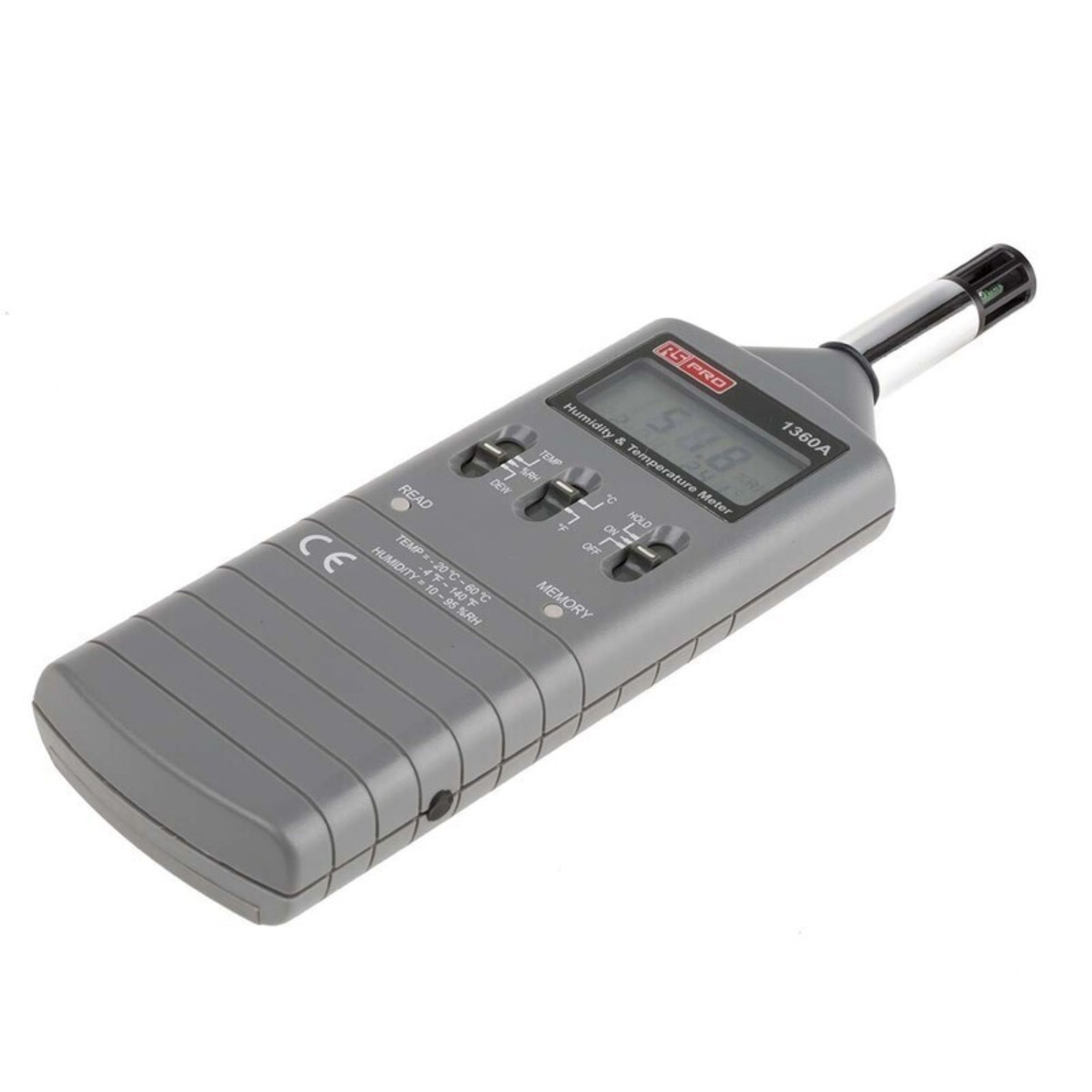
Humidity is one of the most overlooked yet most impactful environmental factors in both everyday life and professional settings. Whether you are managing air quality in your home, monitoring conditions in a greenhouse, ensuring product quality in a manufacturing facility, or conducting scientific research in a laboratory, knowing the exact humidity level of your environment is absolutely essential.
A hand-held hygrometer is the most practical and versatile solution for on-the-go humidity measurement. Compact, battery-powered, and designed for portability, it allows you to measure relative humidity and temperature instantly — wherever you are, whenever you need it.
In this comprehensive guide for 2025, we cover everything from how hand-held hygrometers work and what features to look for to the top models available and how to choose the perfect one for your specific needs.
What Is a Hand-Held Hygrometer?
A hand-held hygrometer is a portable electronic instrument used to measure relative humidity (RH) and temperature in the surrounding environment. Unlike fixed wall-mounted humidity sensors, hand-held models are designed for mobility — allowing users to take spot measurements across multiple locations, rooms, or environments with ease.
Most modern hand-held hygrometers measure:
Relative Humidity (RH%) — the percentage of water vapor in the air relative to the maximum it can hold at that temperature
Temperature (°C / °F) — ambient air temperature
Dew Point — the temperature at which air becomes saturated, and condensation begins
Wet Bulb Temperature — used in HVAC, psychrometric, and industrial calculations
These instruments are used across a wide range of industries and applications — from home comfort monitoring and HVAC servicing to pharmaceutical manufacturing, food processing, and environmental research.
How Does a Hand-Held Hygrometer Work?
Modern hand-held hygrometers rely on one of several sensor technologies to measure humidity:
1. Capacitive Sensors
The most widely used technology in consumer and professional-grade instruments. A thin polymer or metal oxide film absorbs water molecules from the surrounding air, changing the electrical capacitance of the sensor. This change is measured and converted into a relative humidity reading. Capacitive sensors offer excellent accuracy, fast response times, and good long-term stability.
2. Resistive Sensors
These sensors measure changes in electrical resistance caused by moisture absorption in a hygroscopic material. While slightly less accurate than capacitive sensors, resistive models are compact, cost-effective, and suitable for general-purpose humidity monitoring.
3. Thermal Conductivity Sensors
Used primarily in industrial and scientific applications, these sensors determine humidity by comparing the thermal conductivity of humid air versus dry air. They are highly stable and suitable for measuring absolute humidity in controlled environments.
4. Psychrometric (Wet & Dry Bulb) Method
Some professional hand-held hygrometers use a wet bulb and dry bulb thermometer system. The difference in temperature between the two readings is used to calculate relative humidity using psychrometric tables. This method is trusted in meteorology, HVAC commissioning, and industrial drying processes.
For most everyday and professional applications, capacitive sensor-based hand-held hygrometers offer the best combination of accuracy, reliability, speed, and value.
Key Features to Look for Before Buying
Selecting the right instrument means understanding which features are most important for your specific use case:
✅ Accuracy
Look for a hand-held hygrometer with humidity accuracy of ±2% RH or better and temperature accuracy of ±0.5°C or better. For laboratory or critical industrial use, instruments with UKAS or NIST-traceable calibration certificates provide additional assurance.
✅ Measurement Range
A versatile instrument should cover 0% to 100% RH for humidity and at least -20°C to +60°C for temperature. Wider ranges are important for extreme environments such as cold storage facilities, industrial ovens, or outdoor fieldwork.
✅ Resolution
Resolution refers to the smallest increment the display can show. Look for 0.1% RH and 0.1°C resolution for precise, detailed readings — especially important in laboratory, pharmaceutical, and cleanroom applications.
✅ Response Time
A fast response time ensures your readings update quickly as conditions change. Professional-grade instruments typically offer T90 response times of 15–30 seconds, meaning they reach 90% of the true reading within that time frame.
✅ Display Quality
A large, clear backlit LCD display is essential for working in low-light environments. Color displays with graphical trend indicators add extra value for monitoring changing conditions over time.
✅ Dew Point & Wet Bulb Calculation
For HVAC engineers, building inspectors, and industrial professionals, the ability to calculate and display dew point and wet bulb temperature directly on the instrument saves significant time compared to manual calculations.
✅ Data Logging & Memory
Advanced models store hundreds or thousands of readings with timestamps, allowing you to review humidity trends, identify peak values, and export data for analysis and reporting. Essential for compliance monitoring and quality control applications.
✅ Bluetooth & Wireless Connectivity
Modern instruments with Bluetooth connectivity allow real-time data transfer to smartphones or tablets. Dedicated apps enable live graphing, report generation, email sharing, and cloud storage — transforming your instrument into a comprehensive monitoring system.
✅ Probe Options
Many professional hand-held hygrometers support interchangeable or remote probes — allowing measurement in confined spaces, ducts, pipes, or high-temperature environments that the main instrument body cannot access directly.
✅ Battery Life & Power Options
Look for instruments offering at least 200–500 hours of battery life on standard AA or AAA batteries. Some professional models support USB charging or external power for continuous use in fixed monitoring applications.
✅ IP Rating & Durability
For outdoor or industrial use, an IP54 or higher dust and splash resistance rating ensures reliable performance in demanding environments. Rubberized housings and protective boots add further protection against drops and impact.
Common Applications of Hand-Held Hygrometers
Application |
Why Humidity Monitoring Matters |
Home & Indoor Air Quality |
Prevents mold, condensation, and respiratory problems |
HVAC Installation & Servicing |
Verifies system performance and duct conditions |
Building & Damp Surveys |
Identifies moisture problems in walls and structures |
Greenhouses & Horticulture |
Optimizes plant growth and disease prevention |
Museums & Art Conservation |
Protects artifacts, paintings, and documents from humidity damage |
Pharmaceutical Manufacturing |
Ensures product stability and regulatory compliance |
Food Processing & Storage |
Controls microbial growth and extends product shelf life |
Cleanrooms & Semiconductor Fabs |
Maintains strict environmental control for sensitive processes |
Meteorology & Weather Monitoring |
Provides accurate field measurements for weather analysis |
Laboratories & Research |
Supports controlled experiments and calibration work |
Wine & Cigar Storage |
Maintains optimal humidity for product quality |
Printing & Paper Industry |
Controls paper moisture to prevent jams and quality defects |
Top Hand-Held Hygrometers for 2025 — Best Picks
Here are the top hand-held hygrometer models trusted by professionals and consumers in 2025:
🥇 1. Testo 605i — Best Overall Smart Hygrometer
Sensor Type: Capacitive Range: 0–100% RH / -20°C to +60°C Best For: HVAC engineers, facility managers, smart home professionals
The Testo 605i is a sleek, smartphone-connected hygrometer that pairs seamlessly with the free Testo Smart App via Bluetooth. It displays real-time humidity, temperature, and dew point readings on your phone, and allows you to create professional PDF reports instantly in the field. Its compact probe design fits easily into ducts, supply registers, and tight spaces.
Key Highlights:
Bluetooth Smart connectivity with a free app
Instant PDF report generation
Compact probe with magnetic holder
UKAS calibration available
🥈 2. Vaisala HM70 — Best Professional Grade Instrument
Sensor Type: HUMICAP® Capacitive Range: 0–100% RH / -40°C to +180°C Best For: Laboratories, pharmaceutical manufacturing, industrial processes
Vaisala's HUMICAP® sensor technology is the gold standard in professional humidity measurement. The HM70 supports a wide range of interchangeable probes for different environments — including high-temperature, high-humidity, and chemically aggressive applications. Its robust construction and traceable calibration make it the instrument of choice for regulated industries.
Key Highlights:
World-class HUMICAP® sensor technology
Interchangeable probe system for versatile applications
Calculates RH, temperature, dew point, wet bulb, and absolute humidity
NIST-traceable calibration certificate included
🥉 3. Fluke 971 — Best for HVAC & Building Professionals
Sensor Type: Capacitive Range: 5–95% RH / -20°C to +60°C Best For: HVAC technicians, building inspectors, energy auditors
The Fluke 971 is a rugged, reliable instrument built to Fluke's legendary standards of durability and accuracy. It simultaneously displays temperature, humidity, dew point, and wet bulb temperature on a large, easy-to-read display. Its ergonomic design and one-handed operation make it ideal for busy field technicians.
Key Highlights:
Simultaneous display of four measurements
Fluke-grade build quality and reliability
Large backlit display
Min/Max/Average recording functions
4. ThermoPro TP49 — Best Budget Home Hygrometer
Sensor Type: Capacitive Range: 10–99% RH / -50°C to +70°C Best For: Homeowners, baby rooms, plant growers, general indoor monitoring
For homeowners looking for an affordable, easy-to-use hand-held hygrometer, the ThermoPro TP49 is an outstanding choice. Its color-coded comfort level display instantly tells you whether your indoor humidity is too dry, comfortable, or too humid — with no technical knowledge required. Compact enough to fit in a pocket or handbag.
Key Highlights:
Color-coded comfort level indicator
Compact and lightweight design
Clear, easy-to-read digital display
Budget-friendly under £15/$20
5. Reed Instruments R6030 — Best for Industrial Field Use
Sensor Type: Capacitive Range: 0–100% RH / -20°C to +60°C Best For: Industrial hygienists, environmental monitors, field technicians
The Reed R6030 is a professional-grade instrument offering simultaneous measurement of humidity, temperature, dew point, and wet bulb temperature in a durable, ergonomic housing. Its large data logging memory stores up to 16,000 readings with timestamps, making it ideal for long-term field monitoring and compliance documentation.
Key Highlights:
16,000 reading data logger with timestamps
USB PC connectivity for data download
Ergonomic one-handed grip design
Auto power-off to conserve battery life
6. Extech RH390 — Best with Built-In Infrared Thermometer
Sensor Type: Capacitive + Infrared Range: 0–100% RH / -20°C to +750°C (IR) Best For: Building inspectors, restoration contractors, maintenance engineers
The Extech RH390 is a unique combination instrument that integrates a contact humidity/temperature sensor with a non-contact infrared thermometer. This allows building inspectors to simultaneously measure ambient humidity and surface temperature — calculating the risk of condensation and surface mold growth in a single operation.
Key Highlights:
Combined humidity sensor and IR thermometer
Condensation risk assessment capability
Dual display shows both measurements simultaneously
Ideal for damp and mold investigations
7. Rotronic HygroPalm 23 — Best for Pharmaceutical & Cleanroom Use
Sensor Type: Hygromer® IN-1 Capacitive Range: 0–100% RH / -40°C to +85°C Best For: Pharmaceutical laboratories, cleanrooms, GMP-regulated environments
Rotronic's HygroPalm 23 is specifically designed for pharmaceutical, biotechnology, and cleanroom applications where GMP compliance and regulatory traceability are mandatory. Its interchangeable probe system supports a wide variety of specialized probes, and its calibration management software ensures full audit trail documentation for FDA and ISO compliance.
Key Highlights:
GMP-compliant calibration management
Interchangeable probe system
Calculates eight different humidity parameters
Full audit trail for regulatory compliance
Comparison Table: Top Hand-Held Hygrometers at a Glance
Model |
Sensor Type |
RH Range |
Best For |
Bluetooth |
Price Range |
Testo 605i |
Capacitive |
0–100% |
HVAC / Smart Monitoring |
✅ Yes |
££ |
Vaisala HM70 |
HUMICAP® |
0–100% |
Lab / Pharmaceutical |
❌ No |
££££ |
Fluke 971 |
Capacitive |
5–95% |
HVAC / Building |
❌ No |
£££ |
ThermoPro TP49 |
Capacitive |
10–99% |
Home / DIY |
❌ No |
£ |
Reed R6030 |
Capacitive |
0–100% |
Industrial Field |
❌ No |
£££ |
Extech RH390 |
Capacitive + IR |
0–100% |
Building Inspection |
❌ No |
£££ |
Rotronic HygroPalm 23 |
Hygromer® |
0–100% |
Pharma / Cleanroom |
❌ No |
££££ |
How to Use a Hand-Held Hygrometer Correctly
Follow these best practices to get the most accurate and reliable results:
Allow acclimatization time — give the instrument 10–15 minutes to stabilize after moving between environments with significantly different humidity levels
Keep away from direct airflow — avoid measuring near air conditioning vents, fans, or open windows, which can distort local humidity readings
Avoid direct sunlight — solar radiation heats the sensor and causes false low humidity readings
Hold at arm's length — your body heat and breath moisture can influence readings if held too close to your face
Take multiple readings — measure at several points across the area and note any significant variations
Clean the sensor regularly — dust and contamination on the sensor surface reduce accuracy over time
Store correctly — avoid storing in extremely dry or wet conditions, which can stress the sensor
How to Calibrate a Hand-Held Hygrometer
Regular calibration ensures your instrument maintains its accuracy over time. The two most common calibration methods are:
Salt Calibration Method (DIY)
Prepare a saturated salt solution using table salt and a few drops of distilled water in a bottle cap
Place both the salt solution and the hygrometer inside a sealed zip-lock bag
Wait 6–8 hours at a stable room temperature of 25°C
The reading should show 75% RH — adjust the calibration offset if needed
For a 33% RH reference, use magnesium chloride salt solution instead
Two-Point Calibration (Professional)
Professional instruments support two-point calibration using certified reference humidity standards at two different RH levels — typically 11% RH and 75% RH or 33% RH and 75% RH. This method provides superior accuracy across the full measurement range.
Most manufacturers recommend calibration every 6–12 months for general use and every 3–6 months for critical industrial or pharmaceutical applications.
Ideal Humidity Levels by Environment
Environment |
Ideal Humidity Range |
Living Room / Bedroom |
40% – 60% RH |
Baby Room / Nursery |
50% – 60% RH |
Bathroom |
50% – 70% RH |
Greenhouse / Conservatory |
50% – 70% RH |
Wine Cellar |
50% – 70% RH |
Cigar Humidor |
65% – 72% RH |
Museum / Archive |
45% – 55% RH |
Pharmaceutical Storage |
25% – 60% RH |
Cleanroom (ISO Class 7) |
30% – 60% RH |
Server Room / Data Centre |
45% – 55% RH |
Printing & Paper Production |
45% – 55% RH |
Hand-Held Hygrometer vs. Fixed Wall-Mounted Hygrometer
Feature |
Hand-Held |
Wall-Mounted |
Portability |
✅ Fully portable |
❌ Fixed location only |
Multi-location Monitoring |
✅ Unlimited locations |
❌ Single point only |
Installation Required |
✅ None |
⚠️ Wall mounting needed |
Continuous Monitoring |
⚠️ Requires user presence |
✅ 24/7 automatic monitoring |
Cost |
✅ Single purchase covers all areas |
⚠️ Multiple units needed for coverage |
Best For |
Field surveys, multi-room checks, travel |
Permanent room monitoring |
For users who need to monitor multiple rooms, travel between sites, or conduct surveys and inspections, a hand-held hygrometer is clearly the more versatile and cost-effective solution.
Frequently Asked Questions (FAQs)
Q1: What is the difference between relative humidity and absolute humidity? Relative humidity (RH%) expresses how much water vapor is in the air as a percentage of the maximum it could hold at that temperature. Absolute humidity expresses the actual mass of water vapor per unit volume of air (g/m³), regardless of temperature. Most hand-held hygrometers measure and display relative humidity as it is most relevant for comfort, health, and material protection purposes.
Q2: Can a hand-held hygrometer measure outdoor humidity? Yes, most models are suitable for outdoor use in normal weather conditions. For use in rain, heavy humidity, or dusty outdoor environments, choose a model with an IP54 or higher protection rating to ensure reliable performance and sensor protection.
Q3: How accurate are consumer-grade hand-held hygrometers? Consumer-grade models typically offer accuracy of ±3% to ±5% RH, which is adequate for home comfort monitoring. Professional-grade instruments offer ±1% to ±2% RH accuracy for critical applications. Always check the manufacturer's specification sheet before purchasing.
Q4: How long do the sensors in a hand-held hygrometer last? Capacitive humidity sensors typically have a service life of 3–5 years under normal operating conditions. Exposure to chemical contaminants, extreme humidity, or physical damage can shorten sensor life. Many professional instruments support sensor replacement to extend the useful life of the instrument body.
Q5: Can I use a hand-held hygrometer to detect condensation risk? Yes. By measuring ambient humidity and temperature, a hygrometer can calculate the dew point. If the dew point temperature is close to or above the surface temperature of walls, windows, or pipes, condensation is likely to form. Instruments with built-in dew point display make this assessment quick and straightforward.
Q6: What certifications should I look for in a pharmaceutical-grade hygrometer? For pharmaceutical applications, look for instruments with ISO/IEC 17025 accredited calibration certificates, GMP compliance documentation, and 21 CFR Part 11 compatible software for electronic records and audit trail management.
Conclusion
From protecting your home against mold and condensation to ensuring pharmaceutical manufacturing compliance and optimizing greenhouse growing conditions, a reliable hand-held hygrometer is one of the most versatile and valuable measurement instruments you can own.
With a wide range of models available in 2025 — from affordable consumer options to advanced professional instruments with Bluetooth connectivity, interchangeable probes, and regulatory-compliant calibration — there is a perfect solution for every application and budget.
Choose the right hand-held hygrometer for your needs today and take complete control of your humidity environment — wherever your work or life takes you.