How Can Healthcare Organisations Improve Data Governance Without Disrupting Existing Systems?
-
- Published Updated
- 5,102 views
https://ultralinkit.co.uk/contact-us/Healthcare organisations across the UK are under growing pressure to deliver better patient care while managing increasing operational and regulatory demands. According to NHS England, NHS staff log in to more than 1,000 different digital systems across the health service, highlighting how fragmented technology can make everyday work more complex. When information is spread across multiple platforms, maintaining strong data governance becomes increasingly difficult. The good news is that improving governance doesn't always require replacing existing systems. In many cases, it starts with creating better-connected workflows and clearer processes.
Why Data Governance Matters More Than Ever
Healthcare teams make decisions based on information. If that information is incomplete, duplicated or difficult to access, even routine administrative tasks become slower and more challenging.
Poor data governance can lead to:
Multiple versions of the same patient information
Inconsistent communication between departments
Manual data entry across different systems
Limited visibility into operational activities
Difficult reporting and auditing
Increased security and compliance risks
These issues rarely appear overnight. They usually develop gradually as organisations adopt new systems, expand services or introduce new operational processes.
1. Understand Where Your Information Lives
Before changing technology, organisations should first understand how information currently flows through their business.
Patient communication, appointment management, referrals, reporting and operational records are often spread across different platforms. Mapping these processes helps identify where information is duplicated, delayed or manually transferred.
A clear understanding of existing workflows makes it easier to improve governance without disrupting daily operations.
2. Create One Reliable Source of Operational Information
One of the biggest governance challenges is ensuring everyone works from the same information.
When reception teams, administrators and operational managers rely on different systems, maintaining consistency becomes difficult.
Rather than replacing every platform, many organisations focus on creating a connected operational environment where authorised users have access to accurate and up-to-date information. This reduces duplication while improving collaboration across departments.
3. Improve Access Without Reducing Security
Better access does not mean giving everyone access to everything.
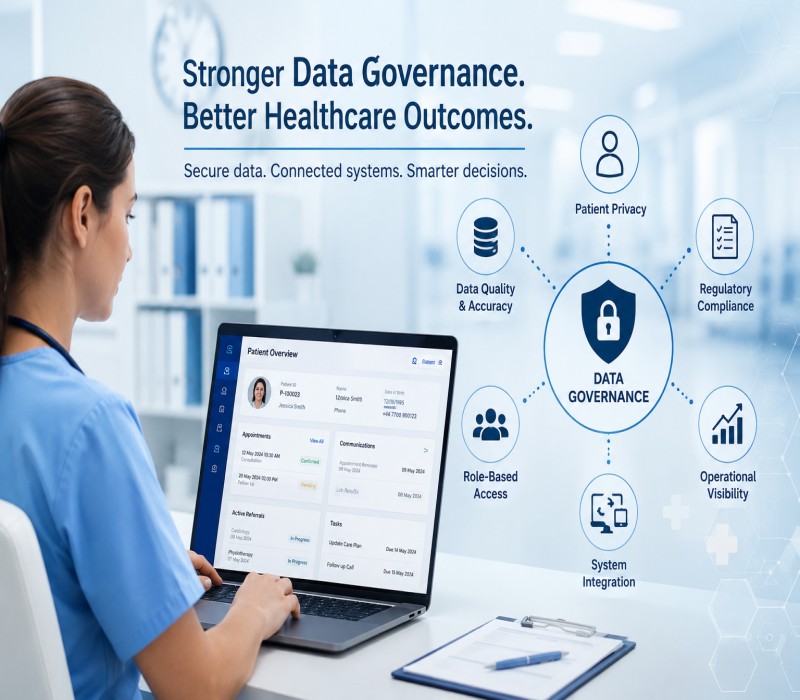
Effective healthcare data governance relies on role-based permissions, ensuring staff only see the information relevant to their responsibilities.
This approach supports both operational efficiency and security while helping organisations meet governance requirements across increasingly complex healthcare environments.
4. Connect Existing Systems Instead of Replacing Them
Healthcare providers often use several specialist applications that perform important functions.
Replacing them all can be expensive and disruptive.
A more practical approach is to improve how those systems communicate. Secure integration allows information to move between platforms while reducing manual updates and helping staff work with more consistent data.
Many organisations exploring Microsoft Dynamics 365 Healthcare solutions begin by connecting existing workflows rather than replacing established systems entirely.
5. Reduce Manual Data Handling Wherever Possible
Every time information is copied from one system into another, there is an opportunity for mistakes.
Routine administrative processes such as updating referrals, confirming appointments or recording patient communication can often be automated.
Reducing manual handling improves consistency, saves valuable staff time and creates more reliable operational records without changing how healthcare professionals deliver patient care.
6. Build Reporting Around Real-Time Information
Reporting should support better decisions, not create additional administration.
When reports rely on spreadsheets that require manual updates, information quickly becomes outdated.
Modern reporting tools allow organisations to monitor operational activity, patient engagement, workflow performance and service demand using current information. This gives managers greater visibility while supporting better planning across healthcare services.
7. Treat Data Governance as an Ongoing Process
Good governance is not a one-off project.
Healthcare organisations continue to introduce new services, expand teams and adopt additional technology. Governance processes should evolve in the same way.
Regular reviews help organisations identify outdated processes, improve workflow visibility and ensure information remains accurate, secure and accessible as operational requirements change.
Data Governance Starts With Better Operational Processes
Many organisations think of data governance as an IT or compliance project.
In reality, it begins with everyday operational processes.
When patient communication, appointments, reporting and workflow management become more structured, information naturally becomes easier to manage. Connected systems, clear ownership and consistent processes create a stronger foundation for governance than technology alone.
Healthcare organisations reviewing their operational workflows often find that improving governance and improving efficiency go hand in hand.
Final Thoughts
Healthcare organisations across the UK and Europe face increasing pressure to manage information securely while delivering efficient, patient-focused services. Improving data governance does not always require replacing existing systems or introducing unnecessary complexity.
By understanding how information flows, connecting existing platforms, reducing manual processes and strengthening operational visibility, organisations can build a more reliable foundation for future growth.
If you're reviewing how patient information, workflows and operational systems are managed, exploring Microsoft Dynamics 365 Healthcare solutions can provide valuable insight into creating more connected healthcare operations. If you'd like to discuss your current processes or future plans, you can also speak with our healthcare technology specialists to explore the most appropriate approach for your organisation.