Payroll Data Security in Mumbai: What to Verify Before You Trust a Vendor With Salary Data
-

- Published Updated
- 5,098 views
Introduction
Payroll software is evaluated based on its compliance and convenience. What it actually holds is some of the most sensitive data a company has — salary figures, PAN numbers, bank details, investment declarations, sometimes Aadhaar-linked UANs — all sitting in one system, usually accessible to a fairly wide set of people across HR, finance, and management. Security tends to come up late in vendor conversations, if at all, well after pricing and features have already narrowed the shortlist.
That ordering deserves a second look. This piece covers what payroll data security actually means in practice — not as a compliance checkbox, but as a specific set of things worth verifying before signing with any vendor about to hold salary data for a Mumbai-based team.
Why Payroll Data Is a Different Category of Risk
A CRM breach is bad. A payroll breach is worse because of what the data enables in someone else's hands. Bank account numbers combined with salary figures and PAN details amount to close to a complete profile for targeted fraud — phishing that references a real salary figure is far more convincing than a generic attempt, and identity-linked financial data carries resale value, a customer email list doesn't.
Scale compounds this in a way that's specific to how Mumbai companies operate. A business running payroll across a BKC headquarters, a Thane manufacturing site, and a South Mumbai retail network typically has HR staff, finance staff, and location managers all touching some part of the system. Every one of those access points — weak permissions, no audit trail, a shared login passed around a branch office — is a place where a gap turns into an actual incident rather than a hypothetical one.
What "Secure" Should Actually Mean
Vendors use the word "secure" the way they use "AI-powered" — sometimes accurately, sometimes not, and rarely with enough specificity to tell the difference from a landing page alone.
1. Encryption, both stored and in motion. Salary and bank data should be encrypted while sitting in the database and while traveling between the app and the server — usually AES-256 for data at rest, TLS for data in transit. Close to table stakes at this point, but still worth confirming rather than assuming.
2. Role-based access control. Not every HR staff member needs visibility into every employee's salary, and a location manager doesn't need to see PAN numbers. Access should be restricted by role — HR sees what HR needs, finance sees cost data, a manager sees their own team and nothing beyond it.
3. Audit logs. Every access to sensitive data — who viewed what, when, and from where — should be logged and reviewable, both for catching misuse and for demonstrating compliance if a regulator ever ask
4. Data residency. For businesses handling government contracts or operating in regulated sectors, whether employee data sits on servers within India is a real question, not a formality. Ask directly rather than assuming.
5. Independent verification. A vendor claiming strong security should be able to point to some external review — a SOC 2 report, ISO 27001 certification, or a recent penetration test summary — rather than only their own word for it
6. A defined incident response process. If something goes wrong, what happens next? A vendor with a documented breach-notification process is a materially different proposition from one that hasn't thought past "we take security seriously."
Six Questions to Ask Directly
A demo shows a clean interface. It shows none of the above. Ask these outright before signing anything:
- Where is our employee data physically stored, and can that be confirmed in writing?
- What encryption standard applies to data at rest and in transit?
- Can we configure role-based access ourselves, or does every change require a support ticket?
- Is there a current SOC 2, ISO 27001, or equivalent certification available to review?
- What's the actual process if a breach occurs — how and when are affected companies notified?
- Are audit logs accessible to us directly, or only provided on request?
A vendor answering these specifically is a stronger signal than one falling back on reassurance language. Platforms built for the Indian SME segment — SavvyHRMS among them — tend to lead with specifics here precisely because smaller companies rarely have an internal security team to interrogate a vendor's claims on their own, which makes the vendor's own transparency the main safeguard actually available to them.
What Employees Should See About Their Own Data
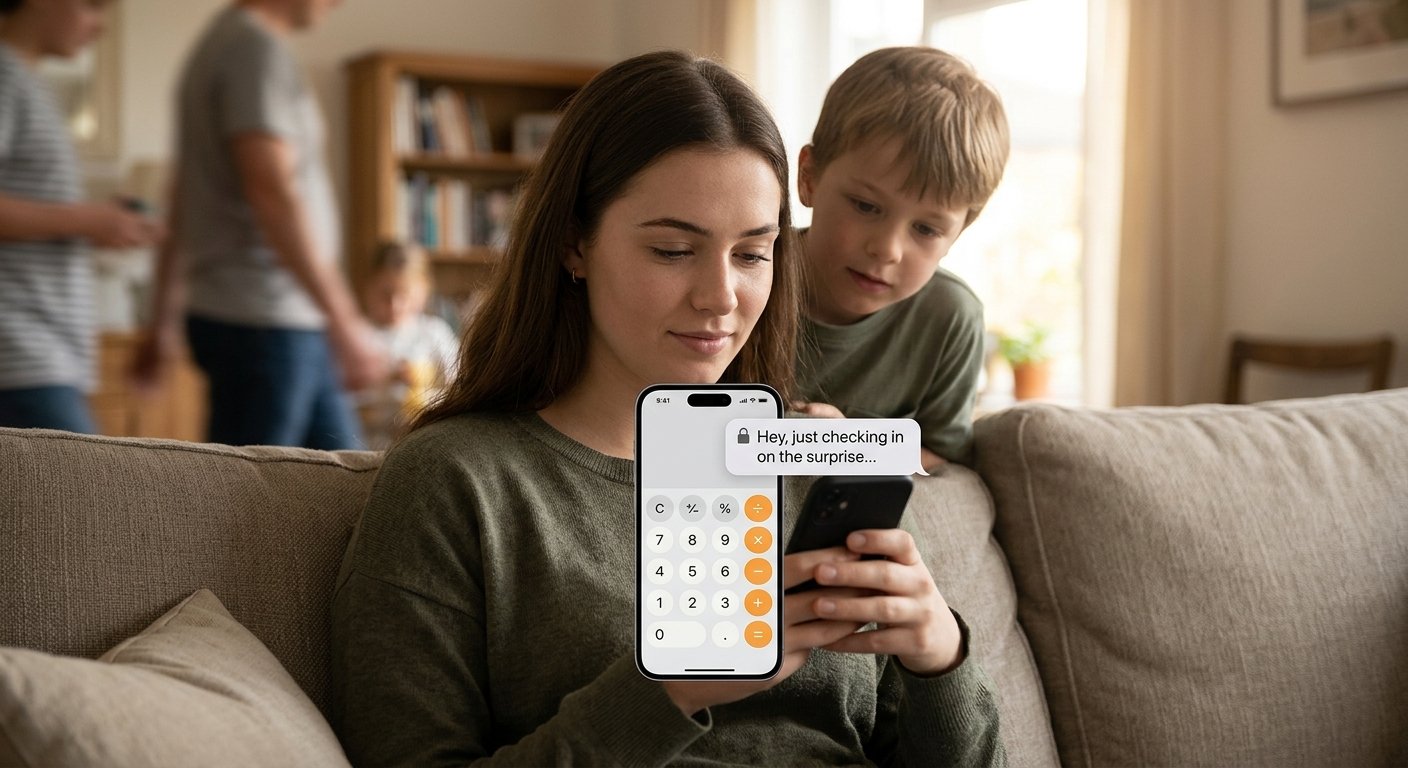
Security isn't only about keeping unauthorized people out — it's also about giving employees reasonable control over what's held about them. A well-built platform lets an employee view their own stored bank details, update those details directly rather than routing a change through HR over email, and access their own salary history without needing anyone's permission. This isn't a minor convenience: a bank account update sent over email or WhatsApp is itself a security gap, however routine it looks in the moment.
Checklist Before You Sign
- Data is encrypted both at rest and in transit, with the standard stated explicitly
- Data stored on servers within India, if that matters for your compliance posture
- Access is restrictable by role without needing vendor support for every change
- A reviewable audit log of who accessed what, and when
- An independent security certification that the vendor can point to
- A documented incident response and breach notification process
- Employees are able to securely update their own bank details, with no email or spreadsheet in between
Two or more gaps here are worth treating as a real flag, not something to revisit after signing.
Frequently Asked Questions
1. Is payroll data actually a common target, or is this risk overstated?
Financial and identity data consistently ranks among the more valuable categories for attackers, since it combines bank details, government ID numbers, and income information in one place — a combination that enables more convincing fraud than most other data a company holds.
2. Do smaller companies need to worry about this as much as large enterprises?
Arguably more, in relative terms. Smaller companies are less likely to have an internal security team vetting a vendor's claims, which makes the vendor's own security posture the primary line of defense rather than a backup one.
3. Is in-India data storage legally required?
Requirements vary by sector, so this is worth confirming for your specific situation rather than assuming a blanket rule. Even without a strict legal requirement, many Mumbai businesses treat in-India storage as a practical preference given the broader compliance environment they already operate in.
4. What certification should I actually look for?
SOC 2 and ISO 27001 are the two most commonly referenced independent standards. Neither is a perfect guarantee on its own, but both indicate the vendor has gone through external review rather than only self-certifying.
5. How does role-based access reduce risk in practice?
It limits how much damage a single compromised account can do. If a retail location manager's login is compromised but they only had visibility into their own team's attendance, the exposure stays contained instead of spreading company-wide.
Conclusion
Payroll software gets evaluated on compliance depth and feature lists far more often than on how carefully it protects the data sitting inside it — an odd gap, given that the data in question is about as sensitive as anything a company holds about its own people. Before signing with any payroll software Mumbai any payroll software Mumbai vendor, run through the questions and checklist above with the same seriousness as any pricing or compliance comparison. A vendor that answers plainly and specifically, without retreating to marketing language, is telling you something real about how they'll handle a problem the day one actually shows up.