Building a New Home in Melbourne? 9 Things to Check Before Choosing a Builder
-
- Published Updated
- 2,362 views
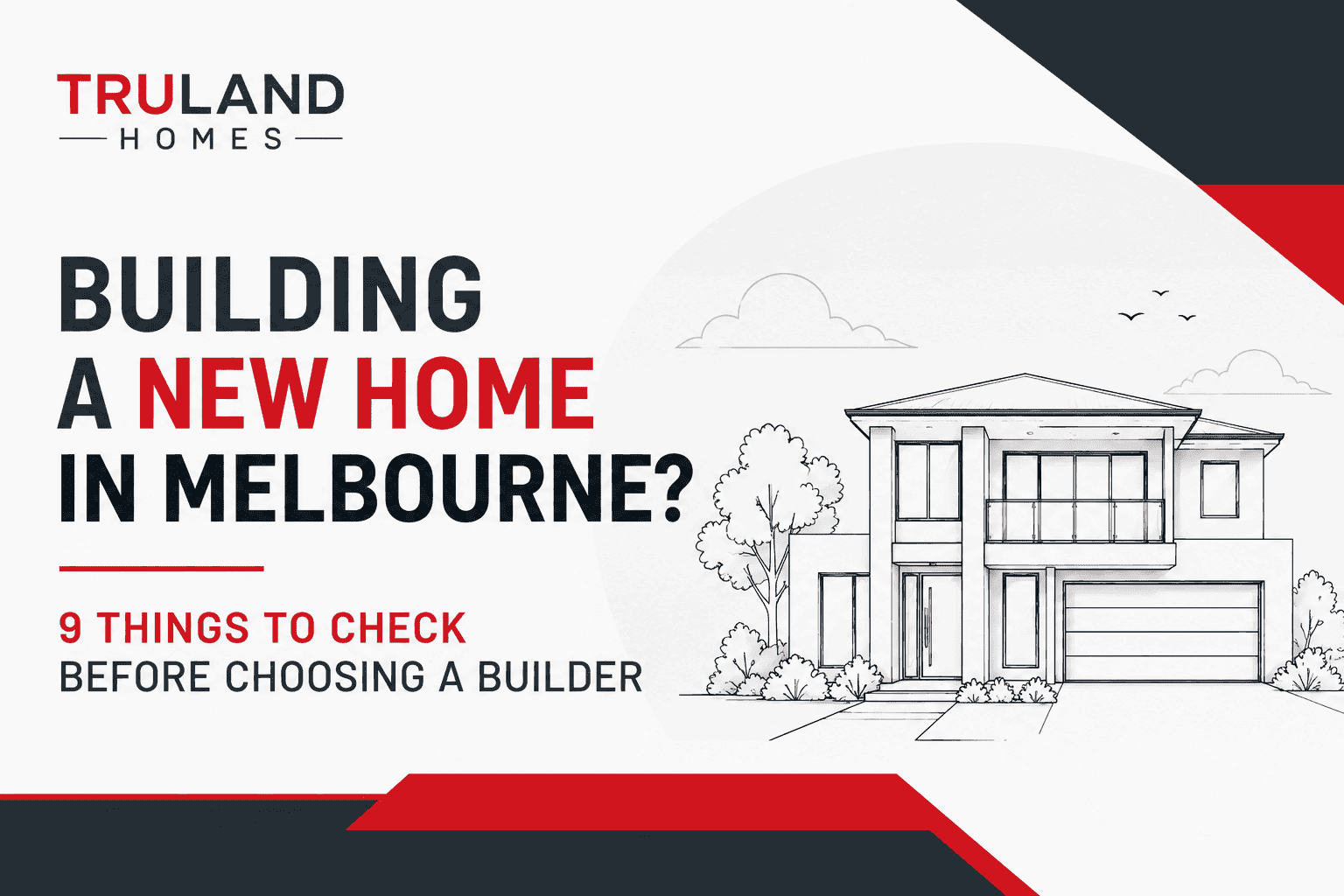
Building a new home in Melbourne is exciting, but choosing a builder can be one of the biggest decisions you make during the process.
There are plenty of builders to compare, different home designs, different contract structures and plenty of prices that can look attractive at first glance. The tricky part is working out what you are actually getting for that price.
A cheaper quote is not always the better deal. What matters is what is included, how clearly the contract is written, whether the home design suits your block and how the builder manages costs and construction.
Before you sign with a builder, here are nine things worth checking.
1. Check What Is Actually Included in the Price
The first thing to look at is not simply the number at the bottom of the quote. Look at what that number covers.
Two builders can quote for a similar-looking home while including very different things. One price might include flooring, kitchen fittings and other standard inclusions, while another might leave some items for the homeowner to pay separately.
Ask for a detailed inclusions schedule and check things such as:
• Flooring
• Kitchen appliances and fittings
• Bathroom fixtures
• Heating and cooling
• Electrical fittings
• Site preparation
• Service connections
• Driveway
• Fencing
• Landscaping
You should also ask the builder to clearly identify anything that is excluded.
This makes it much easier to compare quotes on a like-for-like basis rather than simply choosing the builder with the lowest advertised price.
Internal link: [building costs in Melbourne]
2. Find Out Whether the Price Is Really Fixed
If keeping your budget under control is important, ask the builder exactly what "fixed price" means before signing anything.
A fixed-price build should give you a clear understanding of what you are paying for, but you still need to read the contract and inclusions carefully. Provisional sums, allowances and client-requested variations can all affect the final amount.
A useful question to ask is:
"What could make the contract price change after I sign?"
Ask for the answer in writing.
This is one area where builders with a clearly defined range of plans can make the process easier to understand. For example, Truland Homes uses fixed home plans rather than custom home designs, with the selected plan and pricing confirmed before construction. The approach is aimed at homeowners who prefer to choose from established designs rather than work through an open-ended custom design process.
That does not automatically make a fixed-plan builder the right choice for everyone. It simply gives buyers another option to compare when price certainty and a simpler selection process are priorities.
Internal link: [fixed-price home builders in Melbourne]
3. Make Sure the Home Design Suits Your Block
A home can look fantastic online and still be the wrong choice for your block.
Before choosing a design, consider:
• Block width and depth
• Site orientation
• Driveway position
• Garage requirements
• Setbacks
• Easements
• Overlays
• Estate guidelines
• Private open space requirements
• Natural light
This is particularly important in Melbourne's newer growth areas, where blocks can be narrower and more compact than many established suburban blocks.
The right design is not necessarily the biggest one. It is the design that makes sensible use of your land while still working for your household.
If you are comparing a builder's plans, look at the actual floor plan rather than judging the home purely by its façade or promotional images.
Truland Homes, for example, provides a range of set home plans with different widths, layouts and storey options, allowing buyers to compare the design against their block before choosing a plan.
Internal link: [home designs in Melbourne]
4. Compare Single Storey and Double Storey Options
Before committing to a builder, think about how you actually want to live in the home.
Single-storey homes can be practical for families who prefer everything on one level, particularly where the block provides enough width and outdoor space.
Double-storey homes can make better use of a smaller footprint by putting bedrooms and private areas upstairs while keeping living spaces downstairs.
Neither option is automatically better.
Think about your family, future needs, block size, stairs, storage, outdoor space and how you want the home to function five or ten years from now.
If you are comparing the two, look beyond the façade. Compare the floor plans and consider how much usable space you receive for the footprint of the home.
Internal links:
• [single-storey home designs]
• [double-storey home designs]
For example, Truland Homes offers both single-storey and double-storey fixed plans, so the choice can be made around the block and household requirements rather than starting with a completely new design.
5. Check the Builder's Registration and Experience
Before signing anything, make sure you know who you are actually dealing with.
In Victoria, domestic building work is regulated, so check that your builder is appropriately registered and understand who will be responsible for your project.
Do not rely only on a builder's website when doing your research.
Look at:
• Builder registration
• Industry memberships
• Recent projects
• Customer reviews
• Complaints or recurring issues
• Communication during the quoting process
• How clearly the builder explains the contract
It is also worth asking about completed projects.
If possible, look at homes the builder has already delivered rather than judging them entirely from renders or marketing photographs.
The way a builder communicates before you sign can also tell you a lot. If getting straightforward answers to basic questions is difficult before the contract, it is worth asking how communication will work once construction begins.
6. Understand the Building Contract Before Signing
A building contract is not something to skim through at the last minute.
Take your time and understand what you are agreeing to.
Pay particular attention to:
• Contract price
• Inclusions and exclusions
• Payment stages
• Provisional sums
• Prime cost items
• Variations
• Construction timeframe
• Delays
• Site costs
• Allowances
• Termination conditions
If there is wording you do not understand, ask the builder to explain it.
You can also consider getting independent legal or professional advice before signing a major building contract.
This is particularly important when comparing fixed-price and custom building arrangements. The contract structure, allowances and variation process can be very different between builders.
For a homeowner comparing fixed-plan builders, the useful question is not simply "Is it fixed price?" but "What exactly has been fixed, and what could still change?"
Internal link: [building contract hidden extras in Melbourne]
7. Ask About Site Costs Before Construction Starts
Site conditions can have a major impact on a building project.
Your block may have conditions that affect construction, such as:
• Reactive soil
• Sloping land
• Rock
• Difficult site access
• Drainage requirements
• Existing structures
• Easements
• Service connection requirements
This is why it is important to understand how the builder assesses your particular block.
Do not assume that a price quoted for one block will automatically apply to another block of the same size.
Two blocks in Melbourne can have completely different site requirements.
Ask what site investigations are carried out before the final price is confirmed and what happens if the assessment identifies additional work.
For example, Truland Homes states that it carries out a site assessment before confirming the fixed price, taking site-specific conditions such as slope, soil type and orientation into account.
That is the type of detail worth asking any builder about, regardless of who you ultimately choose.
8. Check How the Builder Handles Approvals and the Building Process
There is more to building a home than choosing a floor plan and waiting for construction to finish.
Depending on your project, there may be planning requirements, building permits, engineering, inspections and other approvals to work through.
Ask the builder:
Who handles the approvals?
What is included in the quoted price?
What do I need to organise myself?
When does construction actually start?
How will I receive progress updates?
A builder that explains the process clearly can make the experience much easier to manage.
This becomes even more important for homeowners who are building for the first time and are unfamiliar with the Victorian building process.
A useful comparison point is whether the builder manages the process from site assessment through approvals, construction and handover or whether you will need to coordinate different parts yourself.
9. Think About What You Will Need in 5 or 10 Years
Finally, do not choose a builder based entirely on what looks good today.
Think about how your household might change.
Maybe you are planning to have children. Maybe you work from home. Maybe an older family member could eventually live with you. Maybe you want more storage, a larger kitchen or better separation between living and sleeping areas.
Your home needs to work beyond handover day.
Consider:
• Bedroom sizes
• Storage
• Kitchen layout
• Home office space
• Outdoor living
• Garage and parking
• Privacy
• Natural light
• Energy efficiency
• Future accessibility
Melbourne homeowners should also consider the energy performance of a new home when comparing designs and builders.
Victoria's current new-home requirements include a 7-star NatHERS energy rating and Whole-of-Home requirements. The state's move towards all-electric new homes also makes heating, cooling, hot water and cooking systems worth discussing before you finalise your design.
Energy efficiency should therefore be considered alongside the floor plan rather than treated as something to deal with after choosing the builder.
So, How Do You Choose a Home Builder in Melbourne?
There is no single question that will tell you whether a builder is right for your project.
Instead, look at the complete picture.
Compare builders based on:
- What is included in the price?
- Is the price genuinely fixed?
- Does the design suit your block?
- What home designs are available?
- How are site costs handled?
- What does the contract say?
- Who handles approvals?
- What do previous customers say?
- Does the builder communicate clearly?
It is also worth comparing several builders rather than relying on one quote.
If you are considering a fixed-price approach, Truland Homes is one Melbourne option worth comparing, particularly if you prefer selecting from established single-storey and double-storey home plans rather than going through a custom design process. Its model focuses on choosing a fixed plan, assessing the site and confirming pricing before construction.
The important thing is to compare that approach against other builders and decide what works for your block, budget and priorities.
What If You Already Own an Older Home?
Choosing a builder is not only relevant when you are building on vacant land.
If you already own a property in Melbourne but the existing house no longer suits your needs, a knockdown rebuild may be another option to investigate.
Instead of renovating an older structure or moving to another suburb, a knockdown rebuild involves demolishing the existing home and constructing a new one on the same block.
Truland Homes also offers knockdown rebuild services, managing the process from demolition and approvals through to construction and handover.
Whether that approach makes sense depends on the property, planning requirements, existing structure, budget and your long-term plans.
Internal link: [knockdown rebuild in Melbourne]
Final Thoughts
Building a new home in Melbourne is a big commitment, so it pays to slow down before signing.
Look beyond the advertised price. Read the inclusions. Understand the contract. Check your block. Compare designs. Ask about site costs and approvals.
Most importantly, make sure you are comfortable with how the builder communicates and explains the process.
A good building decision is not just about what the home looks like when it is finished.
It is also about whether the journey from your first conversation to handover is clear, realistic and financially manageable.