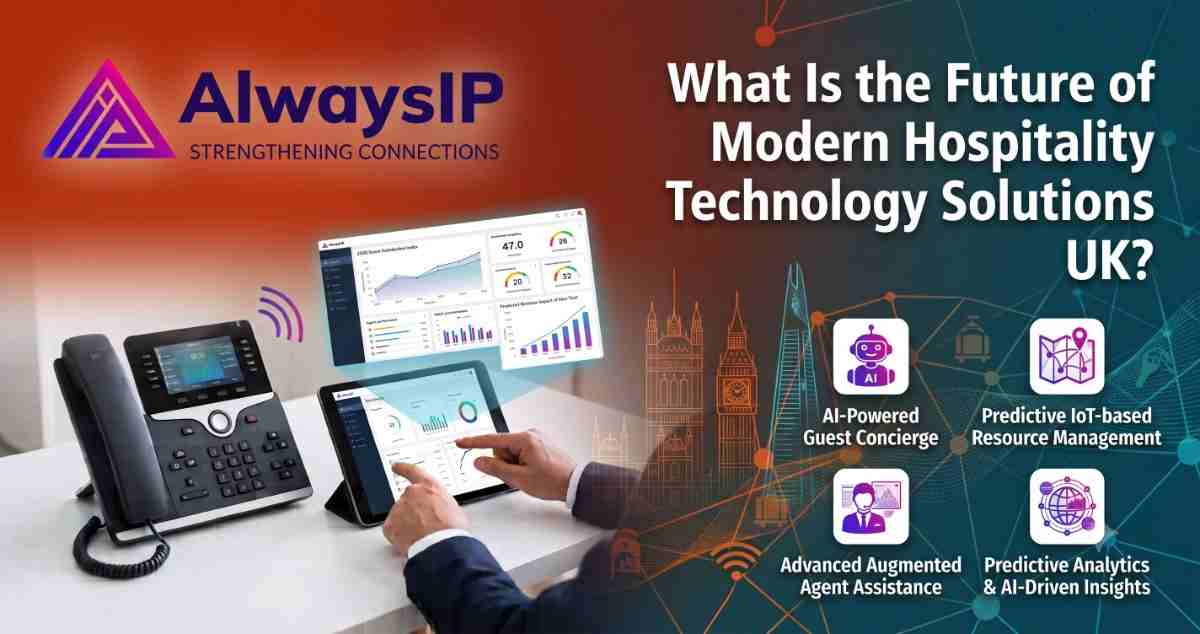
What Is the Future of Modern Hospitality Technology Solutions UK?
-

- Published Updated
- 1,712 views
The hospitality industry is changing quickly. Guests now expect more than a comfortable room and friendly service. They want fast communication, convenient digital experiences, reliable connectivity and personalised interactions throughout their stay.
At the same time, hotels and hospitality businesses are under pressure to control operating costs, improve staff productivity and deliver consistently high levels of service. Technology is becoming an important part of achieving these goals.
This is where Modern Hospitality Technology Solutions UK are becoming increasingly valuable. From cloud communication and digital signage to connected devices and smarter customer service tools, technology is helping hospitality businesses create more efficient and engaging experiences.
But what will hospitality technology look like in the coming years? Let's explore the key trends that are likely to shape the future.
Why Is Hospitality Technology Changing?
Traditional hospitality systems were often built around separate platforms. A hotel might have one system for telephone communication, another for guest information, another for signage and separate tools for staff communication.
While these systems can work independently, managing multiple technologies can create unnecessary complexity.
Modern solutions are moving towards connected, cloud-based platforms that allow businesses to manage communication and digital experiences more efficiently.
Guests are also influencing this change. People are accustomed to using smartphones, apps, online booking systems and instant messaging in their everyday lives. Naturally, they expect a similar level of convenience when staying at a hotel.
For hospitality businesses, keeping up with these expectations is no longer simply about adopting the latest technology. It is about choosing technology that genuinely improves the guest and employee experience.
1. Cloud Technology Will Become Even More Important
Cloud technology is likely to play a major role in the future of hospitality.
Cloud-based communication systems can allow staff to communicate from different locations and devices without depending entirely on traditional on-site hardware.
For example, a hotel may use a cloud phone system to connect reception, reservations, housekeeping and management teams. Employees can potentially access communication tools through compatible desk phones, computers, smartphones or other connected devices.
This flexibility can be particularly useful for hospitality businesses with multiple departments or locations.
Cloud technology can also make it easier to introduce new features, manage users and scale communication as the business grows.
2. Smarter Guest Communication
Communication is at the heart of hospitality.
Guests may need to contact reception for room requests, restaurant bookings, maintenance issues or general questions. If communication is slow or difficult, even a good hotel experience can quickly become frustrating.
Future Modern Hospitality Technology Solutions UK will increasingly focus on making communication faster and more convenient.
AI-assisted call handling, intelligent call routing, voicemail-to-text, call analytics and automated responses can help businesses manage customer enquiries more efficiently.
Instead of making every call dependent on one member of staff, intelligent communication systems can help direct enquiries to the right person or department.
The result can be a smoother experience for both guests and employees.
3. Artificial Intelligence Will Support Hotel Teams
Artificial intelligence is likely to become one of the most significant developments in hospitality technology.
However, AI should not be viewed simply as a replacement for employees. Its greater value may come from helping staff complete repetitive tasks more efficiently.
For example, AI-powered communication tools can assist with call transcription, conversation summaries and information retrieval. This can save employees from manually recording every detail of a conversation.
AI may also help hospitality businesses identify patterns in customer enquiries, understand demand and improve internal processes.
The human element of hospitality will remain important. Technology can handle repetitive processes while employees focus on personal service and more complex guest needs.
4. Digital Signage Will Become More Interactive
Traditional printed signs are limited because the information cannot be changed easily.
Digital displays offer a more flexible alternative.
Hotels can use digital screens to display welcome messages, restaurant menus, event information, promotional offers, directions, local attractions and other useful content.
In the future, digital signage is likely to become more dynamic and personalised. Content can potentially be updated remotely according to time, location, events or current promotions.
For example, a hotel could display breakfast information in the morning and promote its evening restaurant service later in the day.
This creates opportunities to improve communication while also promoting additional hotel services.
5. Connected Devices Will Create Smarter Hotels
The Internet of Things, commonly known as IoT, is another area likely to influence hospitality.
Connected devices can allow different pieces of equipment to communicate with systems and each other.
In a hotel environment, this could include smart room controls, connected lighting, energy management systems, security devices and other building technologies.
The objective is not simply to add more devices. The real opportunity is to connect useful technologies so that hotel operations become more efficient.
For example, smart systems could help manage energy usage when rooms are unoccupied, potentially helping businesses reduce unnecessary consumption.
6. Personalisation Will Become a Competitive Advantage
Guests increasingly value experiences that feel relevant to them.
Future hospitality technology could help businesses use customer information more intelligently to provide more personalised services.
This might include remembering communication preferences, offering relevant services or providing information based on a guest's requirements.
However, personalisation needs to be balanced with privacy and responsible data management.
Hotels will need to make sure customer information is handled securely and transparently while still using technology to improve the overall experience.
7. Communication Systems Will Integrate With Other Platforms
One of the biggest developments in hospitality technology will be better integration.
Instead of operating communication tools separately, businesses can increasingly connect them with customer relationship management platforms, booking systems and other business applications.
This can reduce repetitive data entry and give employees better access to relevant information.
For example, when a customer contacts a hotel, integrated systems may help staff access useful customer or booking information more quickly.
This means employees spend less time switching between platforms and more time helping guests.
8. Technology Will Support Remote Management
Hospitality businesses do not always have their management teams in one location.
Cloud-based technology can make remote management easier by allowing authorised users to access systems from different locations.
Managers can potentially monitor communication activity, review reports, manage users and oversee digital content without needing to be physically present at every property.
For hospitality groups with multiple locations, this can provide greater consistency and control.
9. Cybersecurity Will Become a Bigger Priority
As hotels adopt more connected technologies, cybersecurity will become increasingly important.
Hospitality businesses handle sensitive customer information and operate a wide range of connected systems. Weak security can create serious operational and reputational risks.
Future Modern Hospitality Technology Solutions UK will therefore need to place greater emphasis on secure authentication, access controls, software updates, data protection and network security.
Technology should not simply be convenient. It must also be dependable and secure.
10. The Future Will Be About Connected Hospitality
The future of hospitality technology is unlikely to depend on one single innovation.
Instead, the industry is moving towards connected ecosystems where communication, digital signage, cloud platforms, customer information and operational technologies work together.
The most successful hospitality businesses will not necessarily be those with the largest number of technologies. They will be the businesses that choose the right solutions for their customers, employees and operational requirements.
How Should UK Hospitality Businesses Prepare?
Hotels and other hospitality businesses should begin by identifying their biggest operational challenges.
Are staff struggling with communication? Are guests finding it difficult to get assistance? Is outdated phone equipment becoming expensive to maintain? Could digital signage improve communication? Are multiple systems creating unnecessary administrative work?
Answering these questions can help businesses identify where technology can make a genuine difference.
It is also important to consider scalability. A solution that works for a small hotel today should ideally be capable of supporting future growth.
Working with an experienced technology provider can help hospitality businesses assess their existing infrastructure and create a practical technology roadmap.
Frequently Asked Questions
What are Modern Hospitality Technology Solutions UK?
Modern Hospitality Technology Solutions UK are technology services and systems designed to improve communication, guest experiences and operational efficiency within hotels and other hospitality businesses. They can include cloud communication, digital signage, connected devices, automation and integrated business platforms.
How can hospitality technology improve the guest experience?
Technology can make communication faster, provide useful information through digital displays, support personalised services and make it easier for guests to interact with hotel staff.
Will AI replace hospitality employees?
AI is more likely to support employees rather than completely replace them. It can handle repetitive tasks, analyse information and assist with communication, allowing staff to concentrate on personal service and more complex customer requirements.
Are cloud phone systems useful for hotels?
Yes. Cloud phone systems can provide flexible communication between departments and support employees across different locations and devices. They can also offer features such as call routing, analytics, voicemail and integrations.
Why is digital signage important for hospitality?
Digital signage allows hotels to update information quickly and remotely. It can be used for menus, promotions, event information, welcome messages, directions and other guest communications.
What should hotels consider when choosing hospitality technology?
Hotels should consider ease of use, scalability, security, integration capabilities, reliability, support and the specific needs of their guests and employees.
Final Thoughts
The future of hospitality is becoming increasingly connected, intelligent and digital. Cloud communication, AI, digital signage, connected devices and integrated platforms are creating new opportunities for hotels to improve both guest experiences and internal operations.
For UK hospitality businesses, adopting Modern Hospitality Technology Solutions UK should not be about following technology trends simply because they are new. The focus should be on selecting practical solutions that solve genuine business problems.
When technology is properly planned and integrated, it can help hospitality businesses communicate more effectively, operate more efficiently and deliver the level of service that modern guests expect.
The future of hospitality technology is not just about smarter systems. It is about using technology to create a better, more connected hospitality experience.