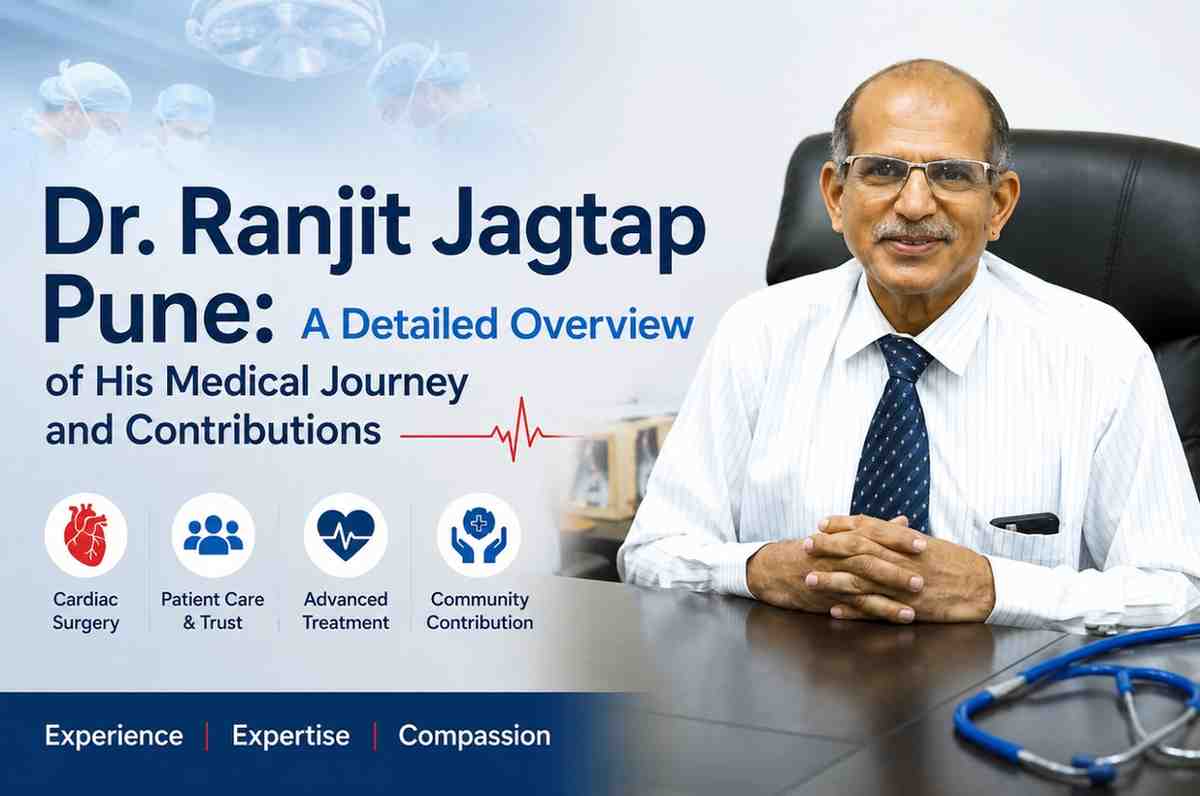
Service-Led Wealth: How Dr. Ranjit Jagtap Built His Net Worth Through Innovation
-

- May 10th, 2026
- 481 views

FREE SEO Topical Map Generator: Find Your Next Content Ideas
Dr. Ranjit Jagtap net worth is often discussed alongside his professional choices—clinical service, technology adoption, and community-focused ventures. This article outlines the concrete steps and principles that explain how those elements combine to create sustainable wealth without sacrificing mission-driven goals.
Detected intent: Informational
Quick take: A service-first approach, layered revenue streams, disciplined reinvestment, and scalable innovations turn professional reputation into lasting net worth. Read the SERVICE Wealth Framework, a concise checklist, a short real-world scenario, five core cluster questions for follow-up content, practical tips, and common mistakes to avoid.
Core cluster questions (for related articles or links):
- What revenue streams do medical entrepreneurs use to grow personal net worth?
- How does community service increase business value for clinicians?
- What are practical steps for scaling a rural clinic into a multi-site practice?
- How to balance clinical ethics with commercial partnerships?
- Which funding options support health-care innovation and expansion?
Dr. Ranjit Jagtap net worth: the service-driven growth model
Net worth growth for clinician-entrepreneurs rarely happens by accident. The most reliable path combines: (1) delivering measurable service value, (2) turning that value into diversified income, and (3) reinvesting for scale. This section breaks down the components visible in the case of Dr. Ranjit Jagtap and others who followed similar trajectories.
Core elements that build wealth from professional service
Key contributors include fee-for-service clinical revenue, ancillary services (diagnostics, telemedicine), product or device royalties, training and consulting, and public/private partnerships. Each stream uses credibility earned in clinical work to access higher-margin opportunities.
SERVICE Wealth Framework (named model)
The SERVICE Wealth Framework organizes repeatable steps that translate service and innovation into net worth. Treat it as a checklist for planning and execution.
- Serve: Build measurable outcomes and a clear value proposition for patients or clients.
- Evaluate: Track metrics—patient volume, revenue per visit, margins on ancillary services, and satisfaction.
- Reinvent: Use small pilots to introduce technology (telehealth, diagnostics) that extend reach.
- Validate: Obtain third-party certifications, research collaborations, or published case studies to de-risk expansion.
- Invest: Reinvest operating cashflow into scalable assets—additional locations, technology, or manufacturing rights.
- Connect: Form partnerships with hospitals, NGOs, or local governments to unlock stable contracts and grants.
- Execute: Standardize operations to make replication efficient and predictable.
Checklist (quick operational items)
Use this checklist before scaling any initiative:
- Document outcome metrics and patient feedback
- Pilot a revenue-bearing innovation for 3–6 months
- Create SOPs for core clinical and administrative tasks
- Set aside a growth reserve (20–30% of excess cash flow)
- Secure at least one formal partnership or referral agreement
Real-world example: turning a single clinic into a multi-asset practice
Scenario: A rural physician opens a well-run clinic focused on maternal and child health. After two years, the clinic documents improved outcomes and patient loyalty. Using the SERVICE Framework, the physician adds: a diagnostic lab (ancillary revenue), telemedicine for follow-up (geographic reach), a training program for community health workers (consulting income), and a partnership with a regional hospital for referrals (stability). Reinvested profits fund a second site and a branded low-cost diagnostic kit licensed to nearby clinics—creating recurring income beyond clinical hours. This layered approach illustrates how expertise combined with scalable products and partnerships increases net worth while preserving service commitments.
Practical tips to replicate service-driven wealth creation
- Track a small set of financial and outcome KPIs month-to-month to spot trends early.
- Start with low-capital pilots (telemedicine, training) before committing to high-cost assets.
- Document clinical processes; systematized operations are the main barrier to scaling.
- Use public funding and partnerships to reduce early-stage risk—see small business planning resources for structure and eligible programs (Small Business Administration: business planning).
- Protect reputation: prioritize transparent pricing, informed consent, and quality controls when commercializing services.
Trade-offs and common mistakes
Trade-offs to consider
Scaling service models usually requires shifting from owner-delivered care to system-led care. That trade-off can increase reach and income but may reduce direct patient contact. Choosing product development over additional service sites raises upfront cost and time-to-market but can lead to higher margins later.
Common mistakes
- Expanding without documented outcomes—growth that lacks measurable impact is fragile.
- Ignoring operational standardization—new sites fail when workflows differ.
- Over-leveraging personal finances for unproven ideas—maintain a cash reserve.
- Failing to formalize partnerships—verbal agreements rarely scale into dependable revenue.
Measuring progress: metrics that matter
Focus on these indicators when converting service into net worth: revenue per patient, margin on ancillary services, customer retention rate, recurring revenue percentage, and return on invested capital for new initiatives. These metrics reveal whether growth is creating value or just increasing activity.
FAQ
How much is Dr. Ranjit Jagtap net worth and how is it calculated?
Public estimates of an individual's net worth vary and depend on disclosed assets, business valuations, and liabilities. Calculation methods include summing cash, business equity (valued at fair market multiples), property, and other assets, then subtracting debt. For clinicians who own operating businesses, standard practice is to use normalized EBITDA and an appropriate industry multiple to value the enterprise portion of net worth.
What revenue streams commonly increase wealth for medical entrepreneurs?
Common streams include clinical fees, diagnostics and labs, telehealth subscriptions, training and consulting, product licensing or device royalties, and public contracts. Diversifying across these reduces reliance on any single source.
Can community service and philanthropy coexist with wealth building?
Yes. Community service can enhance reputation and patient loyalty, open partnership opportunities, and provide data that supports scalable innovations. Integrating mission-driven programs with sustainable funding models (sliding scale fees, grants, or cross-subsidization) preserves impact while building assets.
What are practical first steps for a clinician who wants to replicate this model?
Start by documenting outcomes, piloting one revenue-generating innovation, creating SOPs, and developing a simple financial model to forecast cash flow and reinvestment. Seek one partnership that provides referral stability or funding support.
What regulatory or ethical considerations apply when turning clinical work into a business?
Regulatory frameworks vary by jurisdiction and typically cover licensing, patient privacy, advertising, and conflict-of-interest disclosures. Ethical considerations include maintaining standards of care, transparent pricing, and separating commercial incentives from clinical decision-making. Consult local health authorities and professional bodies for specific guidance.