Hygienic Wall Cladding: The Practical Choice for UK Food Businesses
-

- Published Updated
- 8,072 views
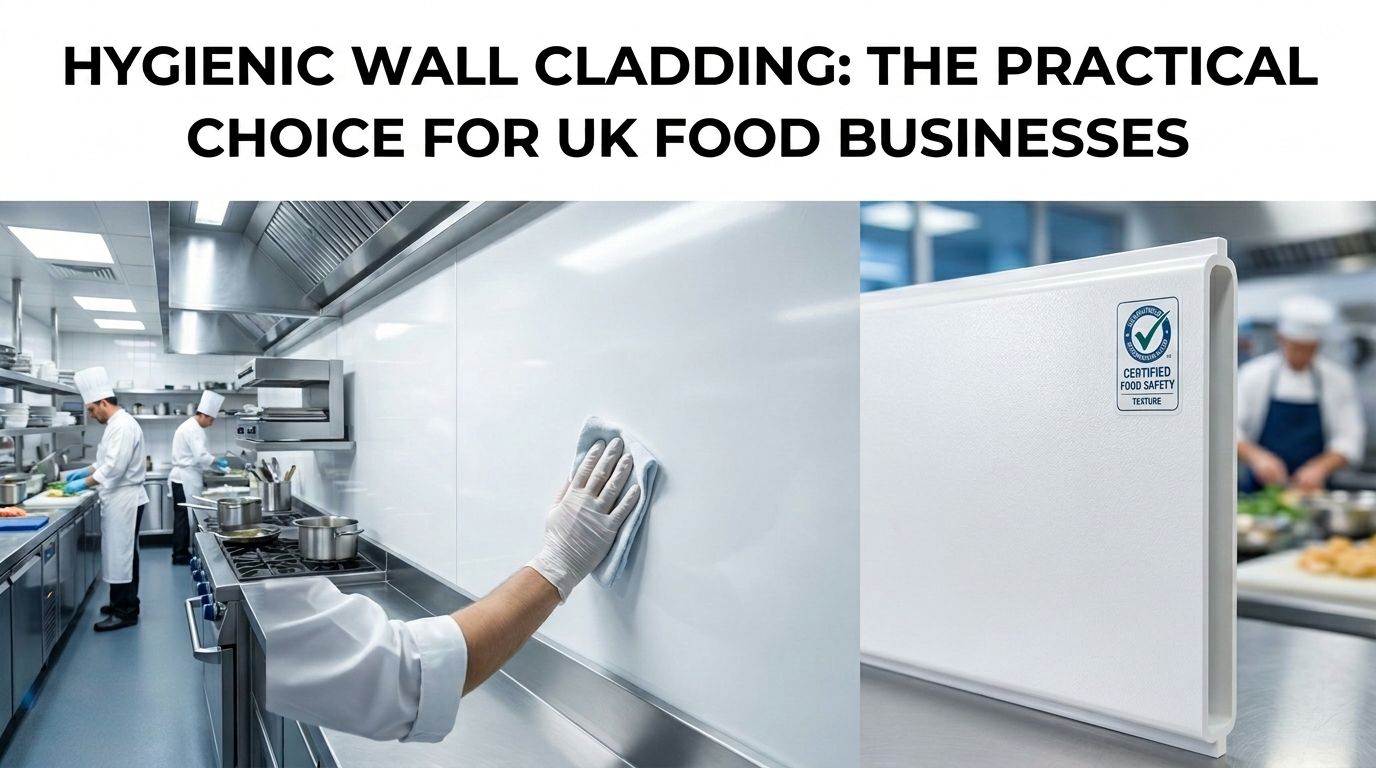
If you manage a commercial kitchen, food processing unit, or catering facility anywhere in the UK, the condition of your walls matters far more than most people realise. Surfaces that are difficult to clean or prone to moisture damage can quietly undermine your hygiene standards — and your reputation.
That is where hygienic wall cladding steps in. Across the UK food industry, more operators are choosing wall panelling systems that are built for performance, not just appearance.
What Is Hygienic Wall Cladding?
Hygienic wall cladding refers to rigid, non-porous wall panels engineered for environments where cleanliness and food safety are a daily priority. Unlike painted walls or ceramic tiles, these panels provide a seamless, smooth surface that resists moisture, bacteria, and contamination.
Popular materials used across UK installations include:
- PVC panels — lightweight, affordable, and moisture-resistant
- GRP (glass-reinforced plastic) — highly durable and impact-resistant
- Stainless steel — premium option for high-contact food preparation zones
- Composite panels — a reliable balance of rigidity and hygiene performance
Why UK Food Businesses Are Upgrading
Food safety legislation in the UK — including the Food Safety Act 1990 and guidance from the Food Standards Agency (FSA) — requires food businesses to maintain clean, washable, and durable wall surfaces. Hygienic wall cladding is one of the most practical ways to meet these requirements consistently.
Here is why operators across England, Scotland, Wales, and Northern Ireland are making the move:
- Regulatory confidence — Supports ongoing compliance with FSA hygiene standards
- Faster cleaning routines — Smooth panels clean down in a fraction of the time
- Bacteria and mould resistance — Non-porous surfaces do not harbour microorganisms
- Lower long-term maintenance costs — Far fewer repairs compared to painted or tiled finishes
- Improved working environment — Bright, clean interiors support staff wellbeing and professionalism
Where Hygienic Wall Cladding Is Most Effective
| Area | Primary Benefit |
|---|---|
| Commercial kitchens | Resists heat, steam, and grease splatter |
| Food processing units | Seamless joints reduce contamination risk |
| Cold stores and refrigeration rooms | Moisture-proof and easy to sanitise |
| Canteens and serveries | Withstands frequent daily cleaning |
| Staff washrooms and changing areas | Waterproof with a hygienic, odour-resistant finish |
Choosing the Right Cladding for Your Space
Every food environment is different. Before selecting a system, it is worth considering:
- Impact and traffic levels — Busier areas benefit from GRP or stainless steel
- Temperature requirements — Cold rooms need panels rated for low-temperature performance
- Colour and light reflection — Lighter tones make hygiene inspections easier
- Installation method — Direct-fix systems versus studwork can affect timelines and budget
Partnering with experienced specialists makes a genuine difference. The team at Oakley Food Projects works with food businesses across the UK to specify, supply, and install wall panelling systems that meet both operational and compliance needs.
Frequently Asked Questions
Can hygienic wall cladding be installed in an existing kitchen? Yes. Panels can be fitted over most existing surfaces, which keeps disruption to your business to a minimum.
How long do hygienic wall panels typically last? With routine care, quality panels can last well over 20 years, offering strong long-term value.
Does wall cladding support UK food hygiene compliance? When correctly specified and professionally installed, hygienic wall cladding actively supports compliance with UK Food Safety legislation and FSA guidance.
Is it possible to install cladding while the kitchen stays open? In many cases, yes. A phased installation approach allows food businesses to remain operational throughout.
The Installation Process: What to Expect
One of the most common questions food business owners ask is how disruptive the installation process will be. The straightforward answer is — far less than you might expect.
A professional installation typically follows a clear, structured process:
- Site survey and assessment — A specialist visits your premises to measure the space, assess existing wall conditions, and recommend the most suitable panel system
- Material selection and specification — Panels are chosen based on your environment, usage, and compliance requirements
- Surface preparation — Existing walls are cleaned, levelled, or lined where necessary to ensure a secure, lasting bond
- Panel fixing and finishing — Panels are fitted using the appropriate method, with all joints sealed to eliminate gaps where bacteria could accumulate
- Final inspection — The completed installation is checked against hygiene and quality standards before sign-off
Most standard kitchen or food room installations are completed within one to three days, depending on the size of the space. With phased scheduling, many businesses continue operating throughout.
Hygienic Wall Cladding vs. Traditional Tiling: A Quick Comparison
Many UK food businesses still rely on ceramic tiles, often simply because that is what has always been used. However, modern hygienic wall cladding offers several distinct advantages worth considering.
| Feature | Hygienic Wall Cladding | Ceramic Tiles |
|---|---|---|
| Joint and grout lines | Minimal or none | Present — can harbour bacteria |
| Cleaning time | Quick wipe-down | Grout requires scrubbing |
| Impact resistance | High (GRP/stainless) | Prone to cracking |
| Installation speed | Fast | Time-consuming |
| Long-term maintenance | Low | Moderate to high |
| Moisture resistance | Excellent | Good, but grout can degrade |
The shift from tiles to cladding panels is not just a trend — it reflects a genuine improvement in how UK food environments manage hygiene on a day-to-day basis.
Take the Next Step
Hygienic wall cladding is a straightforward, proven investment for any UK food business serious about hygiene, efficiency, and long-term performance.
Oakley Food Projects brings specialist knowledge and hands-on experience to every project. View our wall panelling services and find out how we can help create a cleaner, safer space for your team.
Visit for : Hygienic wall cladding