Pooja Deepam Panchami: Practical Guide to Lighting Spiritual Lamps at Home
-

- March 19th, 2026
- 277 views

Get a free topical map and start building content authority today.
Pooja Deepam Panchami is a traditional lamp ritual used in many Hindu observances to mark the fifth (panchami) day or to honor a deity with light during regular worship. The lamp (deepam or diya) is both symbolic and practical: it represents dispelling darkness, creating focus, and establishing a stable ritual environment for prayer or meditation.
What this article covers: the meaning of Pooja Deepam Panchami, a named DEEPAM ritual framework, step-by-step lighting instructions, safety and common mistakes, practical tips, and five core questions for further reading.
Detected intent: Informational
Pooja Deepam Panchami: Meaning and Purpose
The phrase Pooja Deepam Panchami combines three elements: pooja (ritual worship), deepam (lamp or light), and panchami (the fifth day in a lunar or festival cycle). Lighting a lamp on Panchami can be a specific festival observance (for example, certain regional Panchami days) or a general guideline for adding a dedicated lighting ritual to a five-day spiritual practice. The lamp serves as a focal point for devotion, concentration, and the symbolic removal of ignorance.
DEEPAM Ritual Framework (named checklist)
Use the DEEPAM Ritual Framework to make the lamp ritual repeatable and meaningful.
- Designate: Choose and prepare a consistent altar space free from drafts and clutter.
- Equipment: Gather the lamp, suitable oil or ghee, wick, a striker or match, and a tray to catch spills.
- Enhance Intention: Set a clear intention or chant a short mantra before lighting.
- Place: Position the lamp at eye level or slightly below, facing the deity or meditation direction.
- Attend: Spend a few minutes in silence, prayer, or focused breathing while the lamp is burning.
- Maintain: Extinguish carefully after the practice and keep the lamp trimmed and refill supplies ready.
How to Light a Pooja Deepam: Step-by-Step
Gather and prepare
Select a stable lamp or diya. Use natural oils (sesame, coconut) or clarified butter (ghee) where possible, and a cotton wick trimmed to the desired length. Place the lamp on a non-flammable surface or plate to catch drips.
Lighting procedure
- Arrange the lamp and offerings (flowers, incense) within reach.
- Set an intention or quietly recite a short invocation.
- Light the wick using a match or striker, keeping hair and loose fabric away.
- Spend 2–10 minutes observing the flame, meditating, or chanting according to the ritual plan.
- To end, gently cover the flame with a snuffer or a bowl—avoid blowing to reduce splatter and soot.
Practical example: Morning Panchami lamp at home
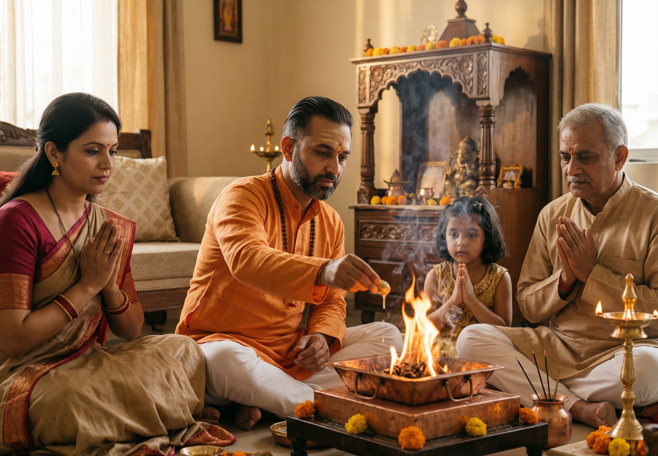
A family marks a five-day observance by placing a brass deepam on a small altar each morning. On the morning of Panchami, the eldest family member follows the DEEPAM framework: designates the altar, fills the lamp with sesame oil, lights the wick after a short prayer, spends five minutes in silence, then carefully covers the lamp and stores it for reuse. The simplicity of the ritual helps maintain daily focus without extensive preparation.
Safety, Trade-offs, and Common Mistakes
Common mistakes
- Using unstable or lightweight holders that tip easily.
- Leaving the lamp unattended in a room with pets or children.
- Blowing out the lamp, which can cause hot oil to spatter and create soot on icons.
Trade-offs
Choosing oil or ghee affects scent, burn time, and cost. Ghee burns cleanly and is traditional in many rituals but is more expensive; sesame oil is affordable and widely used but produces more smoke. Brass or clay lamps are durable and reusable; earthen lamps are traditional and inexpensive but fragile.
Practical Tips
- Keep a small tray under the lamp to catch spills and make cleanup easier.
- Trim the wick regularly for a steady flame and fewer emissions.
- Use a snuffer or a small bowl to extinguish the flame safely—avoid blowing it out.
- Schedule the lamp lighting at the same time daily to build a sustainable practice.
Related practices and reliable sources
Deepam lighting is part of broader puja and home shrine practices documented in religious and cultural sources. For background on puja and its place in Hindu practice, see an overview by an established reference such as Encyclopaedia Britannica: Puja (Britannica).
Core cluster questions
- How to light pooja deepam safely in a small home?
- What oils or wicks work best for a deepam during morning rituals?
- When should a lamp be placed on the altar for Panchami observances?
- How long should a pooja deepam burn during a short meditation?
- What are traditional materials for making a deepam and their advantages?
FAQ
What is Pooja Deepam Panchami?
Pooja Deepam Panchami refers to lighting a ritual lamp (deepam) in the context of a worship session (pooja) tied to the fifth day (panchami) of a lunar cycle or festival sequence. It is a focused way to bring light and attention to a devotional practice.
How to light a pooja deepam safely?
Place the lamp on a stable, non-flammable surface, keep it away from curtains and children, use appropriate oils, and extinguish with a snuffer. Never leave the flame unattended.
Can the DEEPAM Ritual Framework be adapted for short daily use?
Yes. The DEEPAM checklist is designed to be scalable: a condensed version may include only Designate, Equipment, Intention, and Maintain for a two–three minute daily practice.
What oils are recommended for deepam for spiritual practice?
Clarified butter (ghee) and sesame oil are traditional choices. Ghee burns cleaner and is preferred in many temples; sesame oil is more affordable and widely used in home shrines.
How to choose the right panchami lamp ritual for a home altar?
Decide based on space, safety, available materials, and the desired symbolic elements. Simpler, consistent practices sustain daily habit while more elaborate rituals are suitable for special observances.
Related Posts