Induction Hardening Machine: Advanced Surface Hardening Solution for Indian Industries
-

- June 26th, 2026
- 636 views

FREE SEO Topical Map Generator: Find Your Next Content Ideas
An Induction Hardening Machine is a specialized heat treatment system used to improve the surface hardness, wear resistance, and fatigue life of metal components while maintaining a tough and ductile core. In India’s rapidly expanding manufacturing ecosystem, where durability and performance are non-negotiable, the Induction Hardening Machine has become a critical technology across automotive, engineering, aerospace, railways, and heavy machinery sectors. This modern hardening method delivers precise, repeatable, and energy-efficient results that traditional heat treatment processes often struggle to achieve.
What Is an Induction Hardening Machine and How It Works
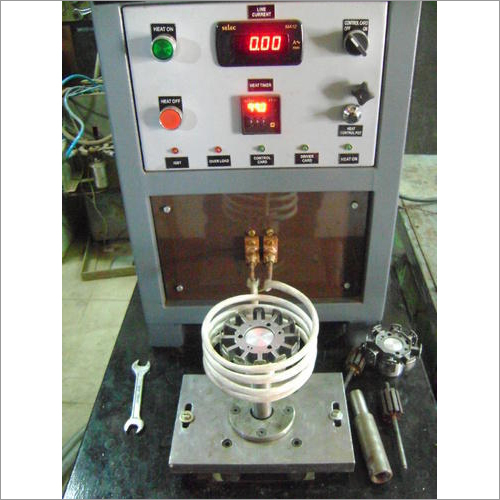
An Induction Hardening Machine works on the principle of electromagnetic induction. High-frequency alternating current flows through an induction coil, creating a magnetic field around the component. This magnetic field induces eddy currents on the metal surface, generating rapid and localized heating. Once the required hardening temperature is reached, the surface is immediately quenched using water, polymer, or spray quenching systems. This controlled heating and rapid cooling transform the surface microstructure into a hardened layer while preserving the internal toughness of the component.
Why Indian Manufacturers Choose Induction Hardening Machine Technology
Indian manufacturers prefer the Induction Hardening Machine because it offers unmatched control over hardness depth, pattern, and consistency. Unlike furnace-based hardening, induction hardening focuses heat only where it is needed, reducing distortion, oxidation, and energy loss. This makes the process ideal for high-precision components used in demanding applications. With increasing pressure to meet global quality standards and reduce production costs, induction hardening has emerged as a reliable and scalable solution for Indian industries.
Key Benefits of Using an Induction Hardening Machine
One of the most significant advantages of an Induction Hardening Machine is precision. The hardening depth can be accurately controlled, ensuring uniform results across batches. The process is extremely fast, often completing hardening cycles in seconds, which dramatically improves production throughput. Energy efficiency is another major benefit, as localized heating minimizes power consumption. The clean and controlled process reduces scaling and eliminates the need for extensive post-treatment machining. Additionally, induction hardening improves component life, reduces failure rates, and enhances overall product reliability.
Applications of Induction Hardening Machine in Indian Industries
The Induction Hardening Machine is widely used across multiple sectors in India. In the automotive industry, it is essential for hardening crankshafts, camshafts, gears, axles, steering components, and transmission parts. Engineering and manufacturing units rely on induction hardening for shafts, pins, rollers, and tooling components that require high wear resistance. Railways use this technology for rails, wheel components, and couplings to ensure long service life under heavy loads. Aerospace and defense sectors benefit from induction hardening due to its ability to deliver consistent quality with minimal distortion, making it suitable for safety-critical components.
Types of Induction Hardening Machines Available
Modern Induction Hardening Machine systems are available in various configurations to meet diverse production requirements. Single-shot hardening machines are used when the entire surface needs uniform hardening in one cycle. Scan hardening machines move the coil along the component length, ideal for long shafts and rods. Vertical and horizontal hardening machines are selected based on component geometry and handling needs. Fully automatic induction hardening lines integrate material handling, CNC control, and quality monitoring for high-volume production environments.
Material Compatibility and Hardening Quality
An Induction Hardening Machine is suitable for a wide range of ferrous materials, including carbon steel, alloy steel, and cast iron. The controlled heating profile ensures consistent hardness and microstructural transformation. Because the core of the component remains unaffected, the final product achieves an optimal balance of surface hardness and internal strength. This makes induction hardening especially valuable for components exposed to friction, impact, and cyclic loading in real-world applications.
Automation and Process Control Advantages
Automation is a defining feature of modern Induction Hardening Machine systems. Advanced machines offer programmable hardening recipes, real-time temperature monitoring, and closed-loop control systems. These features ensure repeatability, reduce operator dependency, and maintain consistent quality across production runs. For Indian manufacturers supplying to global OEMs, such automation supports compliance with international standards while improving efficiency and traceability.
Cost Effectiveness and Long-Term Performance
Although the initial investment in an Induction Hardening Machine may be higher compared to conventional hardening methods, the long-term benefits far outweigh the cost. Reduced energy consumption, faster cycle times, lower scrap rates, and minimal rework contribute to significant operational savings. The extended service life of hardened components also reduces warranty claims and maintenance costs, delivering strong returns over the machine’s lifespan.
Selecting the Right Induction Hardening Machine
Choosing the right Induction Hardening Machine depends on component size, material composition, required hardness depth, and production volume. Power rating, frequency selection, coil design, and quenching method must be carefully matched to the application. Partnering with an experienced manufacturer ensures proper system configuration, installation, training, and after-sales support, which are critical for achieving optimal hardening results.
Future of Induction Hardening Machine Technology in India
As Indian manufacturing continues to adopt automation, electric vehicles, and advanced engineering practices, the demand for reliable surface hardening solutions will continue to rise. The Induction Hardening Machine aligns perfectly with Industry 4.0 initiatives through its compatibility with digital controls, data monitoring, and energy-efficient operation. From traditional manufacturing hubs to emerging EV and aerospace clusters, induction hardening will remain a cornerstone of high-performance component production.
Conclusion
An Induction Hardening Machine is a powerful and future-ready solution for industries that demand strength, precision, and consistency. By delivering controlled surface hardening with minimal distortion and high energy efficiency, this technology helps Indian manufacturers enhance product quality, reduce costs, and stay competitive in global markets. Investing in the right Induction Hardening Machine is a strategic step toward long-term reliability and manufacturing excellence.